
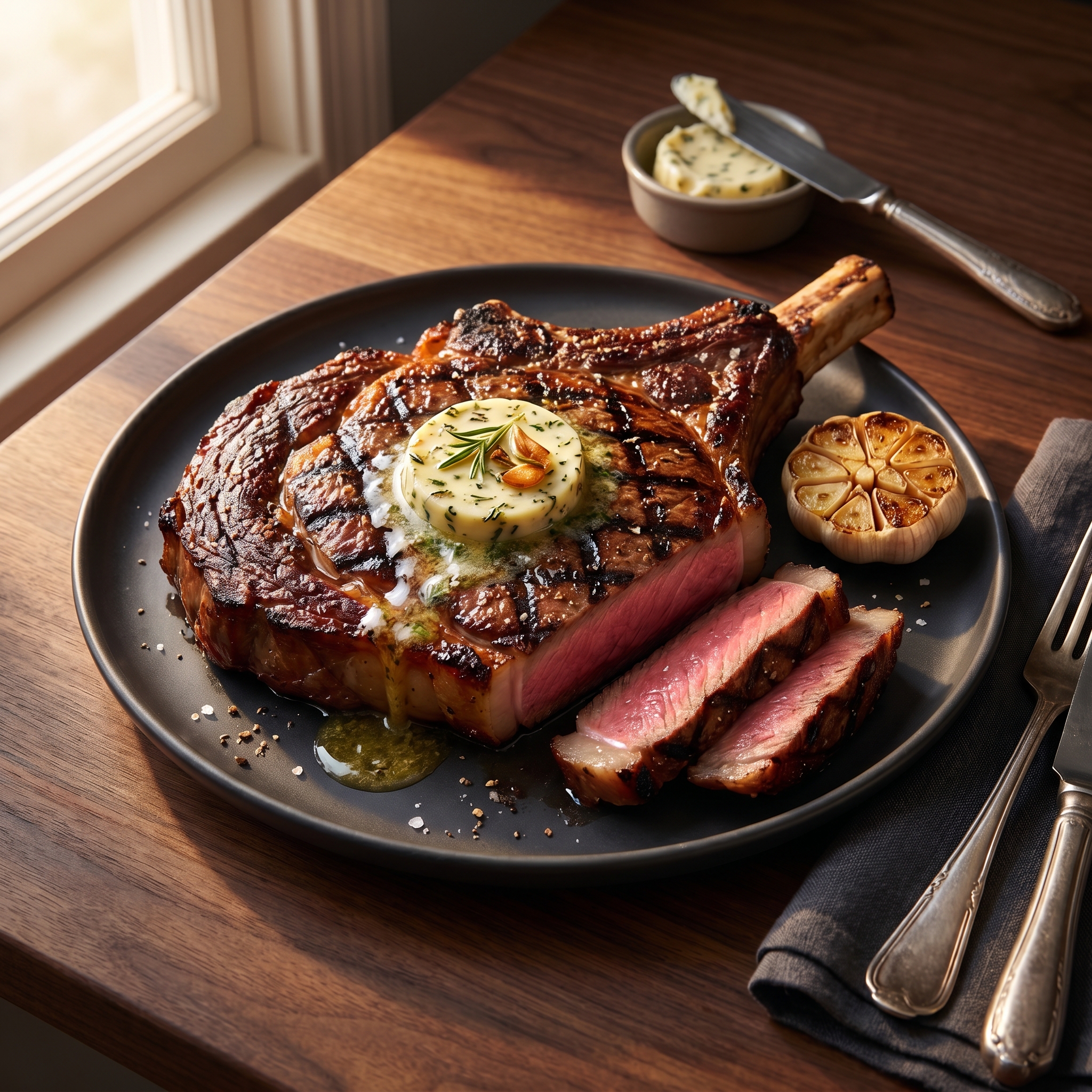
Restaurant-Quality Grilled Ribeye Steak with Compound Butter: 7 Secrets That Make Every Bite Unforgettable
It was Father’s Day, and I had promised my dad the best steak he’d ever eaten at home. He’s a man who has ordered ribeyes at steakhouses for fifty years — the kind of guy who knows exactly what he wants and exactly how it should taste — so the pressure was real. I’d picked up two gorgeous bone-in ribeyes from the butcher counter at Costco, seasoned them the night before, and spent the better part of Saturday afternoon reading about compound butter. When those steaks came off the grill and I slid a thick pat of herb butter right onto the sizzling crust and watched it melt down into every crevice of that beautiful marbling, my dad took one bite, set his fork down, and said: “You don’t need to take me to a steakhouse anymore.” That was four years ago. I’ve been making this recipe every summer since.
Have you ever paid $60 for a ribeye at a restaurant and wondered what on earth they do to it that you can’t seem to replicate at home? The answer isn’t a secret technique or a piece of equipment you don’t own — it’s the grilled ribeye steak with compound butter finish. That little pat of herb-and-garlic-loaded butter melting over a perfectly seared crust is what gives steakhouse ribeyes that impossibly rich, complex flavor you keep chasing. And I’m going to show you exactly how to make it, start to finish, right in your own backyard.
Whether you’re cooking for a Father’s Day cookout, firing up the grill for a Saturday night dinner for two, or just decided that this weekend you’re going to stop settling for mediocre steaks — keep reading. This recipe will change the way you think about cooking steak at home, and it’s more approachable than you think.
Table of Contents
Why This Recipe Works
A great ribeye doesn’t need much — but it does need the right things done in the right order. This recipe nails the dry brine, the sear, the internal temperature, and the compound butter finish, and each of those steps matters more than you might think. Once you make this once, you’ll have a framework you can use for every steak you grill for the rest of your life.
- ✔ The dry brine makes all the difference — Salting the steak the night before draws out surface moisture, which then gets reabsorbed into the meat along with the salt. The result is a steak that’s seasoned all the way through — not just on the surface — with a drier exterior that sears into a better crust.
- ✔ Compound butter does the heavy lifting on flavor — Garlic, fresh herbs, lemon zest, and Worcestershire stirred into softened butter creates a finishing sauce that melts right into the steak’s crust and takes the whole thing from great to genuinely unforgettable.
- ✔ Ribeye is the most forgiving cut for home grillers — All that intramuscular fat — the marbling — bastes the steak from the inside as it cooks, which means even if you pull it a couple degrees early or late, it stays juicy and flavorful in a way that leaner cuts simply don’t.
- ✔ The two-zone fire gives you control — Setting up your grill with a hot zone and a cooler zone means you can sear hard for the crust and then move the steak to finish gently, giving you a perfectly even cook without the outside burning before the inside catches up.
- ✔ Compound butter takes 10 minutes to make and lasts for weeks — Make a log of it on Sunday and you’ve got a finishing butter ready for every steak, piece of grilled fish, roasted vegetable, or warm baguette all week long.
- ✔ No special equipment needed — A charcoal or gas grill, a cast iron skillet or grill grates, an instant-read thermometer, and a pair of tongs. That’s all that stands between you and a steakhouse-quality ribeye.
- ✔ Genuinely impressive for guests — This is the kind of meal that makes people go quiet at the table. The presentation alone — that glossy butter melting over a perfectly charred steak — is enough to earn you dinner party legend status.
Let’s get into what you need to pull this off.
What You’ll Need
This recipe serves 2–4 people depending on steak size. The compound butter recipe makes enough for 6–8 steaks — which is intentional, because once you taste it you’ll want it on everything.
For the Ribeye Steaks
- 2 bone-in or boneless ribeye steaks, at least 1¼ inches thick (ideally 1½ inches)
- 1 tablespoon kosher salt (for dry brining)
- 1 teaspoon coarse black pepper
- ½ teaspoon garlic powder
- 1 tablespoon neutral oil (avocado or vegetable oil — high smoke point)
For the Compound Butter
- 1 stick (8 tablespoons) unsalted butter, softened to room temperature — Land O’Lakes works perfectly here
- 3 cloves garlic, minced or pressed
- 2 tablespoons fresh flat-leaf parsley, finely chopped
- 1 tablespoon fresh chives, finely chopped
- 1 teaspoon fresh thyme leaves (or ½ teaspoon dried)
- 1 teaspoon fresh rosemary, very finely minced
- 1 teaspoon Worcestershire sauce
- 1 teaspoon lemon zest
- ½ teaspoon kosher salt
- ¼ teaspoon coarse black pepper
- ¼ teaspoon smoked paprika
For Serving
- Flaky sea salt (Maldon is worth every penny here) for finishing
- Fresh parsley or chives for garnish
- Lemon wedges, optional
Optional Add-Ins and Upgrades
- 1 tablespoon blue cheese crumbled into the compound butter for a steakhouse-style finish
- 1 teaspoon horseradish stirred into the butter for a sharp, peppery kick
- ½ teaspoon red pepper flakes for heat
- 1 teaspoon Dijon mustard blended into the butter for depth
- Truffle oil — just a few drops — stirred in at the very end for a special occasion upgrade
- Sun-dried tomatoes, finely minced, for a Mediterranean-style compound butter
- Anchovy paste (just ½ teaspoon) — you won’t taste fish, only a deep savory richness
Substitutions
What if I can’t find ribeye at my store? A thick-cut New York strip is the closest substitute and works beautifully with this exact recipe — just know it’s leaner than ribeye, so pulling it at 130°F internal temperature (for medium-rare) is even more important to keep it from drying out. A T-bone or porterhouse also works well and makes for an even more dramatic presentation. What you want to avoid is a thin-cut steak — anything under an inch thick will overcook before it develops a proper crust, and the compound butter won’t have time to do its job.
Can I use dried herbs instead of fresh in the compound butter? Fresh herbs are genuinely worth seeking out for this recipe — they give the butter a brighter, more vibrant flavor and a beautiful green color that dried herbs just can’t match. That said, if all you have is dried, use one-third the amount called for (dried herbs are more concentrated) and make sure they’re not stale. Old dried herbs taste like sawdust. If your jar has been in the spice cabinet for more than a year, replace it before making this butter.
What if I don’t have a grill? A cast iron skillet on your stovetop is your best friend here. Get it screaming hot over high heat, add a thin film of oil, and sear the steak for 3–4 minutes per side without touching it. Then transfer the whole skillet to a 400°F oven to finish to your desired internal temperature. It’s not grilling — but it produces an absolutely gorgeous crust and the compound butter finish works just as beautifully on a skillet-seared steak as it does on a grilled one.
🧑🍳 Chef’s Note — Butter Temperature: Your butter must be genuinely soft — not melted, not cold, but truly room temperature — before you try to mix in the other ingredients. Cold butter won’t incorporate the herbs and garlic evenly, and melted butter will make a greasy mess instead of a cohesive compound. Pull it from the fridge at least an hour before you plan to make the butter.
🧑🍳 Chef’s Note — Steak Thickness: Thickness is not optional in this recipe — it’s load-bearing. A steak under 1 inch thick will cook through before the outside develops the crust you’re after. Ask your butcher to cut them thick, or look for ribeyes labeled “thick cut” at Costco or your local grocery store. This is the single biggest variable between a good home-grilled steak and a great one.
How to Make Grilled Ribeye Steak with Compound Butter — Step by Step
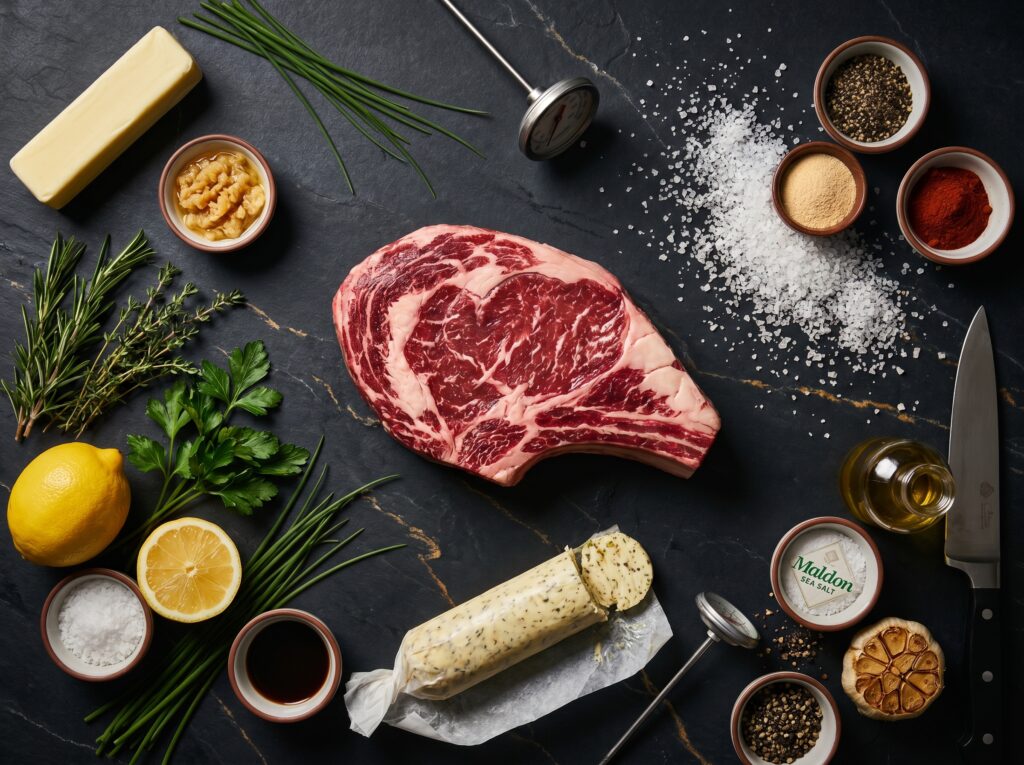
- Dry brine the steaks the night before — or at least one hour ahead. Pat the ribeyes completely dry with paper towels, then season generously on all sides — top, bottom, and edges — with kosher salt, coarse black pepper, and garlic powder. Set them on a wire rack over a sheet pan and refrigerate uncovered for at least one hour, or up to 24 hours. The longer they sit, the more the salt penetrates and the drier the surface gets — and a dry surface is what gives you that deep, crackling crust. This one step alone will visibly improve every steak you grill from here on out.
💡 Pro Tip: Don’t skip the wire rack. Setting the steak directly on a plate traps moisture underneath and defeats the whole purpose of the dry brine. Elevating the steak on a rack lets air circulate on all sides, drying the surface evenly and setting you up for the best possible crust on the grill.
- Make the compound butter while the steaks come to room temperature. Pull the steaks from the fridge about 45 minutes before grilling and let them sit at room temperature — cold steaks cook unevenly, with the outside overcooking before the inside reaches temperature. While they’re warming up, make your compound butter: add the softened butter to a bowl and use a fork to mash in the garlic, parsley, chives, thyme, rosemary, Worcestershire, lemon zest, salt, pepper, and smoked paprika. Mix until everything is evenly combined and the butter has turned a beautiful pale green.
- Roll the compound butter into a log and refrigerate until ready to use. Lay a piece of plastic wrap on your counter, spoon the butter onto the wrap in a rough log shape, and roll it up tightly — twisting the ends like a candy wrapper to compress it into a neat cylinder. Refrigerate for at least 30 minutes so it firms back up into sliceable rounds. When you’re ready to finish the steaks, slice the butter into ½-inch rounds. The rest of the log keeps in the fridge for up to two weeks or in the freezer for up to three months.
💡 Pro Tip: Make a double batch of compound butter every single time. It takes about two extra minutes and costs almost nothing, and that second log in your freezer is one of the best things you’ll ever do for a weeknight dinner. Pull a few rounds straight from the freezer and melt them over grilled chicken, sautéed mushrooms, roasted potatoes, or a warm baguette. It makes everything taste like you tried harder than you did.
- Set up your grill for two-zone cooking. For a charcoal grill, pile the coals on one side to create a hot zone and leave the other side empty for a cooler indirect zone. For a gas grill, turn one or two burners to high and leave the remaining burner on low or off. You want the hot zone to reach at least 450°F — ideally 500°F or higher — for a proper sear. Clean and oil the grates thoroughly: use tongs to rub a folded paper towel dipped in vegetable oil across the grates just before the steaks go on. A clean, oiled grate is the difference between gorgeous sear marks and a steak that tears when you try to flip it.
- Brush the steaks lightly with oil and place them on the hot zone. Give each steak a thin brush of neutral oil right before it hits the grill — this helps the crust develop evenly and prevents sticking. Lay the steaks on the hot zone at a 45-degree angle to the grates and don’t touch them. Leave them completely alone for 3–4 minutes. You’ll hear a strong sizzle and start to see the crust forming around the edges. Resist every urge to move or press them.
- Flip once and sear the second side. Using tongs — never a fork, which punctures the steak and lets the juices escape — flip the steaks and sear the second side for another 3–4 minutes. If you want crosshatch grill marks, rotate the steak 90 degrees halfway through each side. For steaks over 1½ inches thick, after searing both sides, move the steak to the cooler indirect zone, close the lid, and let it finish cooking to your target internal temperature — this gentle finish keeps the center cooking evenly without charring the outside.
💡 Pro Tip: Use an instant-read thermometer every single time, without exception. Pull the steak at 125°F for rare, 130–135°F for medium-rare (the sweet spot for ribeye), 140°F for medium. The steak will continue cooking for 5–8 degrees after it comes off the grill during resting — so always pull it a little early. A ribeye cooked to medium-well or beyond is a beautiful cut of beef that didn’t deserve what happened to it.
- Rest the steaks before you touch them. Transfer the grilled ribeyes to a cutting board or warm plate and let them rest, uncovered, for at least 8–10 minutes. This is non-negotiable. Cutting into a steak immediately after it comes off the grill causes all those precious juices to run straight out onto your cutting board. Resting lets the muscle fibers relax and reabsorb the juices, so every slice is as moist and flavorful as possible. Use this time to finish your sides and pour the wine.
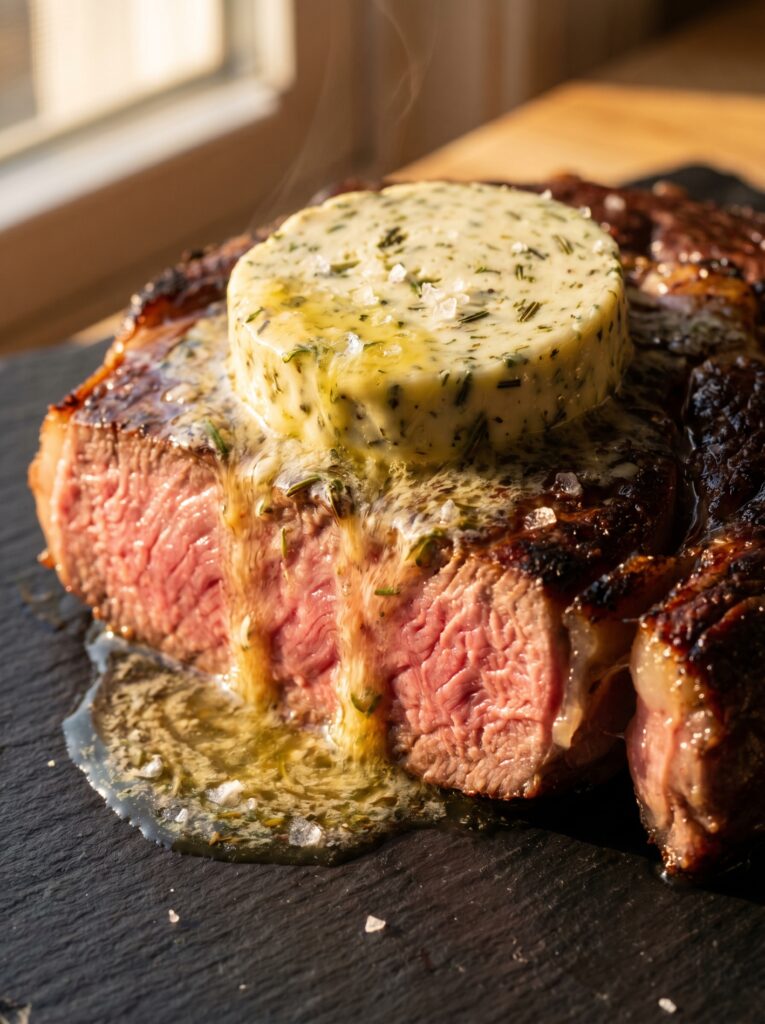
- Add the compound butter immediately after resting. Right when the resting time is up — while the steak is still hot — lay one or two rounds of compound butter directly on top of each steak. Watch it begin to melt and pool into the crust, running into the char marks and dripping down the sides. This is the moment. That melting butter is picking up all the savory, smoky flavor from the crust and transforming it into a glossy, herb-scented sauce that coats every bite.
- Finish with flaky salt and serve immediately. Just before bringing the steaks to the table, hit them with a small pinch of Maldon flaky sea salt — those big, crunchy flakes add a final pop of salinity and texture that ties the whole dish together. Garnish with a scatter of fresh parsley or chives and a lemon wedge on the side. Serve whole for a dramatic presentation, or slice against the grain for easier sharing. Either way — get it to the table while that butter is still melting.
From dry brine to dinner plate, this recipe asks for patience in a few key places — the overnight brine, the resting time, the hands-off sear — and rewards that patience extravagantly. Follow these steps once and you’ll have a grilled ribeye formula you’ll rely on for the rest of your grilling life.
How to Serve It
A perfectly grilled ribeye steak with compound butter deserves sides that complement without competing. Here are five ways to build a full meal around this centerpiece.
- ☕ Classic Steakhouse Night at Home: Serve alongside a loaded baked potato — sour cream, chives, crumbled bacon, shredded cheddar — and a simple wedge salad with blue cheese dressing and crispy bacon. Light a candle, pour a glass of cabernet sauvignon, and you’ve recreated a $120 steakhouse dinner for a fraction of the price. This is the combination my dad asks for every single Father’s Day.
- 🥞 Weekend Brunch Steak and Eggs: Slice leftover grilled ribeye thin and serve it alongside two fried eggs, roasted breakfast potatoes, and a slice of compound butter melting over the whole plate. The herb butter does double duty here — it works just as beautifully with eggs as it does with steak. This is the kind of brunch that makes people cancel their afternoon plans and just stay at your table.
- 🌸 Elegant Date Night Dinner: Plate each steak whole on a warm plate, add a round of compound butter, and surround it with roasted asparagus drizzled with olive oil and a spoonful of creamy mashed potatoes. Keep everything warm, dim the lights, and this is a dinner that requires zero reservations and absolutely zero compromise. The presentation speaks for itself.
- 📚 Summer Cookout Centerpiece: Slice both ribeyes against the grain into thick strips and arrange them on a large wooden cutting board, compound butter rounds nestled alongside. Set out grilled corn, a big bowl of cold pasta salad, and crusty bread for mopping up the butter. Letting guests serve themselves from a shared board is relaxed, generous, and impressive all at once.
- 🎃 Holiday or Special Occasion Spread: For a Christmas or New Year’s Eve dinner, serve bone-in ribeyes plated individually with a round of compound butter, roasted garlic mashed potatoes, creamed spinach, and roasted mushrooms with thyme. Finish the table with a good red wine and warm dinner rolls — any bread that goes near that compound butter is going to disappear fast.
Whatever you serve alongside, make sure your plates are warm before plating — a cold plate pulls heat from the steak almost immediately and you lose that beautiful melting butter effect within seconds. Warm plates in a 200°F oven for 10 minutes while the steak rests.
Storage & Make-Ahead Tips
Compound butter — Refrigerator: Wrapped tightly in plastic wrap, compound butter keeps in the refrigerator for up to 2 weeks. The flavor actually deepens over the first few days as the garlic and herbs infuse further into the butter — a log made on Friday is at its absolute best by Sunday. Keep it in the coldest part of your fridge and away from strong-smelling foods, as butter absorbs odors easily.
Compound butter — Freezer: This is where compound butter really earns its keep. Wrapped in plastic and then in a layer of foil or a zip-top freezer bag, it keeps beautifully in the freezer for up to 3 months. Slice off rounds directly from the frozen log — they thaw in seconds on a hot steak — and return the rest to the freezer. Making a double or triple batch and freezing it means you always have a steakhouse finish on hand for any protein that hits your grill.
Grilled ribeye — Refrigerator: Leftover cooked ribeye keeps in an airtight container in the refrigerator for up to 3 days. Slice it thin for steak sandwiches, chop it for steak and egg scrambles, or warm it gently in a skillet with a little butter. Avoid microwaving steak if you can help it — it toughens the meat and kills the crust. A low oven at 250°F for 10–15 minutes, or a quick reheat in a hot skillet, preserves far more of the original texture.
📅 Make-Ahead Tip: The compound butter can be made up to a week in advance and kept refrigerated — in fact, making it ahead is ideal, since the flavors have more time to develop. The dry brine can be done up to 24 hours ahead. On the day of cooking, the only active work is the grilling itself, which takes about 15 minutes. It’s an impressive dinner that front-loads almost all of the effort into days when you have time to spare.
Dry-brined raw steaks: Once seasoned and set on a rack, the steaks can sit in the refrigerator for up to 24 hours before grilling. Beyond 24 hours, the surface can start to get overly dry and the salt can begin to draw out more moisture than it can reabsorb. For best results, brine the night before and grill the next day.
Helpful Tips & Common Mistakes
These five mistakes show up constantly when home cooks grill steaks — and every single one of them is fixable once you know what to watch for.
✗ Mistake: Grilling a cold steak straight from the refrigerator.
✓ Fix: Pull your steaks from the fridge 45 minutes before they go on the grill and let them sit at room temperature. A cold steak takes longer to cook through, which means the outside overcooks trying to bring the center up to temperature. Room-temperature steaks cook more evenly from edge to center and develop a better crust in less time on the grates.
✗ Mistake: Moving the steak around the grill during the sear.
✓ Fix: Put the steak down and leave it completely alone for the full 3–4 minutes per side. Every time you move it, you interrupt the Maillard reaction — the chemical process that creates that dark, flavorful crust — and you risk tearing the steak before the sear has set. If the steak releases easily when you try to flip it, it’s ready. If it sticks, it needs more time. Let it tell you when it’s done.
✗ Mistake: Cutting into the steak immediately after pulling it off the grill.
✓ Fix: Rest the steak for a full 8–10 minutes before slicing, no shortcuts. The juices inside a steak that just came off high heat are boiling and agitated — cutting into it now sends them all running out onto your board. Resting allows the fibers to relax and pull those juices back in, so every bite from edge to center is moist and flavorful instead of dry and disappointing.
✗ Mistake: Using salted butter for the compound butter.
✓ Fix: Always start with unsalted butter and add your own salt. Salted butter varies wildly in sodium content by brand, which makes it nearly impossible to control the final seasoning of your compound butter. Starting with unsalted Land O’Lakes and adding kosher salt to taste puts you in complete control and prevents a compound butter that’s too salty to use generously.
✗ Mistake: Adding the compound butter too early — while the steak is still on the grill.
✓ Fix: Add the butter after the steak comes off the grill and has finished resting, not while it’s still over the flame. Butter on a live fire flares up, burns, and turns bitter. The whole point of the compound butter is to melt gently over the hot crust after cooking — that slow melt is what creates the glossy, herb-infused sauce that makes this dish special. Patience, just a little more of it, right at the end.
Recipe Variations
The base recipe is a classic for good reason, but the compound butter is endlessly riffable depending on the occasion, the protein you’re cooking, or just what sounds good. Here are four directions worth exploring.
🧄 Roasted Garlic and Blue Cheese Compound Butter: Instead of raw minced garlic, roast a full head of garlic in a 400°F oven for 40 minutes until the cloves are golden and jammy, then squeeze them out and mash them into the butter. Add 2 tablespoons of crumbled blue cheese, a teaspoon of fresh thyme, and a splash of Worcestershire. This version is richer and more mellow than the original — the roasted garlic loses its sharpness and turns sweet and nutty, and the blue cheese adds a funky, savory depth that is absolutely stunning on a thick ribeye. This is the one I make for company.
🌿 Chimichurri-Style Compound Butter: Stir together softened butter with a big handful of finely minced fresh parsley, fresh oregano, 4 cloves of garlic, a big pinch of red pepper flakes, 1 tablespoon of red wine vinegar, and the zest of one lemon. The acidity from the vinegar gives this version a brighter, more assertive flavor than the classic herb butter — it cuts through the richness of the ribeye in a way that feels lighter and more summery. This is also wonderful on grilled chicken thighs and grilled shrimp.
🌶️ Spicy Jalapeño Lime Compound Butter: Add one fresh jalapeño (finely minced, seeds removed for mild heat or included for serious heat), the zest and juice of one lime, a handful of fresh cilantro, and a teaspoon of cumin to the softened butter. This variation takes the steak in a Tex-Mex direction that pairs beautifully with grilled corn, black beans, and cold beer on a hot summer night. It’s also the compound butter I reach for when I’m doing fajita-style sliced steak — slice the ribeye thin, arrange it on a platter, and let pats of this butter melt over the whole thing before serving.
🍋 Lemon Caper and Herb Butter for Lighter Cuts: Combine softened butter with the zest of two lemons, a tablespoon of drained capers (roughly chopped), fresh tarragon, flat-leaf parsley, and a teaspoon of Dijon mustard. This version leans more elegant and delicate than the steak-forward originals — it’s stunning on grilled salmon, swordfish, or halibut, on roasted chicken breast, or stirred into pasta with grilled shrimp. Make the classic herb butter for your ribeye and this one for everything else coming off the grill this summer.
Final Thoughts
This recipe started with a Father’s Day promise and a lot of pressure, and it delivered in the most satisfying way — a man who’d eaten ribeyes at steakhouses for fifty years, telling me he didn’t need to go back. That’s what this combination of a properly dry-brined, two-zone grilled ribeye and a well-made compound butter can do. It’s not complicated — it’s just deliberate. The dry brine, the two-zone fire, the thermometer, the rest, the butter — each piece is simple on its own, and together they produce something that genuinely earns every compliment it gets.
If you fire up the grill and make this recipe this weekend, I want to see it. Leave a ⭐⭐⭐⭐⭐ rating below, tag @zippydishes on Pinterest with your compound butter log and your gorgeous sear, and send this to whoever in your life is still cutting into steaks straight off the grill without letting them rest. We can help them. 🥩🔥
Frequently Asked Questions
What does a grilled ribeye steak with compound butter taste like?
A properly grilled ribeye with compound butter is one of the most purely satisfying bites in all of American cooking. The steak itself is deeply beefy, rich, and juicy — ribeye has more intramuscular fat than almost any other cut, and that fat bastes the meat from the inside as it cooks and renders on the grill, creating an almost buttery texture throughout. The crust from the grill adds a smoky, savory char that contrasts beautifully with the tender interior. Then the compound butter melts over all of that and adds a herby, garlicky, slightly citrusy richness that pulls every element of the dish together. It tastes like something that required far more skill and effort than it actually did.
What is compound butter and how is it different from regular butter?
Compound butter is simply softened butter that’s been mixed with flavorings — herbs, garlic, citrus zest, spices, cheese, or any combination thereof — and then re-chilled into a firm, sliceable log. Unlike plain butter, which adds richness and fat, compound butter adds a whole layer of seasoning and flavor that infuses into whatever it melts over. It’s a classic French technique that steakhouses have used for decades to add that final, signature richness to an already-great piece of meat. The beauty of it is that it’s made cold and stored ahead of time, so the flavor work happens in your kitchen days before the steak ever hits the grill.
What internal temperature should a ribeye be pulled off the grill?
For medium-rare — which is the ideal doneness for ribeye — pull the steak off the grill at 130–135°F internal temperature, measured with an instant-read thermometer inserted into the thickest part of the steak away from any bone. For rare, pull at 120–125°F. For medium, pull at 140–145°F. Remember that the steak will continue to rise 5–8 degrees in internal temperature during resting, so always pull it a little early. A ribeye cooked past medium loses a significant amount of its juiciness and that gorgeous marbling starts to render out rather than staying in the meat where it belongs.
Can I make compound butter without fresh herbs?
Yes, though fresh herbs really do produce a noticeably better result — they give the butter a brighter flavor and a beautiful color that dried herbs can’t replicate. If fresh herbs aren’t available, use dried at one-third the quantity called for, since dried herbs are considerably more concentrated. Make sure your dried herbs are fresh — smell them before using. If they have little to no aroma, they’ve lost their potency and should be replaced. A combination of good-quality dried herbs plus fresh garlic and lemon zest gets you surprisingly close to the real thing, and is absolutely worth making if fresh herbs aren’t an option.
How do I get a good sear on a ribeye without burning it?
Three things control the sear: a very hot grill (at least 450–500°F), a dry surface on the steak, and patience. The dry brine handles the surface moisture — by the time the steak comes off the rack after its overnight rest, the exterior is noticeably drier than a steak that wasn’t brined, and that dry surface is what sears instead of steaming. The two-zone fire gives you a scorching hot zone for the sear and a cooler zone to finish cooking gently, so you get that dark crust without driving the internal temperature past your target before the inside has a chance to catch up. And patience means leaving the steak completely alone for the full sear time — no pressing, no moving, no peeking.
Can I make this recipe without a grill?
Absolutely — and honestly, a cast iron skillet produces one of the best steak crusts you can get, rivaling or even beating a grill for sheer crust quality. Get the skillet ripping hot over high heat for at least 5 minutes before the steak goes in — it should be visibly smoking. Add a thin film of avocado or vegetable oil, lay the steak in, and sear for 3–4 minutes without touching it. Flip once, sear the second side, and then transfer the whole skillet to a 400°F oven to finish to your target internal temperature. Rest, then add the compound butter exactly as you would for a grilled steak. The only thing you lose is the smoke flavor — everything else is just as good, and some people honestly prefer it.
How long does compound butter last, and can I freeze it?
Compound butter keeps in the refrigerator for up to two weeks when wrapped tightly in plastic wrap and stored away from strong-smelling foods — butter absorbs odors readily. In the freezer, wrapped first in plastic and then in foil or a zip-top freezer bag, it keeps for up to three months without any significant loss of flavor or quality. Slice rounds directly from the frozen log as needed — they thaw in seconds on a hot steak — and return the rest to the freezer. Making a double batch and freezing one log is one of the smartest things you can do for weeknight dinners; those frozen rounds are extraordinary melted over grilled chicken, roasted vegetables, or corn on the cob.
What wine pairs best with a grilled ribeye with herb compound butter?
A full-bodied red wine is the classic pairing for good reason — the tannins in a big red cut through the fat of a well-marbled ribeye and balance the richness of the compound butter in a way that makes both the food and the wine taste better. A California cabernet sauvignon is the most classic American pairing — something from Napa or Paso Robles in the $20–$35 range will do the job beautifully without breaking the bank. A Malbec from Argentina is a slightly more affordable option with similar body and fruit-forward flavor. If you prefer something a little more old-world, a Côtes du Rhône or a Montepulciano d’Abruzzo both pair wonderfully with the garlic and herb notes in the compound butter without overpowering the steak itself.