
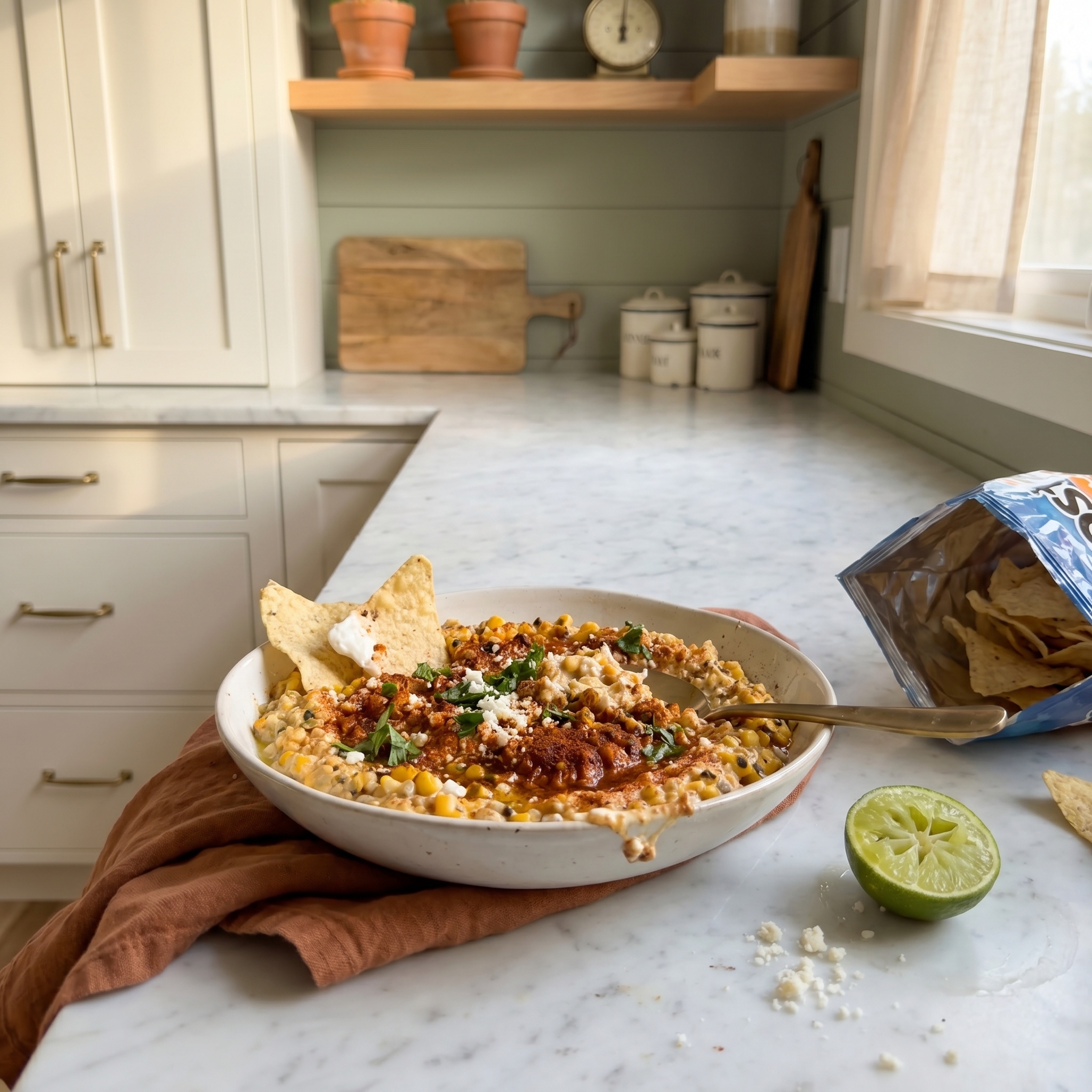
Addictive Grilled Corn Elote Dip: 9 Reasons This Crowd-Pleasing Tortilla Chip Appetizer Will Be the First Thing Gone at Every Party
It started with a street corn vendor at the farmers market in Nashville on a Saturday morning in August. He was doing a brisk business despite the heat — charred ears of corn slathered with a mayo-based sauce, rolled in cotija cheese, dusted with chili powder, finished with lime — and I stood in line for twenty-two minutes because the smell alone made waiting feel reasonable. I ate it standing at a picnic table with corn juice running down my elbow and declared it one of the best things I had eaten all summer. The drive home I did nothing but think about how to turn that experience into something I could bring to a party, something with the same flavors but in a format where nobody had to eat it off a cob in ninety-degree heat and end up with chili powder on their shirt. By the time I pulled into my driveway I had the recipe in my head. By that evening I had it in a skillet on the stove. By the following weekend I had brought it to a cookout and watched it disappear before anyone had touched the guacamole sitting directly next to it.
Have you ever had Mexican street corn — elote — and thought: this is too good to only eat once a summer at a food truck when the timing is right and the line isn’t too long? This grilled corn elote dip takes every flavor that makes elote so completely irresistible — the charred sweet corn, the creamy tangy sauce, the salty cotija cheese, the chili and lime — and transforms them into a warm, scoopable dip that you make in one skillet, serve with tortilla chips, and watch disappear from the appetizer table faster than anything else you’ve ever put in front of a crowd. It is bold and creamy and smoky and bright all at once, it comes together in twenty minutes, and it is genuinely one of the most requested recipes I make all summer long.
Whether you’re hosting a backyard cookout and need an appetizer that keeps people happy while the grill is still running, bringing a dish to a potluck where you want something more interesting than the standard seven-layer dip, or simply in possession of peak-season sweet corn and a craving that the farmers market vendor is not available to satisfy today — keep reading. This recipe delivers every single time, and I am going to walk you through every detail of making it exactly right.
Table of Contents
Why This Recipe Works
Elote dip works because it takes the most beloved elements of Mexican street corn — the char, the cream, the cheese, the heat, the citrus — and combines them into a warm, communal format that is infinitely more practical for a party table than actual corn on the cob. The charring of the corn is the non-negotiable step that separates a great elote dip from a merely good one; it creates flavor compounds in the corn that the raw or boiled version simply does not have, and those compounds carry through every bite of the finished dip.
- ✔ Ready in 20 minutes start to finish — Char the corn, make the sauce, combine in the skillet, warm through, serve. Twenty minutes of mostly hands-off work produces an appetizer that tastes like you spent your afternoon in the kitchen.
- ✔ That irreplaceable grilled corn char flavor — The direct contact between sweet corn kernels and a screaming hot grill or cast-iron skillet creates a caramelization and smokiness that is the entire soul of elote. This step cannot be skipped and cannot be substituted — it is the flavor difference between this dip and every other corn dip you’ve ever had.
- ✔ Crowd-stopping, conversation-starting presentation — A cast-iron skillet of warm elote dip brought to the table with cotija crumbled generously over the top, chili powder dusted across the surface, cilantro scattered over everything, and lime wedges arranged around the edge is one of the most visually striking appetizers you can set on a party table. People reach for it before they know what it is.
- ✔ All the elote flavors without the mess — Eating corn elote off a cob is delicious and completely impractical at a party. This dip delivers every single flavor note of the original in a format that goes on a chip, requires no paper towels, and produces no chili-powder-on-the-white-shirt incidents.
- ✔ Makes ahead and reheats beautifully — Make the full dip up to a day in advance, refrigerate, and reheat in a skillet or low oven before serving. The flavors deepen overnight and the finished dip is arguably better the next day than the day it was made.
- ✔ Works hot, warm, or at room temperature — Unlike many warm dips that become unpleasant when they cool, elote dip is genuinely good at any temperature — hot from the skillet, warm from the oven, or room temperature at the end of a party. This makes it one of the most practical appetizers for outdoor summer entertaining.
- ✔ Inexpensive to make for a crowd — Fresh corn in summer costs almost nothing. A block of cotija, a container of sour cream, a lime — this entire dip feeds twelve to fifteen people as an appetizer for well under ten dollars, which is the kind of crowd-to-cost ratio that makes a home cook look like a genius.
Let’s get into what you need to build this dip and talk about why every single ingredient is earning its place in the skillet.
What You’ll Need
This recipe serves 10 to 12 people as an appetizer with tortilla chips. Everything here is available at any grocery store, Walmart, or Trader Joe’s, and most of it is either already in your pantry or easy to find in the dairy and produce sections. The cotija cheese is the one ingredient that occasionally requires a dedicated search — look for it in the specialty cheese section, the Latin foods aisle, or at any Latin grocery store, where it will be very easy to find and very reasonably priced.
For the Charred Corn
- 6 ears of fresh sweet corn, shucked — about 4 to 4½ cups of kernels once cut from the cob; peak-season corn from a farmers market or roadside stand is dramatically better here than grocery store corn if you can find it
- Alternative: 2 bags (10 oz each) frozen corn kernels, thawed and patted very dry — works well when fresh corn isn’t in season; more on this below
- 1 tablespoon neutral oil for the grill or skillet
- ½ teaspoon kosher salt for the corn
For the Elote Sauce Base
- ½ cup mayonnaise — Hellmann’s or Duke’s; do not substitute light mayo here, the fat content matters for richness and texture
- ½ cup sour cream — full fat; Mexican crema is an excellent substitute and more authentic if you can find it
- 4 oz cream cheese, completely softened to room temperature — this is what gives the dip its body and prevents it from being too loose and runny
- Juice of 2 limes — about 3 tablespoons; plus extra lime wedges for serving
- Zest of 1 lime
- 3 garlic cloves, minced or grated on a microplane
- 1 teaspoon chili powder
- ½ teaspoon smoked paprika
- ½ teaspoon cumin
- ¼ teaspoon cayenne pepper — adjust to taste; this is where the heat comes from
- ½ teaspoon kosher salt
- ¼ teaspoon black pepper
For the Cotija and Toppings
- ¾ cup cotija cheese, crumbled — divided; half stirred into the dip, half crumbled over the top before serving
- ¼ cup fresh cilantro, roughly chopped
- 1 teaspoon chili powder for dusting over the finished dip
- ½ teaspoon smoked paprika for dusting
- Lime wedges for serving — at least 4 to 6 wedges
- Optional: a drizzle of hot sauce — Cholula or Valentina — over the finished dip
- Optional: sliced scallions scattered over the top for color and fresh onion bite
For Serving
- 1 large bag thick-cut tortilla chips — Mission Tortilla Strips or Tostitos Scoops are ideal; the thick-cut chips hold up to scooping a warm, chunky dip without breaking
- Alternative dippers: sliced jicama, cucumber rounds, or warm flour tortillas torn into wedges for a more authentic approach
Optional Add-Ins and Upgrades
- ½ cup diced roasted poblano pepper stirred into the dip for a mild, earthy heat that is very different from cayenne
- ½ cup black beans, drained and rinsed, stirred in with the corn for extra substance
- 1 jalapeño, seeded and finely minced, stirred into the sauce for fresh heat in addition to the dried spices
- A handful of diced avocado added right before serving for richness and color contrast
- 2 tablespoons of finely diced red onion added to the finished dip for a sharp, fresh bite
- A drizzle of hot honey over the finished dip — the sweet-heat combination against the charred corn is extraordinary
- Crumbled bacon scattered over the top alongside the cotija — smoky, salty, and irresistible
Substitutions
What if I can’t find cotija cheese? Cotija is a firm, dry, salty Mexican cheese that crumbles beautifully and doesn’t melt when heated — it’s the traditional cheese for elote and the correct choice for this recipe. If you genuinely cannot find it, feta cheese is the closest substitute in terms of texture and saltiness — use the same amount and crumble it the same way. Pecorino Romano finely grated is another good option. Parmesan works in a pinch but has a milder, less funky flavor. Queso fresco is softer and less salty than cotija but is a reasonable substitute if it’s what’s available — it’s also more commonly found in mainstream grocery stores. What you don’t want to do is substitute a melting cheese like cheddar or Monterey Jack, which changes the entire character of the dip.
Can I use frozen corn instead of fresh? Frozen corn works well with one critical preparation step — it must be completely thawed and then patted very dry with paper towels before it goes anywhere near a hot pan. Frozen corn that still has surface moisture will steam instead of char, and steamed corn does not develop the caramelization and smokiness that makes this recipe what it is. Once dry, frozen corn chars beautifully in a very hot cast-iron skillet. The flavor of peak-season fresh corn is noticeably better — sweeter and more complex — but frozen corn is a genuinely excellent option the rest of the year and significantly better than out-of-season fresh corn that was picked too early and traveled too far.
What if I need a lighter version? You can replace the full-fat sour cream with plain Greek yogurt — same volume, same function, more protein and less fat, slightly more tang that works well with the lime. The mayonnaise is harder to replace without changing the character of the dip significantly — light mayo works if you must, but the reduction in fat means the dip will be slightly thinner and less rich. The cream cheese is not negotiable; it provides the structure that keeps the dip from being a sauce, and there’s no low-fat alternative that performs the same function.
🧑🍳 Chef’s Note — Charring the Corn: The char on the corn is not aesthetic — it is functional. Direct, high-heat contact between the corn kernel surface and a very hot grill grate or cast-iron skillet triggers the Maillard reaction in the corn’s natural sugars, creating hundreds of flavor compounds that simply do not exist in raw, steamed, or boiled corn. The smoky, slightly bitter, deeply caramelized flavor of properly charred corn is the entire difference between elote dip and plain corn dip. Do not skip this step. Do not do it halfway. Get the pan or grill genuinely screaming hot, add the corn without oil first so it makes direct contact with the dry heat, and let it sit undisturbed long enough to develop real color and char — not just warmth.
🧑🍳 Chef’s Note — Cream Cheese Temperature: The cream cheese must be completely at room temperature before it goes into the sauce — pull it from the fridge at least an hour before you start. Cold cream cheese clumps and refuses to blend smoothly into the mayo and sour cream, leaving lumps in the finished dip that no amount of stirring will fully resolve. Room temperature cream cheese blends in 30 seconds into a smooth, cohesive sauce. This is the same principle as any cream cheese application — cold cream cheese is uncooperative and room temperature cream cheese is perfectly obedient. Give it the time it needs.
How to Make Grilled Corn Elote Dip — Step by Step
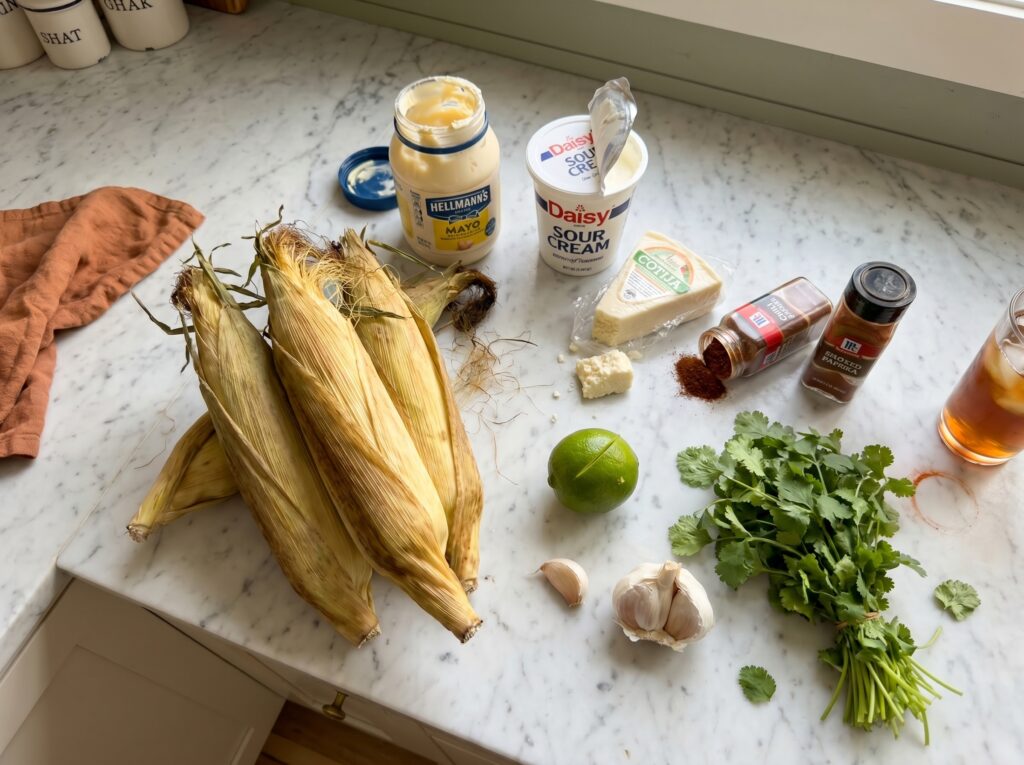
- Make the sauce base first and let it sit while you char the corn — this resting time matters. In a medium bowl, beat the softened cream cheese with a fork or hand mixer until completely smooth and lump-free. Add the mayonnaise, sour cream, lime juice, lime zest, minced garlic, chili powder, smoked paprika, cumin, cayenne, salt, and pepper. Stir everything together until completely combined and smooth — the sauce should look uniform and slightly glossy with no streaks of plain cream cheese visible. Taste it aggressively — it should be tangy, garlicky, slightly spicy, and bright from the lime. Adjust the cayenne for heat and the lime for brightness. Set it aside and let the flavors meld while you char the corn. A sauce that has sat for 10 minutes tastes noticeably more cohesive than one used immediately.
💡 Pro Tip: Grate the garlic on a microplane rather than mincing it with a knife. Microplane-grated garlic is significantly finer and more evenly distributed throughout the sauce than knife-minced garlic — it dissolves into the cream cheese and mayo base rather than leaving noticeable garlic pieces in every other bite. The flavor is also slightly more mellow and integrated when grated this fine, which produces a garlic flavor that is present throughout the dip rather than concentrated in occasional chunks. A microplane is a ten-dollar kitchen tool that improves this dip meaningfully and almost every other savory recipe you make.
- Char the corn on the grill or in a very hot cast-iron skillet — this is the most important step in the entire recipe. If grilling: brush the shucked ears lightly with oil, place directly over high heat, and grill turning every 3 to 4 minutes until deeply charred in multiple places around the circumference — about 12 to 15 minutes total. The char should be genuinely dark — approaching black in the most caramelized spots — not just lightly golden. Let the ears cool slightly before cutting the kernels from the cob with a sharp chef’s knife. If using a cast-iron skillet: heat the dry skillet over very high heat for 3 full minutes until it is genuinely smoking — this is not the time for patience. Add the corn kernels in a single layer without oil, press them flat with a spatula, and cook completely undisturbed for 2 to 3 minutes until deeply charred on the contact side. Toss and repeat until at least 30 to 40 percent of the corn has visible char. Work in batches if needed — crowded corn steams instead of chars.
- While the corn cools slightly, warm the sauce base in a large cast-iron skillet or heavy-bottomed pan over medium-low heat. Add the sauce to the skillet and stir gently for about 2 minutes until it’s warmed through and just beginning to loosen and bubble slightly at the edges — you’re not cooking it aggressively, just warming it enough that it becomes glossy and more fluid. Warming the sauce before adding the corn ensures the finished dip is uniformly hot rather than having warm corn sitting in a cold sauce. Don’t let it go above a gentle simmer or the mayo can break and the sauce will look slightly greasy.
💡 Pro Tip: Before cutting the kernels from the grilled ears, stand each cob upright in a large bowl — the bowl catches all the kernels and the corn milk that sprays when you cut, which you want to keep and add to the dip. Hold the tip of the cob firmly, run a sharp chef’s knife straight down the sides, rotating the cob as you go. Don’t cut too close to the cob — stop about an eighth of an inch from the base so you keep the kernel intact rather than shaving off just the tops. After cutting, run the back of the knife down the stripped cob to squeeze out the corn milk directly into the bowl — that milky, starchy liquid is sweet and flavorful and enriches the finished dip.
- Add the charred corn kernels and half the cotija to the warm sauce in the skillet and stir to combine. Fold the corn into the sauce gently until every kernel is coated in the creamy, spiced base — you want to see the char on the corn visible against the pale sauce rather than having it disappear entirely into the mixture. Stir in half the cotija and let it incorporate for about 30 seconds over the heat. Taste the dip at this point and adjust — more lime if it needs brightness, more cayenne if it needs heat, more salt if it tastes flat. The dip should be warm, deeply flavored, slightly chunky from the corn, and have that unmistakable elote combination of sweet, creamy, tangy, spicy, and smoky all present simultaneously.
- Transfer to your serving vessel if not serving directly from the skillet — a cast-iron skillet is the ideal serving vessel for this dip. Serving the dip directly from the cast-iron skillet it was made in is the best approach — the skillet retains heat exceptionally well and keeps the dip warm on the table for a full 30 to 40 minutes, which is usually enough time for it to be completely gone. If you’re transporting it, transfer to a serving bowl that’s been warmed with hot water first and dried — a warm bowl keeps the dip at a good temperature significantly longer than a cold one.
- Finish with the toppings immediately before serving — this is the step that transforms a good dip into a stunning one. Crumble the remaining cotija generously over the surface of the warm dip — it should cover the top in a visible, generous layer rather than a light dusting. Dust chili powder and smoked paprika over the cotija through a small sieve or from a spoon held high over the bowl for even distribution. Scatter the fresh cilantro over everything. Drizzle Cholula or Valentina hot sauce over the top in a loose pattern if using. Arrange lime wedges around the edge of the skillet or bowl. The presentation at this stage — warm corn dip, white cotija, red chili powder, green cilantro, bright lime — is one of the most visually striking appetizer presentations in the summer entertaining playbook.
💡 Pro Tip: Set the bag of tortilla chips next to the skillet rather than pouring them into a separate bowl — let people pull chips straight from the bag and scoop directly from the skillet at the table. This keeps the chips from getting soggy sitting next to a warm dip, keeps the presentation focused on the dip itself, and creates a more casual, interactive appetizer experience that feels appropriately relaxed for a summer cookout. Tostitos Scoops are the superior chip here — the cup shape holds a generous scoop of the dip without it sliding off before it reaches a mouth.
- Serve immediately while the dip is warm, with tortilla chips and fresh lime wedges alongside. Squeeze one of the lime wedges over the entire surface of the dip right before people start scooping — this final hit of fresh lime juice brightens everything and adds an aromatic citrus note that the lime juice already in the sauce doesn’t fully replicate. Encourage people to squeeze additional lime over their own chips as they go — the lime is a crucial part of the elote experience and more is better.
- Keep the dip warm throughout the serving period if possible. A cast-iron skillet set on a trivet on the table retains heat for 30 to 40 minutes. For longer serving periods, set the skillet on a small warming tray or candle warmer designed for fondue or dip presentation — any party supply store or Walmart carries these inexpensively and they are genuinely useful for any warm dip appetizer. Alternatively, return the dip to low heat on the stove for 2 minutes every 30 minutes to refresh the temperature — it takes thirty seconds and keeps the dip warm and fresh-tasting throughout the entire party.
- Taste and refresh the dip as it sits if it seems to flatten in flavor. Warm dips that sit on a table for any length of time can lose some of their brightness as the acid in the lime juice mellows with heat and time. If the dip starts to taste a little flat after 20 minutes on the table, squeeze half a fresh lime over the surface and give it a gentle stir — the fresh acid immediately lifts and brightens every other flavor in the bowl and makes the dip taste like it was just made. This thirty-second refresh extends the life of the dip on the party table significantly.
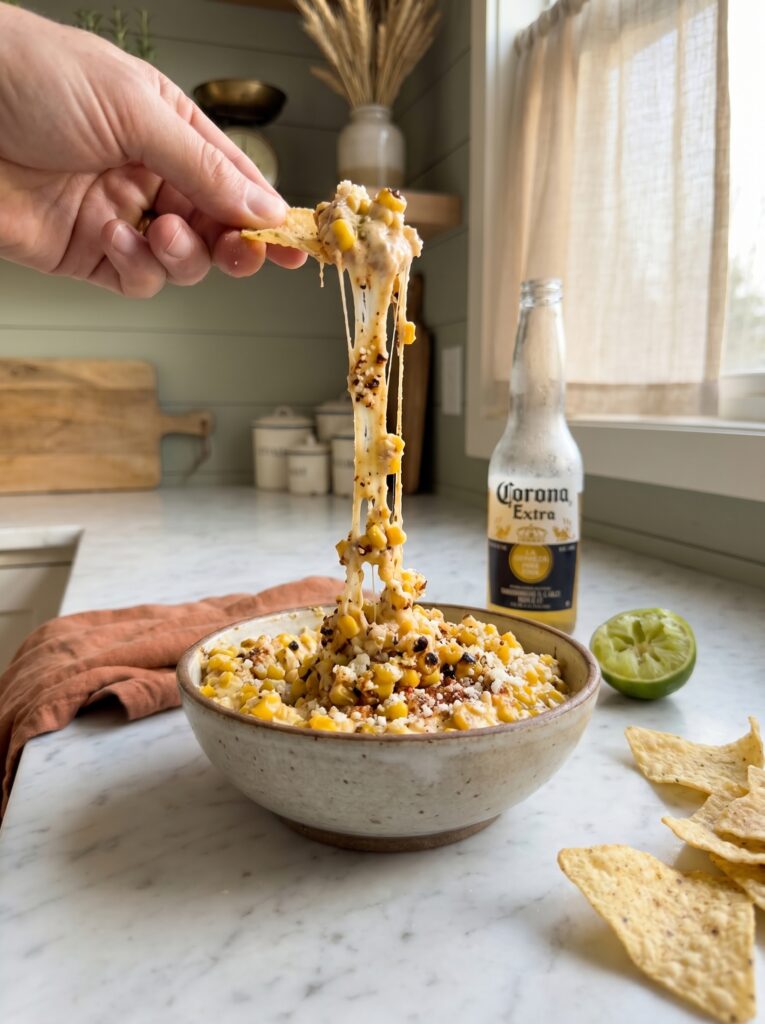
Twenty minutes from cold corn to finished dip on the table, carried to the party in the same cast-iron skillet it was made in, topped with cotija and chili powder and cilantro and lime — this is the appetizer that people circle back to the table for, the one that gets requested at the next party before the current one is over, the one that makes you look like you spent more time on it than you did. That is exactly what a great summer appetizer should do.
How to Serve It
This grilled corn elote dip is one of the most versatile summer appetizers in a home cook’s arsenal — festive enough for a formal backyard dinner party, casual enough for a Tuesday night watching the game, impressive enough to bring to any cookout where you want to contribute something people will remember. Here are five ways to bring it to the table.
- ☕ Classic Cookout Appetizer: Bring the whole cast-iron skillet to the appetizer table, set it on a trivet, surround it with a bag of Tostitos Scoops and a pile of lime wedges, and step back. This is the format that produces the fastest disappearing act — a warm, beautifully topped skillet of elote dip on an outdoor table next to people who are already warm and hungry from the summer heat is one of the most irresistible appetizer presentations imaginable. Have a second batch ready in the kitchen because the first one will not last.
- 🥞 Game Day Spread Anchor: Elote dip is the centerpiece anchor for a full game day appetizer spread — set the warm skillet in the center of the table surrounded by Tostitos Scoops, sliced jicama sticks, cucumber rounds, and warm flour tortilla wedges for scooping. Add small bowls of guacamole, pico de gallo, and sour cream alongside as supplementary dips and let people build their own combinations. The elote dip is the most popular thing on the table every time — everything else exists in its orbit.
- 🌸 Dinner Party First Course: Serve the dip in individual small cast-iron cocottes or ramekins as a plated first course — about ¼ cup per person — with three or four thick-cut tortilla chips arranged upright in the dip and a single lime wedge on the side. Dust each individual portion with chili powder and a small scatter of cotija and cilantro right before they go to the table. This individual plating format is elegant and impressive for a sit-down dinner and keeps the appetizer course feeling intentional rather than casual — the same flavors, a more formal presentation.
- 📚 Make-Ahead Potluck Contribution: Make the full dip the night before, refrigerate in the skillet covered tightly with foil, and reheat on the stove over medium-low heat for 5 to 6 minutes while stirring gently before adding the toppings at the party. This is the ideal potluck contribution — it travels safely at room temperature in a covered skillet, reheats in minutes on any available burner, and arrives looking and tasting like you made it that morning. Add the cotija, chili powder, cilantro, and lime right before setting it out so everything looks fresh and beautiful.
- 🎃 Tacos and Elote Dip Dinner: Serve the elote dip as a warm side sauce alongside a taco bar — spoon it over grilled chicken tacos, use it as a base sauce for shrimp tacos, or serve it as the dipping component for a carne asada platter. The dip is substantial enough to function as a sauce rather than just an appetizer, and the combination of warm elote dip, fresh pico, avocado, and good tortillas is one of the best casual dinner formats of the entire summer. Set the skillet on the table alongside everything else and let people use it however they want.
However you serve it, always add the cotija, chili powder, cilantro, and lime garnishes right before the dip goes to the table rather than before any refrigeration or transport — everything stays fresher, brighter, and more visually stunning when applied at the last moment.
Storage & Make-Ahead Tips
Finished dip — Refrigerator: Store leftover elote dip in an airtight container in the refrigerator for up to 4 days. The flavors deepen and meld overnight in a way that makes day-two elote dip arguably better than the day it was made — the lime and spices integrate further into the cream base and the corn flavor becomes more concentrated. Reheat in a skillet over medium-low heat, stirring gently, for 4 to 5 minutes until warmed through. Add a squeeze of fresh lime juice after reheating to refresh the brightness that mellows slightly during storage. Do not microwave if you can avoid it — the mayo and cream cheese can separate unevenly in the microwave, creating a slightly greasy texture that a gentle stovetop reheat prevents.
Charred corn alone — Refrigerator and Freezer: The charred corn kernels can be prepared up to 2 days in advance and stored in an airtight container in the refrigerator — this is the most time-consuming step in the recipe, so doing it ahead makes the day-of assembly extremely fast. Charred corn also freezes well for up to 3 months in a sealed freezer bag — freeze flat in a single layer first before transferring to a bag so the kernels don’t freeze into a solid block. Having a bag of pre-charred corn in the freezer means elote dip is a 10-minute recipe any time you want it.
Full assembled dip — Make up to 24 hours ahead: Make the complete dip — corn charred, sauce made, combined and warmed in the skillet — up to 24 hours before the party. Let it cool completely, then cover the skillet tightly with foil and refrigerate. The day of the party, remove from the fridge 30 minutes before you plan to reheat it, then warm over medium-low heat for 5 to 6 minutes, stirring occasionally, until heated through. Add all toppings fresh right before serving. The make-ahead dip often tastes better than the freshly made version — the overnight rest gives the spices and lime time to fully penetrate the cream base.
📅 Make-Ahead Tip: Char the corn on Friday evening after dinner while the grill or skillet is already hot from cooking — it takes 12 minutes on the grill and requires almost no attention. Cut the kernels from the cobs, store in a container in the fridge, and make the sauce base in the same session. Saturday party prep is reduced to warming the sauce, adding the corn, heating through, and adding toppings. Fifteen minutes of Friday work makes Saturday completely effortless, and that is always the goal with appetizer prep.
Leftover dip — creative second-day uses: Leftover elote dip is one of the most useful refrigerator ingredients of summer. Spoon it over scrambled eggs for one of the best breakfasts of the season. Use it as a sauce for grilled chicken tacos — warm it slightly and spoon directly over the taco filling. Stir it into pasta with a splash of pasta water for a creamy corn pasta that is extraordinary. Spread it on a quesadilla before grilling. Mix it with shredded rotisserie chicken and stuff into baked potatoes. There is no wrong application for leftover elote dip and it should never be thrown away.
Helpful Tips & Common Mistakes
These are the five mistakes that most consistently prevent elote dip from being as extraordinary as it should be — and every fix is simple, fast, and makes an immediately noticeable difference in the finished result.
✗ Mistake: Sautéing the corn over medium heat with butter and calling it charred, then wondering why the dip doesn’t taste like the elote from the street cart.
✓ Fix: The pan or grill must be genuinely, aggressively hot — significantly hotter than anything you’d use for general sautéing. Cast iron heated empty over high heat for 3 full minutes before the corn goes in, or a grill running at full heat — that is the temperature required for real Maillard reaction charring on corn. Medium heat produces tender, cooked corn. Very high dry heat produces charred, caramelized, smoky corn that tastes like elote. The difference is enormous and there is no shortcut.
✗ Mistake: Adding too much corn to the skillet at once and ending up with steamed, softened corn instead of charred corn because the kernels are crowded and releasing steam rather than making direct contact with the hot pan surface.
✓ Fix: Char the corn in batches — one to two ears’ worth of kernels at a time in a standard 12-inch cast-iron skillet. The kernels need to be in a single layer with space between them so the moisture they release can evaporate rather than pooling and creating steam. A crowded pan full of corn will steam to tenderness in 3 minutes. A properly spaced pan with room for moisture to escape will char in 2 to 3 minutes per batch. It takes longer in batches but the result is incomparably better.
✗ Mistake: Heating the assembled dip over high heat to speed up warming and ending up with a sauce that has broken — separated and greasy-looking — from the emulsification of the mayo and cream cheese being disrupted.
✓ Fix: Warm the sauce base and combined dip over medium-low heat only — never above a gentle simmer. Mayo-based sauces break when overheated; the fat separates from the emulsion and the sauce goes from creamy and cohesive to greasy and split. Medium-low heat and 4 to 5 minutes of patient warming produces a dip that is hot, glossy, and perfectly smooth. High heat produces a dip that looks wrong and feels wrong in the mouth. Low and slow is the only setting for warming this dip.
✗ Mistake: Skipping the cotija cheese entirely because it’s hard to find and substituting shredded cheddar or Monterey Jack instead, and ending up with a dip that tastes like a pleasant corn cheese dip rather than an elote dip.
✓ Fix: Seek out the cotija — most Walmart stores carry it in the specialty cheese section, any Latin grocery store will have it, and many mainstream grocery stores stock it near the queso fresco. Cotija is dry, salty, and doesn’t melt when heated — it crumbles over the warm dip and stays as visible, distinct pieces of cheese that provide little bursts of salty, funky flavor in every bite. A melting cheese like cheddar disappears into the dip and adds richness but not the distinct cotija character that is central to the elote experience. If you absolutely cannot find it, feta is the most acceptable substitute.
✗ Mistake: Making the sauce without tasting and adjusting it before the corn goes in, and pulling a finished dip from the heat that is either too flat, too sour, or too spicy with no easy way to fix it without starting over.
✓ Fix: Taste the sauce base aggressively before the corn goes anywhere near it. The sauce should taste almost too bold on its own — bright from the lime, garlicky, spicy, with a good hit of salt — because it’s about to be diluted by three to four cups of corn. A sauce that tastes perfectly balanced on its own will taste flat once the corn is added. Taste, adjust, taste again. This is the step where you control the entire flavor direction of the finished dip, and it takes thirty seconds.
Recipe Variations
The elote dip formula — charred corn, creamy spiced base, cotija, lime — is a framework that adapts beautifully to different flavor directions. Here are four variations that are all genuinely worth making.
🧀 Baked Elote Dip with Pepper Jack: Transfer the assembled warm dip to an oven-safe dish, top with a generous layer of shredded pepper jack cheese and an extra crumble of cotija, and bake at 375°F for 12 to 15 minutes until bubbly and golden on top. Finish under the broiler for 2 minutes for a deeply browned, slightly crispy cheese crust over the warm corn dip underneath. This baked version is richer and more substantial than the stovetop version — the melted pepper jack adds a stretchy, gooey cheese pull when you dig in that makes it feel more like a queso-elote hybrid than a traditional dip. Serve with thick-cut tortilla chips and cold beer and call it the best thing you’ve ever brought to a tailgate.
🌶️ Spicy Chipotle Elote Dip: Add 2 minced chipotle peppers in adobo sauce plus 1 tablespoon of the adobo sauce to the cream cheese base in place of the cayenne. Chipotle brings a smoky, complex heat that is completely different from the clean heat of cayenne — it deepens the overall flavor of the dip and creates an earthy, smoky backbone that makes the corn and lime flavors stand out even more vividly. Finish with a drizzle of the adobo sauce over the top instead of hot sauce. This variation is the one for people who specifically love smoky flavors and want the heat to build slowly rather than hit immediately.
🥓 Bacon and Jalapeño Elote Dip: Cook 4 slices of thick-cut bacon until crispy, drain on paper towels, and crumble roughly — reserve the bacon fat. Char the corn in the reserved bacon fat instead of oil for a deeply smoky, porky baseline flavor that changes the entire character of the dip. Stir the crumbled bacon and 1 finely minced seeded jalapeño into the finished dip along with the cotija. Top with additional bacon crumbles and sliced fresh jalapeño rings alongside the usual cotija and cilantro. This is the most indulgent version of elote dip and the one that people who claim they don’t even like corn dip cannot stop eating.
🌿 Lighter Greek Yogurt Elote Dip: Replace the mayonnaise entirely with plain full-fat Greek yogurt and use light sour cream or additional Greek yogurt in place of the full-fat sour cream. The Greek yogurt version is tangier and brighter than the mayo version — the higher acidity makes the lime and spices stand out more vividly — and significantly lower in fat while maintaining the creamy, cohesive texture the dip needs. This variation is the one for summer entertaining where you want something that feels a little lighter without sacrificing flavor. It is not diet food — it is genuinely, intentionally delicious — just made with a different creamy base that happens to have more protein and less fat than the original.
Final Thoughts
That twenty-two minute wait in the Nashville farmers market line in August heat was completely worth it, and this elote dip is the recipe that lets you have that experience any time you want it, for any number of people, in your own kitchen in twenty minutes with a bag of tortilla chips on the side. Grilled corn elote dip works because it respects what makes elote so extraordinary in the first place — the char, the creaminess, the salt, the heat, the lime — and translates all of it into a format that is made for sharing, made for summer, and made for the appetizer table where something genuinely memorable is always the goal. Make it once and it becomes a permanent fixture in your summer entertaining rotation. Make it twice and people start requesting it by name before you’ve even confirmed the party date.
Make this for your next cookout and let me know what happens when you set the skillet on the table — leave a ⭐⭐⭐⭐⭐ rating below, tag @zippydishes on Pinterest with your beautiful charred corn dip, and share this with every home cook you know who is still bringing store-bought salsa to parties when they could be bringing this instead. The upgrade is twenty minutes and a cast-iron skillet. It is absolutely worth it. 🌽🔥
Frequently Asked Questions
What does grilled corn elote dip taste like?
It tastes like Mexican street corn in dip form — which is exactly as good as that sounds. The charred sweet corn provides a smoky, caramelized sweetness that is the backbone of the whole dip, the creamy base of mayo, sour cream, and cream cheese carries that corn flavor in a rich, tangy, cohesive sauce, and the cotija cheese adds little bursts of salty, slightly funky flavor throughout. The lime juice and zest cut through all that richness with a bright, citrusy sharpness that keeps every bite feeling fresh, and the chili powder and cayenne add a warmth that builds slowly rather than overwhelming. The overall experience is simultaneously bold and balanced — you taste the corn, the cream, the cheese, the spice, and the lime in every single bite, and none of those elements is missing or muted. It is one of the most fully realized flavor combinations in all of summer appetizer cooking.
Can I make elote dip without a grill — just using the stovetop?
A cast-iron skillet on the stovetop over very high heat produces excellent results — arguably comparable to the grill for this application. The key variables are the same regardless of method: the pan must be genuinely screaming hot, the corn must be in a single uncrowded layer, and it must sit undisturbed long enough to develop real char rather than just gentle browning. Heat your largest cast-iron skillet over high heat for 3 full minutes before any corn touches it — the pan should be so hot that a drop of water evaporates immediately on contact. Add the dry corn kernels in a single layer and leave them completely alone for 2 to 3 minutes until you can see and smell real charring at the contact points. Toss and repeat. Work in batches without exception. The result is deeply charred, smoky corn that is indistinguishable from grill-charred corn in the finished dip.
What is cotija cheese and where do I find it?
Cotija is a firm, aged, dry Mexican cheese named after the city of Cotija in Michoacán, Mexico. It has a salty, slightly tangy, mildly funky flavor and a dry, crumbly texture — it behaves more like feta or Pecorino Romano than like American cheddar, and it does not melt when heated, which is why it crumbles beautifully over warm dishes without disappearing into them. It is the traditional and correct cheese for elote and for this dip. You can find it at most Walmart stores in the specialty cheese section, at any Latin grocery store where it will be prominently displayed, at Trader Joe’s seasonally, and at most mainstream grocery stores either in the specialty cheese case or the Latin foods section near the queso fresco. Buy the block version and crumble it yourself rather than the pre-crumbled version if possible — the texture and flavor of freshly crumbled cotija is noticeably better.
How spicy is this dip — can I adjust the heat level?
As written, the dip has a moderate heat level — you will feel the warmth from the cayenne and chili powder building as you eat, but it should not be aggressively spicy or uncomfortable for most adults. For a milder version, reduce the cayenne to ⅛ teaspoon or omit it entirely and rely on the chili powder alone for a hint of warmth — the chili powder adds complexity and color without significant heat. For a spicier version, increase the cayenne to ½ teaspoon and add a finely minced seeded jalapeño to the sauce base. For the spiciest version, use 2 chipotle peppers in adobo instead of cayenne — the chipotle adds smoky, deep heat that is more complex than cayenne and builds more slowly. Always taste the sauce before the corn goes in and make your heat adjustments at that stage when they’re easiest to control.
Can I make this dip ahead of time for a party?
This is one of the best make-ahead party appetizers in existence. The complete dip can be made up to 24 hours in advance — char the corn, make the sauce, combine everything, warm through, and let it cool completely before covering and refrigerating. The day of the party, bring the dip to room temperature for 30 minutes, then reheat gently on the stovetop over medium-low heat for 5 to 6 minutes, stirring occasionally. Add all the toppings fresh right before serving. The make-ahead version often tastes better than the same-day version because the overnight rest allows the spices, lime, and garlic to fully penetrate the cream base. Charring the corn the day before is also a great time-saving option — store the charred kernels separately and add them to the warm sauce base on the day of the party.
What are the best chips for scooping elote dip?
Tostitos Scoops are the clear winner for elote dip specifically — the deep cup shape holds a generous spoonful of the chunky corn dip securely without it sliding off before it reaches your mouth, and the corn flavor of the chip complements the corn dip rather than competing with it. Mission Tortilla Strips are a good alternative for their thickness and sturdy texture that doesn’t break under the weight of a heaped scoop. Standard thin tortilla chips like the basic Tostitos rounds work but require more care with scooping and break more frequently with a dense dip. For a more authentic approach, warm thick corn tortillas briefly in a dry skillet and tear them into irregular wedges — the fresh tortilla flavor against the elote dip is closer to the actual street corn experience and is genuinely wonderful. Jicama sticks and cucumber rounds work beautifully for people avoiding chips and provide a cool, crunchy contrast to the warm dip.
Is elote dip served hot, warm, or cold?
Elote dip is best served warm to hot — the cream cheese and mayo base is creamiest and most cohesive at a warm temperature, the corn flavors are more aromatic and vivid when warm, and the cotija softens very slightly against the warm dip in a way that is more appealing than against a cold base. That said, this dip is genuinely good at room temperature too — it doesn’t become unpleasant as it cools the way some cream-based dips do, partly because the cream cheese gives it structural stability. Cold from the refrigerator it is significantly less appealing — the fats in the mayo and cream cheese firm up and the texture becomes dense and slightly greasy-feeling rather than creamy and scoopable. Always serve warm, keep warm during the party if possible, and reheat briefly if it cools below room temperature during a long serving period.
What do I do with leftover elote dip the next day?
Leftover elote dip is a gift to your next several meals. Reheat it gently in a skillet and spoon it over scrambled eggs or an omelet for a breakfast that is one of the best things you can eat on a summer morning. Use it as a taco sauce — warm it slightly and spoon generously over grilled chicken or shrimp tacos in place of the usual toppings. Stir it into hot pasta with a ladleful of pasta water for a creamy corn pasta sauce that comes together in 5 minutes. Spread a thin layer on a flour tortilla with some shredded chicken and additional cheese and grill it as a quesadilla until golden and crispy. Mix it with rotisserie chicken and stuff it into a halved baked potato topped with extra cotija and scallions. There is no wrong use for leftover elote dip, and the fact that it exists in your refrigerator the day after a party is one of the best arguments for always making a double batch.