

Easy Eggs Benedict Casserole for the Perfect Make-Ahead Brunch
Imagine waking up on a lazy Sunday morning and sliding a dish into the oven that delivers all the rich, indulgent flavors of eggs Benedict — without any of the last-minute stress of poaching eggs or whisking hollandaise sauce. That’s the magic of this eggs Benedict casserole. You prep it the night before, pop it in the oven in the morning, and serve up restaurant-quality brunch while you’re still in your pajamas sipping coffee.
Can I ask you something? Have you ever wanted to make eggs Benedict for a crowd but felt overwhelmed by all the timing and technique involved? Because that’s exactly how I used to feel until I discovered this casserole version. The buttery English muffins, the savory Canadian bacon, those perfectly cooked eggs, and that creamy hollandaise-style sauce — it’s all here, just way easier and feeds 8–10 people without breaking a sweat.
Whether you’re hosting Easter brunch, planning a Mother’s Day breakfast, need a Christmas morning showstopper, or just want to impress weekend guests, this make-ahead casserole is your answer. Keep reading — I’m sharing every tip and trick to make this foolproof brunch recipe turn out perfectly every single time.
Table of Contents
Why This Recipe Works
This isn’t just a random egg casserole — this is eggs Benedict reimagined for easy entertaining. Here’s why this eggs Benedict casserole is about to become your favorite brunch recipe:
- ✔ Prep the night before — assemble it, refrigerate, and bake in the morning
- ✔ No poaching eggs or making hollandaise — all that finicky work is eliminated
- ✔ Feeds 8–10 people easily — perfect for holiday gatherings and brunch parties
- ✔ All the classic flavors — tastes just like traditional eggs Benedict but so much easier
- ✔ Impressive presentation — looks fancy but requires minimal effort
- ✔ Customizable — swap in ham, bacon, or even smoked salmon
- ✔ Minimal morning work — just 5 minutes to make the sauce while it bakes
Trust me, once you serve this at your next brunch and watch everyone go back for seconds, you’ll be making it for every special occasion. Now let’s talk about what you’ll need.
What You’ll Need
For the Casserole
- 6 English muffins, split and cut into 1-inch cubes
- 12 oz Canadian bacon, diced (or ham)
- 8 large eggs
- 2 cups whole milk
- 1 cup heavy cream
- 1 teaspoon Dijon mustard
- ½ teaspoon salt
- ¼ teaspoon black pepper
- ¼ teaspoon cayenne pepper (optional)
- ¼ teaspoon paprika
- 2 tablespoons butter, melted (for greasing pan)
For the Easy Hollandaise Sauce
- 4 large egg yolks
- 2 tablespoons fresh lemon juice
- ½ cup (1 stick) unsalted butter, melted and hot
- Pinch of cayenne pepper
- Salt to taste
For Serving
- Fresh chives or parsley, chopped
- Paprika for garnish
- Extra black pepper
- Optional: cherry tomatoes, avocado slices
Substitutions
No Canadian bacon? Regular ham, crispy bacon pieces, or even turkey bacon work great. Want a fancy twist? Use smoked salmon instead for a Benedict Florentine vibe. No English muffins? Thick-sliced white bread, sourdough, or croissants make delicious substitutes — just cube them the same way. Dairy-free? Swap the milk and cream for unsweetened almond milk or oat milk, though the texture will be slightly less rich. For a lighter version, use half-and-half instead of heavy cream.
Chef’s Note — English Muffins: English muffins are key here because their nooks and crannies soak up the egg mixture perfectly without getting mushy. Use regular or whole wheat — both work beautifully. Slightly stale English muffins actually work even better than fresh because they absorb the custard without falling apart. Leave them out overnight or toast them lightly before cubing.
Chef’s Note — The Overnight Soak: Letting the assembled casserole sit in the fridge overnight is essential! This gives the English muffin cubes time to absorb all that creamy egg mixture, resulting in a perfectly custardy texture instead of dry bread floating in eggs. Don’t skip this step — it’s what makes the casserole amazing.
Got everything ready? Perfect — let’s build this make-ahead brunch masterpiece.
How to Make Eggs Benedict Casserole — Step by Step
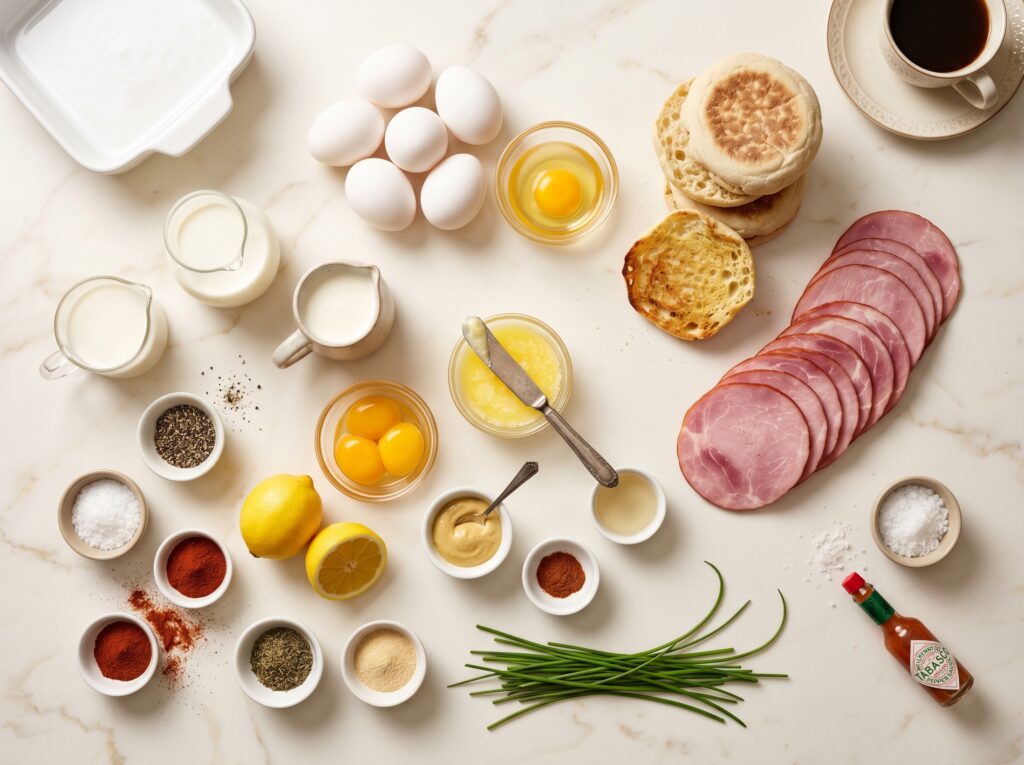
- Prep your baking dish. Grease a 9×13-inch baking dish with the melted butter, making sure to coat the bottom and sides well. This prevents sticking and makes cleanup easier the next morning.
- Layer the English muffins and bacon. Spread the cubed English muffins evenly across the bottom of the prepared baking dish. Scatter the diced Canadian bacon (or ham) over the top of the English muffin pieces, distributing it evenly so every bite gets some meat.
- Make the egg custard mixture. In a large mixing bowl, whisk together the eggs, whole milk, heavy cream, Dijon mustard, salt, black pepper, cayenne (if using), and paprika until completely smooth and well combined. The mixture should be pale yellow and slightly frothy.
💡 Pro Tip: Whisk the egg mixture really well to break up the eggs completely. Any streaks of egg white will create uneven texture in the baked casserole. Aim for a smooth, uniform custard.
- Pour over the English muffins. Slowly pour the egg mixture evenly over the English muffin cubes and Canadian bacon. Use a spatula or your hands to gently press down on the bread, making sure every piece gets soaked with the custard. Don’t be shy — really press it down so nothing stays dry.
- Cover and refrigerate overnight. Cover the baking dish tightly with plastic wrap or aluminum foil and refrigerate for at least 8 hours, or up to 24 hours. This overnight soak is crucial — it allows the English muffins to fully absorb the egg mixture and creates that perfect custardy texture.
- Bring to room temperature and preheat. The next morning, remove the casserole from the fridge and let it sit at room temperature for 20–30 minutes while you preheat your oven to 350°F. This ensures even baking — cold dishes straight from the fridge can have overcooked edges and undercooked centers.
💡 Pro Tip: Use this time to make your coffee, set the table, and get everything else ready. The casserole does all the work while you relax!
- Bake uncovered. Remove the cover and bake uncovered for 45–55 minutes, until the top is golden brown and the center is set. A knife inserted in the center should come out mostly clean, and the edges should be puffed and slightly crispy. The internal temperature should reach 160°F.
- Make the easy hollandaise while it bakes. About 10 minutes before the casserole is done, make your hollandaise sauce. In a blender, combine the egg yolks and lemon juice. Blend on medium speed while slowly drizzling in the hot melted butter in a thin stream. The mixture will thicken and become creamy. Add cayenne and salt to taste. Keep warm until serving.
- Let it rest before serving. Remove the casserole from the oven and let it rest for 10 minutes. This allows it to set up properly so you get clean, beautiful slices instead of a soupy mess. The residual heat will finish cooking everything perfectly.
💡 Pro Tip: If you’re nervous about making hollandaise, you can use a good-quality store-bought version or even make a simple cheese sauce with butter, flour, milk, and parmesan. It won’t be traditional, but it’s still delicious!
- Drizzle with hollandaise and serve. Cut the casserole into squares, drizzle generously with the warm hollandaise sauce, and garnish with fresh chives or parsley and a sprinkle of paprika. Serve immediately while it’s hot and the sauce is creamy.
That’s it — now let’s talk about all the delicious ways to serve this stunning brunch dish.

How to Serve It
This eggs Benedict casserole is already a complete dish, but here are some ways to round out your brunch spread:
- 🥂 Classic brunch spread — serve with mimosas, fresh fruit salad, and crispy hash browns
- 🍓 Easter or Mother’s Day brunch — pair with asparagus, fresh berries, and pastries for an elegant meal
- 🎄 Christmas morning breakfast — serve alongside cinnamon rolls, bacon strips, and hot coffee
- 🥗 Light and fresh — add a simple arugula salad dressed with lemon vinaigrette to cut the richness
- 🍅 Garden additions — top with roasted cherry tomatoes, sautéed spinach, or avocado slices
- 🥐 Continental style — serve with fresh croissants, butter, jam, and a selection of fresh juices
However you serve it, this casserole is guaranteed to impress. It looks beautiful, tastes incredible, and best of all — you did most of the work the night before! Now let’s cover storage and make-ahead tips.
Storage & Leftovers
Refrigerator: Store leftover casserole covered in the fridge for up to 3 days. The hollandaise sauce keeps separately in an airtight container for up to 2 days, though it may need to be gently rewhisked or reheated to restore the creamy texture.
Freezer: You can freeze the unbaked assembled casserole (without the hollandaise) for up to 2 months. Wrap it tightly in plastic wrap and then aluminum foil. Thaw overnight in the fridge before baking as directed. Don’t freeze baked casserole — the texture of the eggs changes and becomes rubbery.
Counter: Don’t leave the casserole out at room temperature for more than 2 hours. Egg dishes need to stay refrigerated for food safety.
Make-Ahead Tip: This is THE ultimate make-ahead brunch recipe. Assemble the entire casserole the night before (or even two nights before) and keep it covered in the fridge. In the morning, just let it come to room temp for 20 minutes, slide it in the oven, and make the hollandaise while it bakes. You can even prep the hollandaise ingredients the night before (separate the eggs, measure the lemon juice, melt and store the butter) so it comes together in 2 minutes. This means you can serve an impressive, restaurant-quality brunch with almost zero morning stress. I make this for every holiday breakfast because it lets me actually enjoy the morning with my family instead of being stuck in the kitchen.
Reheating:
— Oven: Reheat individual portions covered with foil at 325°F for 15–20 minutes until warmed through. This is the best method for maintaining texture.
— Microwave: Heat individual portions for 1–2 minutes on 50% power to avoid overcooking the eggs. They’ll be softer but still tasty.
— Hollandaise: Gently rewarm in a double boiler or microwave in 10-second bursts, whisking between each until smooth and warm.
Coming up next — the mistakes that can ruin this casserole, and exactly how to avoid them.
Helpful Tips & Common Mistakes
I’ve made this casserole dozens of times for holidays and brunches. Here are the mistakes people make, and how to get perfect results:
✗ Mistake: Skipping the overnight refrigeration to save time.
✓ Fix: The overnight soak is non-negotiable! This is what transforms dry bread and raw eggs into a creamy, custardy casserole. Without it, you’ll have soggy eggs with dry bread floating on top. Plan ahead and let it soak at least 8 hours.
✗ Mistake: Baking the casserole straight from the fridge.
✓ Fix: Let it sit at room temperature for 20–30 minutes before baking. A cold dish takes longer to cook and can have overcooked edges while the center is still undercooked. Room temp = even baking.
✗ Mistake: Not pressing down the English muffin cubes into the egg mixture.
✓ Fix: Really press those bread cubes down! They’ll float at first, but you need to submerge them so they soak up the custard. Use a spatula or your clean hands to press everything down into the liquid before refrigerating.
✗ Mistake: Overbaking until the eggs are rubbery and dry.
✓ Fix: Bake just until the center is set but still has a slight jiggle when you shake the pan — about 45–55 minutes. It will continue to set as it rests. Overcooked eggs are tough and rubbery. Pull it out when it’s just barely done.
✗ Mistake: Making the hollandaise sauce too far ahead and having it break.
✓ Fix: Make the hollandaise right before serving while the casserole bakes or rests. Hollandaise doesn’t hold for long periods — it can separate and break. Fresh is best, and it only takes 5 minutes in a blender!
Follow these tips and you’ll have a perfect, creamy, delicious eggs Benedict casserole every single time. Now let’s talk variations.
Recipe Variations
Once you’ve mastered the classic version, here are some delicious ways to customize it:
🌿 Eggs Florentine Casserole: Add 2 cups of fresh spinach (squeezed dry if using frozen) and swap Canadian bacon for smoked salmon or leave it out entirely. The spinach adds color and nutrients, and the salmon makes it feel extra fancy. Perfect for a lighter, more elegant brunch.
🥓 Loaded Breakfast Casserole: Use crispy crumbled bacon instead of Canadian bacon, and add ½ cup of shredded cheddar cheese mixed into the English muffin layer. Top with extra cheese in the last 10 minutes of baking for a golden, bubbly crust. This is heartier and more indulgent.
🍄 Mushroom & Swiss Version: Sauté 8 oz of sliced mushrooms until golden and layer them with the English muffins. Use diced ham instead of Canadian bacon and add 1 cup of shredded Swiss cheese. The earthy mushrooms and nutty Swiss create an incredible flavor combination.
🌶️ Southwestern Benedict Casserole: Add diced green chiles, use pepper jack cheese, and top with salsa and avocado instead of hollandaise. Use chorizo instead of Canadian bacon for a spicy, Tex-Mex twist that’s perfect for a casual brunch.
Pick your favorite variation and make it your own — the base recipe is incredibly versatile!
Ready for Stress-Free Brunch?
This eggs Benedict casserole is the answer to every brunch host’s prayers. It delivers all the rich, luxurious flavors of classic eggs Benedict without any of the last-minute stress, timing anxiety, or advanced cooking techniques. You prep it the night before, bake it in the morning, and serve up something that looks and tastes like you spent hours in the kitchen — when really, you were relaxing with your coffee.
If you try this recipe, I’d love to hear how it turned out! Drop a comment below or tag me on Pinterest with a photo of your beautiful brunch spread. Happy cooking, friends! 🍳
Frequently Asked Questions
Can I make this casserole ahead of time?
Absolutely — that’s the whole point! Assemble the casserole the night before (or up to 24 hours ahead), cover tightly, and refrigerate. In the morning, let it sit at room temperature for 20–30 minutes, then bake as directed. The flavors actually improve overnight as the English muffins soak up all that custard.
Can I freeze eggs Benedict casserole?
You can freeze the unbaked assembled casserole (without hollandaise) for up to 2 months. Wrap it tightly in plastic wrap and foil, then thaw overnight in the fridge before baking. Don’t freeze baked casserole — the eggs become rubbery and watery when reheated from frozen.
What can I use instead of English muffins?
Thick-sliced white bread, sourdough, French bread, or even croissants work beautifully. Cut whatever bread you use into 1-inch cubes and proceed with the recipe. Croissants make it extra buttery and rich, while sourdough adds a nice tangy flavor.
Do I have to make hollandaise sauce?
No! While hollandaise is traditional and delicious, you can skip it and top the casserole with shredded cheese in the last 10 minutes of baking instead. Or make a simple cheese sauce with butter, flour, milk, and parmesan. Some people even use store-bought hollandaise to save time.
How do I know when the casserole is done?
The casserole is done when the edges are puffed and golden, the center is set but still has a slight jiggle, and a knife inserted in the center comes out mostly clean. Internal temperature should reach 160°F. Don’t overbake or the eggs will be rubbery — pull it when it’s just set.
Can I add vegetables to this casserole?
Yes! Sautéed spinach, mushrooms, diced bell peppers, or asparagus all work great. Just make sure to cook watery vegetables first to remove excess moisture. Add them to the English muffin layer before pouring the egg mixture over top.
Why is my casserole watery?
This usually means it wasn’t baked long enough or you didn’t let it rest before cutting. Make sure the center reaches 160°F and is fully set (not jiggly), then let it rest for a full 10 minutes before slicing. Also, if you added vegetables, make sure they were well-drained.
Can I make individual portions instead of one large casserole?
Yes! Divide the mixture among 8–10 greased ramekins or large muffin tins. Reduce the baking time to 20–25 minutes. Individual portions are perfect for brunch parties where guests can grab their own serving, and they look really elegant on the plate!