
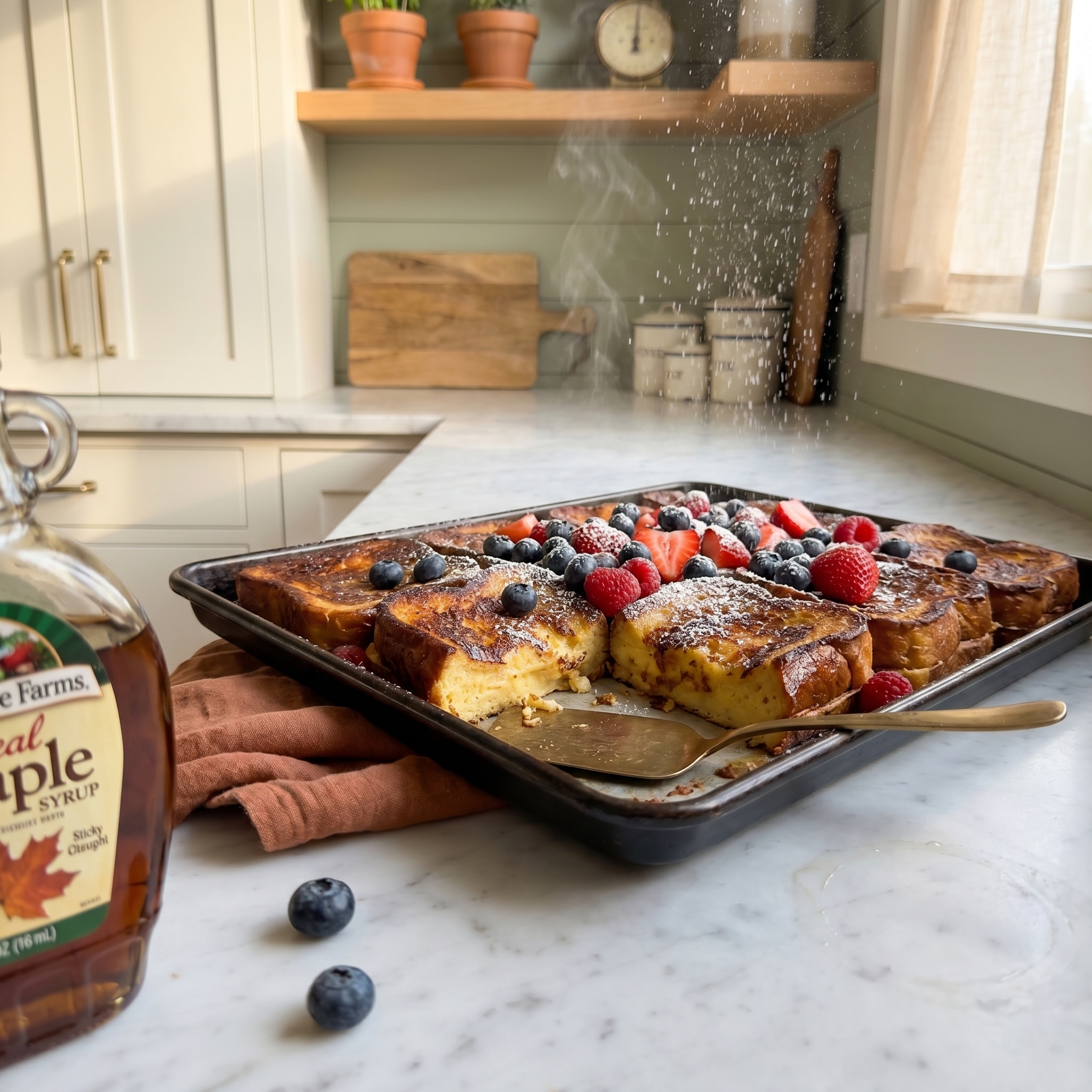
Crowd-Pleasing Sheet Pan French Toast with Summer Berries: 9 Reasons This Foolproof Breakfast Will Replace Every Brunch Recipe You Own
It started with eight people sleeping in my house on a Saturday morning in June and zero desire to stand at the stove flipping individual slices of French toast for forty-five minutes while everyone else sat at the table getting hungrier and more caffeinated and increasingly unhelpful with their suggestions. I had made the stovetop version of French toast for guests exactly once before and I still think about it — the burned first batch, the too-cold second batch, the fact that by the time the last four slices came off the pan the first four were sitting in a sad stack getting cold and slightly rubbery. I swore I would never do it again. That Saturday morning in June, with a brioche loaf on the counter and a pint of strawberries and blueberries from the farmers market sitting on the table, I did the only sensible thing: I made a custard, soaked the whole loaf sliced into thick planks, laid them all on a sheet pan with the berries tumbled over the top, and put the whole thing in the oven. Thirty minutes later every single slice came out at exactly the same time, golden and puffed and caramelized at the edges, and I carried the entire pan to the table and let people serve themselves. Nobody spoke for a full minute. That was a very good minute.
Have you ever tried to make French toast for more than two people on a stovetop and realized partway through that you’ve made a logistical commitment that is going to ruin your morning? The solution to that problem — and the solution to every brunch-for-a-crowd problem you have ever had — is sheet pan French toast with summer berries. The entire recipe goes into the oven at once, bakes evenly, comes out at the same time, and produces thick, custardy, golden-edged slices with jammy, bursting berries roasted right into the top — no flipping, no batches, no cold slices waiting for the stragglers, no standing over a hot pan for an hour. It is the most efficient, most impressive, most forgiving breakfast you can make for a group of any size, and it tastes better than the stovetop version in every measurable way.
Whether you’re hosting a full summer brunch for eight people and need something that looks effortless even though you’re coordinating five other things in the kitchen simultaneously, a parent who wants a special Saturday morning breakfast that doesn’t require forty minutes of active cooking, or someone who has always loved French toast but always resented the labor-to-payoff ratio — keep reading. This is the recipe that fixes all of that, and it comes together in under an hour with about fifteen minutes of actual work.
Table of Contents
Why This Recipe Works
Sheet pan French toast works because the oven does something a stovetop skillet cannot — it heats every slice simultaneously and from multiple directions at once, producing a custardy, deeply soaked interior with caramelized edges on all sides rather than just the bottom. The berries roast alongside the bread and release their juices into the custard-soaked surface as they cook, creating pockets of jammy, intensely flavored fruit baked directly into each slice. No separate berry sauce required. No flipping. No batches. Just one pan, one oven, one perfect breakfast.
- ✔ Feeds 6 to 8 people all at exactly the same time — Every slice comes out of the oven simultaneously, which means no cold French toast, no sad waiting slices, no person at the end of the table eating alone while everyone else is halfway done. This is the single greatest practical advantage of the sheet pan method and it changes brunch entirely.
- ✔ 15 minutes of active work, 30 minutes of oven time — Mix the custard, soak the bread, tumble on the berries, put it in the oven. That is the recipe. The oven handles the rest while you make coffee, set the table, get dressed, or do literally anything else.
- ✔ Thick, deeply custardy texture the stovetop can’t replicate — Thick-sliced brioche soaked in a rich egg custard and baked rather than pan-fried develops a custardy, almost bread-pudding-like interior with golden, slightly crispy caramelized edges that is dramatically more satisfying than thin, quickly cooked stovetop French toast.
- ✔ The summer berries roast into something extraordinary — Fresh strawberries and blueberries scattered over the top before baking soften, burst, and release their juices into the bread as it bakes, creating concentrated pockets of jammy fruit flavor woven through each slice. It is better than any berry compote you would make separately.
- ✔ Made entirely ahead for overnight guests — Assemble the whole pan the night before, cover tightly, and refrigerate. Pull it out in the morning and bake straight from the fridge — add 5 minutes to the bake time. You wake up, put a pan in the oven, and breakfast is ready in thirty minutes with zero morning stress.
- ✔ Looks completely stunning on the table — A full sheet pan of golden, puffed French toast studded with burst berries and dusted with powdered sugar carried to the table is one of the most visually impressive breakfast presentations imaginable for the effort involved. It looks like a restaurant brunch spread.
- ✔ The leftovers reheat perfectly — Individual slices warmed in a toaster oven or a skillet the next morning are arguably better than freshly baked — the custard sets more firmly overnight and the texture becomes even more satisfying when reheated with a little butter in the pan.
Let’s get into what you need to build this from the ground up — starting with the bread, because the bread is the most important decision in the entire recipe.
What You’ll Need
This recipe serves 6 to 8 people generously from one half-sheet pan. Everything here is available at any grocery store, Trader Joe’s, or Whole Foods, and the quality of the bread and the eggs matters more than almost anything else in this recipe. Buy the best brioche you can find and use whole eggs — this is not the recipe for egg substitutes or skim milk.
For the Bread
- 1 large loaf brioche bread — about 14 to 16 oz — sliced 1 to 1½ inches thick; Trader Joe’s brioche loaf is outstanding here and widely available
- Alternative: thick-sliced challah, Texas toast, or a day-old French baguette sliced on the diagonal into thick rounds — all excellent, all different
- Day-old or slightly stale bread is strongly preferred — fresh bread is too soft and absorbs the custard unevenly, while slightly dried-out bread soaks up custard like a sponge and produces a dramatically more custardy, satisfying result
For the Custard
- 6 large eggs, room temperature
- 1½ cups whole milk
- ½ cup heavy cream — this is what separates a rich, custardy sheet pan French toast from a thin, eggy one
- 3 tablespoons granulated sugar
- 2 tablespoons light brown sugar, packed
- 2 teaspoons pure vanilla extract
- 1 teaspoon cinnamon
- ¼ teaspoon nutmeg — freshly grated if possible; pre-ground works fine
- ¼ teaspoon kosher salt — always salt your custard; it amplifies every other flavor
- Zest of 1 lemon — this is not optional; it brightens the custard and makes the berry flavor more vivid
For the Summer Berries
- 1 cup fresh strawberries, hulled and halved or quartered depending on size
- 1 cup fresh blueberries
- ½ cup fresh raspberries — optional but beautiful and add a lovely tartness
- 2 tablespoons granulated sugar
- 1 teaspoon lemon juice
- Pinch of cinnamon
For Topping and Serving
- 2 tablespoons unsalted butter, cut into small cubes — Land O’Lakes — dotted over the top of the assembled pan before baking for golden, caramelized edges
- Powdered sugar for dusting generously over the finished pan before it hits the table
- Pure maple syrup — the real kind, not pancake syrup — for serving alongside
- Fresh mint sprigs for garnish
- Optional: a dollop of whipped cream or crème fraîche alongside each serving
- Optional: additional fresh berries scattered over the finished pan right before serving for color and freshness
Optional Add-Ins and Upgrades
- 2 tablespoons of cream cheese softened and blended into the custard for a tangy, cheesecake-like richness in the finished French toast
- A tablespoon of orange zest in addition to the lemon zest — the combination of citrus makes the whole pan taste brighter and more summery
- A drizzle of honey over the berries before baking instead of or in addition to the granulated sugar
- Sliced peaches, nectarines, or mango alongside or instead of the strawberries for a tropical summer variation
- A handful of toasted sliced almonds scattered over the top in the last 5 minutes of baking for crunch
- A tablespoon of bourbon or Grand Marnier stirred into the custard for an adults-only brunch version
Substitutions
What if I can’t find brioche or don’t want to use it? Challah is the next-best option — it has a similar egg-enriched structure and absorbs custard beautifully without falling apart. A day-old baguette sliced into thick rounds on the diagonal produces a chewier, more rustic version with a crispier exterior that many people prefer. Texas toast — the thick-sliced white bread available at Walmart and most grocery stores — is an excellent budget-friendly option that produces a more classic American French toast experience. What you want to avoid is standard thin sandwich bread, which absorbs custard too quickly, becomes waterlogged, and falls apart on the pan before it has time to bake properly.
Can I use frozen berries instead of fresh? Frozen berries work with one important adjustment — do not thaw them before adding to the pan. Thawed frozen berries release too much liquid too quickly and can make the top layer of the French toast soggy before the custard has a chance to set. Frozen berries added directly from the freezer release their liquid more gradually during baking, which produces a better-integrated result. Add an extra minute or two to the bake time when using frozen berries since they lower the surface temperature of the bread initially. The flavor of frozen berries is often more concentrated than out-of-season fresh berries, which is a genuine advantage in this recipe.
What if I need to make this dairy-free? Replace the whole milk with full-fat oat milk — Oatly is the best option here — and the heavy cream with full-fat canned coconut cream. The custard will be slightly less rich but still deeply flavorful and custardy. Use refined coconut oil in place of the butter dots on top so the coconut flavor doesn’t overpower the berries. The lemon zest and vanilla become even more important in the dairy-free version — they carry the flavor in the absence of the richness that dairy provides.
🧑🍳 Chef’s Note — Bread Staleness: If you’re making this recipe with fresh brioche — bought the same day — slice it and leave the slices out on a wire rack uncovered for at least an hour before soaking, or spread them on a baking sheet and put them in a 250°F oven for 10 minutes to dry out slightly. Fresh bread is too moist to absorb the custard properly without becoming waterlogged. Slightly dried-out bread soaks up custard like a sponge from the outside in, which is exactly what you want — full saturation all the way through, producing that deep, bread-pudding-like custardy interior that makes this recipe what it is. Day-old brioche bought the day before requires no drying at all.
🧑🍳 Chef’s Note — Soaking Time: The custard soak time is the most important variable in this recipe. A minimum 20-minute soak at room temperature produces acceptable results. A 30-minute soak produces noticeably better results. An overnight soak in the refrigerator produces the best results of all — the custard penetrates fully to the center of every slice, the bread swells and becomes almost pillowy before baking, and the finished French toast has a deeply custardy, almost soufflé-like interior that a quick soak simply cannot achieve. If you have the time, soak overnight. If you don’t, 30 minutes is the realistic minimum for thick-sliced brioche.
How to Make Sheet Pan French Toast with Summer Berries — Step by Step
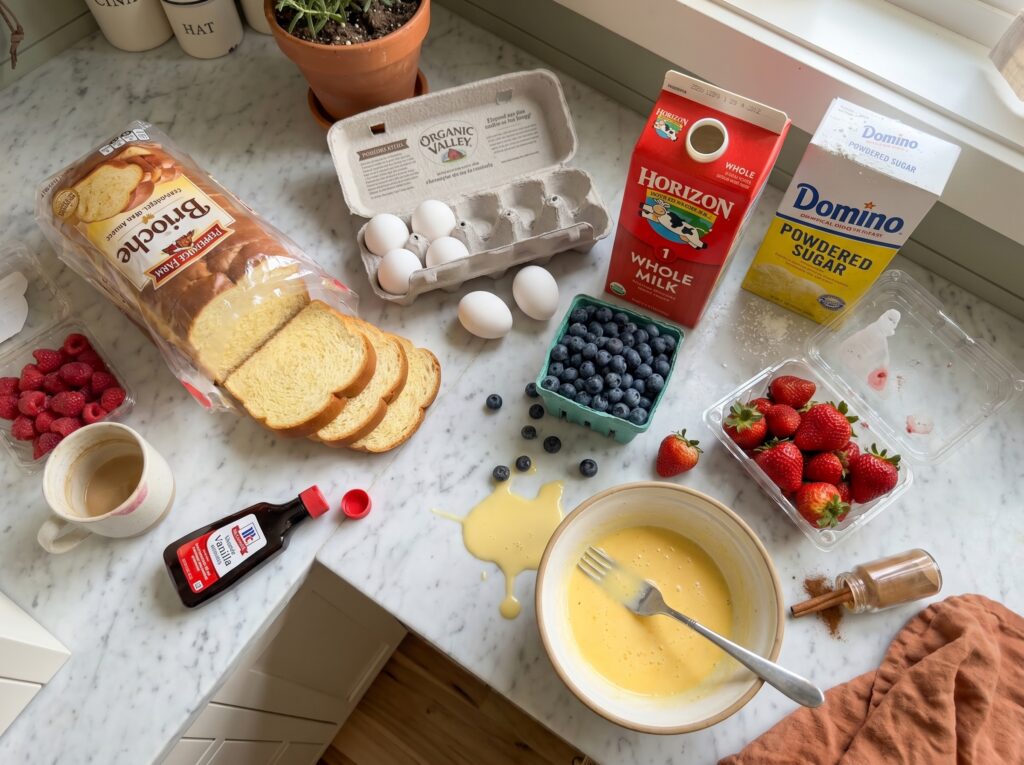
- Preheat the oven to 375°F and prepare your sheet pan while the oven heats. Line a half-sheet pan — 18 by 13 inches — with parchment paper, then grease the parchment generously with butter or cooking spray. The parchment is non-negotiable here; the sugars from the custard and the berry juices will caramelize and bond aggressively to an unlined pan, and cleanup without parchment is genuinely miserable. Grease the parchment because custard-soaked bread will stick to even parchment if it isn’t well-greased. Set the prepared pan aside.
💡 Pro Tip: Make the custard before you do anything else — not because it needs time to rest, but because mixing it first and tasting it before the bread goes anywhere near it lets you adjust the seasoning and sweetness while you still can. A custard that’s properly seasoned before the bread is soaked produces dramatically better results than one that was mixed in a rush and never tasted. Mix it, taste it, adjust it, then move to the bread.
- Make the custard by whisking all the custard ingredients together until completely smooth and homogenous. In a large, wide bowl — wide enough to dip the bread slices flat — whisk together the eggs, whole milk, heavy cream, both sugars, vanilla extract, cinnamon, nutmeg, salt, and lemon zest. Whisk vigorously for a full minute until the eggs are completely incorporated and there are no visible streaks of yolk or white remaining in the mixture. The custard should look uniform and slightly frothy. Taste it — it should be rich, lightly sweet, warmly spiced, and bright from the lemon zest. Adjust the cinnamon, vanilla, or sugar if needed.
- Slice the brioche into 1 to 1½-inch thick slices and soak them in the custard. Working in batches, lay the bread slices flat in the custard bowl and let them soak for 2 to 3 minutes per side — pressing gently with your hand to encourage the custard up into the center of each thick slice. The bread should feel noticeably heavier and swollen with custard when you pick it up. Don’t rush this step — under-soaked bread produces French toast with a dry, bready center and a thin eggy exterior rather than the fully custardy, uniform texture you’re going for. If the custard level in the bowl drops as you soak, that’s correct — it’s all going into the bread where it belongs.
💡 Pro Tip: After soaking each slice, hold it briefly over the bowl and let the excess custard drip back in — about 10 seconds per slice. You want the bread thoroughly saturated but not dripping so heavily that a pool of custard forms under the slice on the pan, which can make the bottom soggy and prevent proper caramelization. The goal is full saturation with no excess liquid pooling. That 10-second drip makes a real difference in the finished texture of the bottom of each slice.
- Arrange the soaked bread slices on the prepared sheet pan in a single layer with slight overlap if needed. Place the slices close together but not completely on top of each other — a slight shingle overlap of about half an inch is fine and actually creates a beautiful, unified presentation on the finished pan. Pour any remaining custard from the bowl evenly over all the slices on the pan — every drop of custard should go on the bread, nothing wasted. Press the bread gently to ensure it’s in full contact with the pan and that the custard is distributed evenly across all the slices.
- Toss the summer berries with sugar, lemon juice, and cinnamon, then scatter them generously over the top of the soaked bread. In a small bowl, toss the strawberries, blueberries, and raspberries with the 2 tablespoons of granulated sugar, lemon juice, and pinch of cinnamon until evenly coated. Distribute the berries across the entire surface of the bread — every slice should have berries on it. Press the berries very gently into the surface of the custard-soaked bread so they don’t roll off when the pan goes into the oven, but don’t push them all the way in — you want them sitting on top where they’ll roast and caramelize against the open oven heat rather than being buried in the bread.
- Dot the top of the pan with small cubes of cold butter and slide it into the preheated oven. The butter dots are not decoration — they melt during baking and baste the bread and berries from above, creating those golden, caramelized, slightly crispy edges on each slice that are one of the defining features of sheet pan French toast. Space them evenly across the pan so every area gets some coverage. Bake at 375°F for 25 to 30 minutes, rotating the pan once at the halfway mark, until the bread is deeply golden on top and at the edges, the berries have burst and released their juices, and the custard is fully set — a toothpick inserted into the thickest part of a center slice should come out clean or with only a tiny bit of set custard clinging to it.
💡 Pro Tip: In the last 5 minutes of baking, switch the oven to broil on low and watch the pan constantly — this optional step caramelizes the top surface of the French toast and the berry juices into a slightly crispy, deeply golden finish that looks spectacular and adds a textural dimension you don’t get from baking alone. Stay at the oven for this step; the broiler can take bread from perfectly golden to burned in under two minutes, and the sugar content of this recipe means it caramelizes and then scorches faster than you’d expect. Watch it. Pull it at perfect.
- Remove the pan from the oven and let it rest for 3 to 5 minutes before cutting or serving. The resting period allows the custard to finish setting and the berry juices to thicken slightly so they don’t run immediately when you slice into the pan. The French toast will look slightly puffed right out of the oven and will settle back gently during the rest — this is normal and correct. While it rests, dust the entire pan generously with powdered sugar through a fine-mesh sieve, scatter a handful of fresh berries over the top for color and freshness, and tuck a few mint sprigs at the corners for the photograph that is about to happen involuntarily.
- Carry the entire pan to the table and let people serve themselves. This is not a recipe you plate in the kitchen and carry out on individual dishes — it is a pan you bring to the table whole, in its full glory, and let people cut and serve their own portions. Use a wide spatula to lift slices cleanly from the parchment. Have maple syrup warm in a small pitcher alongside — cold maple syrup poured over warm French toast is a minor tragedy that is easily avoided by warming the syrup in a small saucepan or the microwave for 45 seconds before serving.
- Serve immediately, with warm maple syrup, whipped cream or crème fraîche on the side, and extra fresh berries for anyone who wants more fruit. Sheet pan French toast is at its absolute peak the moment it comes out of the oven — the edges are crispy, the interior is custardy and hot, the berry juices are still slightly jammy and warm. It is genuinely excellent for the first thirty minutes after baking. After that the edges soften slightly and the texture becomes more uniform — still very good, just different. Eat it hot. That is the whole point of making it.
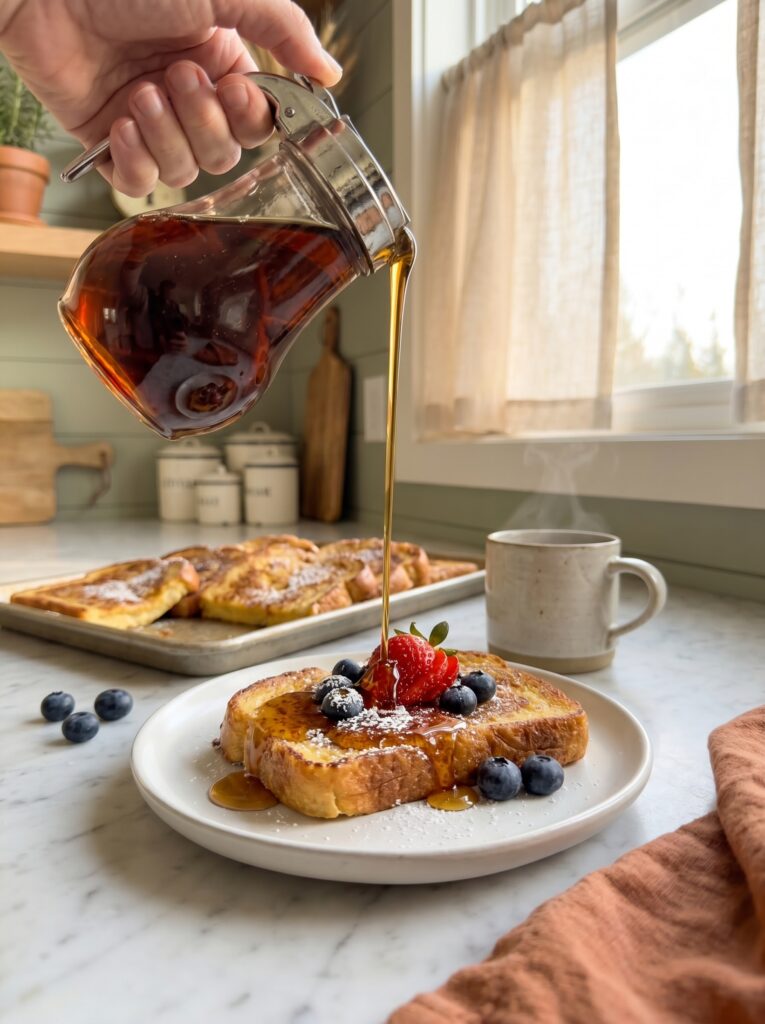
Fifteen minutes of mixing and soaking, thirty minutes of oven time, five minutes of resting and finishing, and a sheet pan of the best French toast you have ever served at a table full of people. That is the recipe. That is the entire promise. And the first time you carry that pan to the table, dust it with powdered sugar, and watch eight people reach for it simultaneously, you will understand exactly why this has replaced every other brunch recipe in my rotation.
How to Serve It
This sheet pan French toast with summer berries is one of the most versatile breakfast and brunch recipes in a home cook’s repertoire — impressive enough for a full Mother’s Day spread, casual enough for a Saturday morning with the kids, and simple enough to execute even when you’re half-awake and the coffee hasn’t fully kicked in yet. Here are five ways to bring it to the table.
- ☕ Classic Summer Brunch Centerpiece: Carry the whole pan to the table dusted with powdered sugar, fresh berries scattered over the top, and mint tucked at the corners. Set a warm pitcher of pure maple syrup alongside, a bowl of whipped cream, and a platter of crispy bacon or breakfast sausage on the side. This is the brunch table that makes people take photos before they eat, and the entire spread required about forty minutes of actual work. The presentation does the rest.
- 🥞 Make-Ahead Overnight Guest Breakfast: Assemble the entire pan the night before — soaked bread, berries on top, butter dotted over everything — cover tightly with plastic wrap, and refrigerate. In the morning, pull it from the fridge while the oven preheats, uncover it, and bake straight from the cold — add 5 minutes to the total bake time. You wake up, start the oven, make coffee, and by the time everyone is at the table breakfast is on its way out of the oven. This is the only acceptable way to host overnight guests for breakfast and maintain your sanity simultaneously.
- 🌸 Special Occasion Individual Plates: For a more formal Mother’s Day or anniversary brunch, plate individual portions on wide white plates — two slices slightly overlapping, a generous spoonful of the roasted berry juices from the pan poured over the top, a small quenelle of crème fraîche alongside, a drizzle of honey, a pinch of lemon zest, and a single mint sprig. This plated version looks restaurant-quality and costs about two dollars per serving. Add a glass of fresh orange juice and a small mimosa and you have a brunch that feels genuinely celebratory.
- 📚 Weekend Family Breakfast with Kids: Cut the French toast into strips rather than whole slices — easier for small hands to pick up and dip into maple syrup. Set out small bowls of toppings the kids can add themselves: fresh blueberries, sliced strawberries, a dusting of powdered sugar, a drizzle of honey. Kids who won’t eat plain French toast will eat the version they built themselves. This format also makes the sheet pan stretch further for a family with a lot of small appetites.
- 🎃 Dessert French Toast for a Summer Dinner Party: Yes, French toast as dessert — serve warm slices with a scoop of vanilla ice cream melting over the top, a drizzle of warm berry coulis made by cooking ¼ cup of blueberries with a tablespoon of sugar and a squeeze of lemon for 5 minutes until jammy, and a dusting of powdered sugar. The thick, custardy brioche French toast with ice cream and berry sauce is essentially a deconstructed bread pudding sundae, and it is the kind of dessert that makes people put down their wine glasses and pay full attention. Make it for the dinner party where you want to end on something memorable.
However you serve it, always warm the maple syrup before it goes to the table — pour it into a small heatproof pitcher and microwave for 45 seconds, or warm it gently in a small saucepan. Cold syrup on hot French toast is a small thing that makes a real difference in the eating experience, and it takes forty-five seconds. Do it every time.
Storage & Make-Ahead Tips
Baked French toast — Refrigerator: Store leftover baked sheet pan French toast in an airtight container or covered tightly on the pan in the refrigerator for up to 4 days. Individual slices reheat beautifully — in a toaster oven at 350°F for 5 minutes, in a skillet over medium heat with a small pat of butter for 2 to 3 minutes per side, or in a microwave covered with a damp paper towel for 60 seconds. The skillet reheat is the best method — the butter re-crisps the edges and caramelizes the bottom slightly, producing a reheated slice that is arguably better than the original. The berry juices that have soaked into the bread overnight intensify the flavor significantly.
Baked French toast — Freezer: Individual slices freeze exceptionally well for up to 2 months. Let them cool completely, lay them flat on a parchment-lined baking sheet to freeze solid, then transfer to a zip-top freezer bag. Reheat from frozen in a toaster oven at 350°F for 8 to 10 minutes, or in a skillet over medium-low heat covered with a lid for 4 to 5 minutes until heated through. Frozen and reheated sheet pan French toast is one of the best weekday breakfast situations — better than almost anything else you can reheat in the same time.
Assembled uncooked pan — Refrigerator: Assemble the complete pan — soaked bread, berries, butter dots — up to 12 hours in advance and refrigerate covered with plastic wrap. This overnight assembly is actually the preferred method for maximum custard penetration and the deepest, most custardy finished texture. Pull from the fridge when the oven is preheating and bake as written, adding 5 minutes to the total bake time to account for starting cold.
📅 Make-Ahead Tip: For maximum weekend morning efficiency, do everything the night before: slice the bread, make the custard, soak the slices, arrange on the pan, top with berries and butter, cover, and refrigerate. Saturday morning: start the oven, make coffee, put the pan in, set a timer for 35 minutes. When the timer goes off, breakfast is done. You did the work Friday night when you had energy. You reap the reward Saturday morning when you don’t. This is the correct approach to weekend breakfast hosting.
The custard mixture alone — Refrigerator: Mix the custard up to 24 hours in advance and store it in a sealed jar or covered bowl in the refrigerator — the ingredients will separate slightly, so give it a good whisk before using. This is a useful shortcut if you want to partially prep the recipe but don’t want to commit to soaking the bread the night before. Fresh custard poured over bread that morning and soaked for 30 minutes still produces excellent results — the overnight soak is better, but a 30-minute same-day soak with pre-made custard is a completely respectable alternative.
Helpful Tips & Common Mistakes
These are the five mistakes that most commonly prevent sheet pan French toast from reaching its full potential — and every fix is straightforward once you understand what’s going wrong and why.
✗ Mistake: Using fresh, soft brioche straight from the bakery and ending up with waterlogged, structurally fragile slices that fall apart when you try to lift them onto the pan and produce a mushy, wet-centered result after baking.
✓ Fix: Use day-old bread, or dry fresh bread in a 250°F oven for 10 minutes before soaking. Slightly stale bread has a firmer structure that absorbs custard without collapsing, holds its shape during soaking and baking, and produces a deeply custardy interior without the sogginess that fresh bread creates. This is the single most impactful variable in the recipe — the right bread at the right moisture level makes everything else easier and better.
✗ Mistake: Rushing the custard soak and giving the bread only 5 minutes because you’re in a hurry, then pulling a pan out of the oven with a dry, bready center on every slice that tastes like regular toast with egg on the outside.
✓ Fix: Soak for a minimum of 20 to 30 minutes at room temperature, pressing the bread gently into the custard every few minutes to encourage full saturation. For thick-cut brioche, the custard needs time to travel from the surface to the very center of the slice — this cannot be rushed and cannot be faked. The overnight soak is the gold standard. The 30-minute room-temperature soak is the realistic minimum. Anything less produces an undersoaked result that no amount of oven time will fix.
✗ Mistake: Skipping the parchment paper lining because it seems unnecessary, and then spending twenty minutes scrubbing caramelized custard and berry sugar off a sheet pan after breakfast.
✓ Fix: Always line the pan with parchment and always grease the parchment. The combination of egg custard, berry sugars, and butter creates a caramelized layer on the bottom of the pan that bonds aggressively to bare metal and even to ungreased parchment. A well-greased parchment-lined pan releases every slice cleanly and the pan cleans up in sixty seconds. This is a thirty-second prep step that saves fifteen minutes of cleanup. There is no rational argument for skipping it.
✗ Mistake: Pressing the berries deeply into the bread before baking so they cook inside the slice rather than on the surface, and ending up with soggy purple pockets where the berries were and no visible fruit on the finished pan.
✓ Fix: Set the berries on top of the custard-soaked bread surface — just barely pressed to keep them from rolling — rather than pushing them in. Berries that bake on the surface roast, caramelize at the edges, and burst into concentrated, jammy pockets of fruit that are visible and beautiful on the finished pan. Berries buried inside the bread release steam and liquid into the surrounding custard, creating wet pockets rather than jammy fruit. Keep them on the surface. Let the oven do the roasting.
✗ Mistake: Serving the French toast with cold maple syrup poured directly from the bottle and wondering why the eating experience feels slightly anticlimactic for a dish that looked so beautiful coming out of the oven.
✓ Fix: Warm the maple syrup before serving — always. Forty-five seconds in the microwave or two minutes in a small saucepan over low heat transforms cold syrup into something fragrant, runny, and genuinely aromatic that pools beautifully into the custard surface of the French toast rather than sitting in a cold, thick puddle on top. Use pure maple syrup — not pancake syrup, which is corn syrup and artificial flavoring — because the real thing has a depth and complexity that makes the whole dish taste more expensive than it is.
Recipe Variations
The sheet pan French toast formula — thick bread, rich custard, oven-roasted fruit, golden finish — adapts beautifully to every season and every flavor preference. Here are four variations that are all genuinely worth making once you’ve mastered the classic summer berry version.
🍑 Peach Bourbon Sheet Pan French Toast: Replace the summer berries with 3 ripe peaches halved, pitted, and sliced into ½-inch wedges, tossed with 2 tablespoons of brown sugar, a tablespoon of bourbon, and a pinch of cinnamon before scattering over the soaked bread. Stir 1 tablespoon of bourbon into the custard alongside the vanilla. The peaches roast into something deeply caramelized and jammy against the golden brioche, and the bourbon adds a warmth and depth to both the custard and the fruit that makes this version feel grown-up and celebratory. Serve with a drizzle of warm caramel sauce instead of maple syrup and a scoop of vanilla ice cream if you’re serving it as a brunch dessert.
🍎 Apple Cinnamon Sheet Pan French Toast: This is the fall and winter version that keeps the sheet pan method running year-round. Sauté 3 peeled, thinly sliced apples with 2 tablespoons of butter, 3 tablespoons of brown sugar, 1 teaspoon of cinnamon, and a pinch of nutmeg in a skillet for 5 minutes until slightly softened and caramelized. Scatter the spiced apple mixture over the custard-soaked bread instead of berries before baking. Increase the cinnamon in the custard to 1½ teaspoons. The apples roast into the bread and create an apple pie-adjacent flavor profile that is deeply comforting on a cold morning. Top with a simple powdered sugar glaze — powdered sugar thinned with a tablespoon of milk and a drop of vanilla — drizzled over the finished pan.
🍫 Nutella Stuffed Berry Sheet Pan French Toast: Before soaking the bread slices, spread a generous tablespoon of Nutella on one side of half the slices and press an unspread slice against it to create a Nutella sandwich. Soak these stuffed sandwiches in the custard — they need an extra minute per side since they’re thicker — and arrange on the pan. Top with the summer berries as written. The Nutella melts into the custard-soaked bread during baking, creating pockets of warm chocolate-hazelnut richness that run through each slice in the most wonderful way. The berry acidity against the Nutella richness is a combination that makes people ask for the recipe before they’ve finished their first slice.
🧀 Cream Cheese and Lemon Berry Sheet Pan French Toast: Beat 4 oz of softened cream cheese with 2 tablespoons of powdered sugar and 1 teaspoon of lemon zest until smooth. Spread the cream cheese mixture over half the bread slices and press the remaining slices on top to create filled sandwiches, then soak and bake as written with the summer berries on top. The cream cheese melts into the interior of each slice during baking and creates a cheesecake-like richness that makes this version feel like a special occasion dessert disguised as breakfast. The lemon in the cream cheese mirrors the lemon zest in the custard and makes the berry flavor more vivid and more complex. This is the variation I make for Mother’s Day every year without exception, and it has never once failed to produce the intended reaction.
Final Thoughts
That Saturday morning in June with eight people sleeping in my house and a brioche loaf on the counter is the morning this recipe saved my brunch credibility and permanently retired my stovetop French toast spatula. Sheet pan French toast with summer berries is proof that feeding a crowd a genuinely impressive breakfast does not require standing over a hot stove flipping individual slices for an hour — it requires a sheet pan, a good custard, peak-season fruit, and the willingness to let the oven do the work while you do something more enjoyable than monitoring a skillet. The results are better than the stovetop version. The effort is a fraction of the stovetop version. And the moment you carry that golden, berry-studded, powdered-sugar-dusted pan to the table, every person sitting there will understand immediately that you made the right choice.
Make this for your next brunch, your next overnight guest weekend, your next special Saturday morning that deserves something genuinely worthy of the occasion — and when someone asks you how you made it, you can tell them the truth: one pan, one oven, fifteen minutes of work. Leave a ⭐⭐⭐⭐⭐ rating below, tag @zippydishes on Pinterest with your beautiful pan, and share this with every home cook you know who is still flipping French toast one slice at a time. Their Saturday mornings are about to get a lot better. 🍓🫐✨
Frequently Asked Questions
What does sheet pan French toast with summer berries taste like?
It tastes like the best French toast you’ve ever had, with roasted summer fruit baked directly into it. The thick brioche slices soak up a rich, lightly spiced custard that bakes into a deeply custardy, almost bread-pudding-like interior — tender and yielding at the center, with golden, slightly caramelized edges that have a faint crispiness from the butter and oven heat. The summer berries roast into jammy, concentrated pockets of sweet-tart fruit flavor that run through each slice and stain the custard around them with vivid color and brightness. The lemon zest in the custard lifts everything and keeps it from feeling heavy despite the richness of the egg and cream base. Against a pour of warm maple syrup, it is one of the most satisfying breakfast bites of the entire summer.
What is the best bread to use for sheet pan French toast?
Brioche is the gold standard — it’s an egg-enriched, buttery bread with a tight, fine crumb that absorbs custard beautifully without falling apart, and it bakes into the richest, most deeply custardy result of any bread you can use. Challah is the second-best option and produces nearly identical results at often a lower price point. A day-old baguette sliced thick on the diagonal makes a more rustic, chewier version with a crispier exterior that many people actually prefer. Texas toast — thick-sliced white bread — is a reliable budget option that produces a more classic American diner French toast experience. What all the best options have in common is thickness — at least 1 inch, preferably 1½ inches — and at least slight staleness, which allows proper custard absorption without structural collapse.
Can I make sheet pan French toast the night before?
Not only can you — you should. Assembling the complete pan the night before is the optimal method for this recipe. Soak the bread in the custard, arrange it on the prepared pan, scatter the berries over the top, dot with butter, cover tightly with plastic wrap, and refrigerate overnight. In the morning, preheat the oven, pull the pan from the fridge, uncover it, and bake as written — adding 5 extra minutes to the total bake time to account for starting cold. The overnight custard soak produces a more deeply saturated, more uniformly custardy result than any same-day soak, and the morning work is reduced to starting the oven and pouring the coffee. For anyone hosting overnight guests, this make-ahead method is the only rational approach.
How do I know when sheet pan French toast is fully cooked?
Three indicators tell you the pan is done. First, the top surface should be deeply golden — not pale yellow, not light gold, but a rich amber-gold that looks like something has genuinely caramelized on the surface. Second, the edges of the pan and the edges of each slice should show visible caramelization — slightly darker, slightly crispy-looking, with the berry juices around them thickened and jammy rather than liquid. Third, a toothpick inserted into the thickest part of a center slice — the hardest place to cook through — should come out clean or with only a tiny amount of set custard clinging to it. If it comes out with wet, liquid custard, give the pan another 5 minutes and test again. The center takes longer than the edges to set, especially with an overnight cold start.
Can I use different fruit besides summer berries?
Absolutely — and seasonality is the best guide for what to use. Sliced ripe peaches or nectarines in July and August are extraordinary. Halved fresh figs with a drizzle of honey in late summer produce a sophisticated, deeply flavored result. Sliced bananas with a sprinkle of brown sugar produce a banana foster-adjacent variation that kids go wild for. Thinly sliced apples sautéed briefly with butter and brown sugar work beautifully in fall and winter. Cranberries tossed with orange zest and sugar make a beautiful and tart holiday brunch version. The general rule is that firmer fruits — apples, pears, stone fruits — benefit from a brief pre-sauté before going on the pan, while softer fruits — berries, bananas, figs — go on raw and roast beautifully in the oven without any pre-cooking.
What size sheet pan do I need for this recipe?
A half-sheet pan — 18 by 13 inches — is the standard size for this recipe as written and fits a full loaf of brioche sliced thick. This is the most common sheet pan size and what most home kitchens have. If you only have a quarter-sheet pan — 13 by 9 inches — halve the recipe and it works perfectly. A jelly roll pan, which is slightly smaller than a half-sheet pan, works well but may require slightly closer-together slices. What you want to avoid is using a pan with sides lower than 1 inch — the custard overflow during the first minutes of baking needs the pan walls to contain it. A rimmed baking sheet with at least 1-inch sides is the minimum requirement.
How do I reheat leftover sheet pan French toast?
The skillet method is the best — melt a small pat of butter in a nonstick skillet over medium heat and cook individual slices for 2 to 3 minutes per side until warmed through and re-crisped at the edges. The butter in the pan caramelizes the custard surface of the French toast and produces a slightly crispy, golden crust on both sides that is genuinely better than the original baked version. The toaster oven method is the most convenient — 350°F for 5 to 6 minutes produces excellent results with minimal effort. The microwave method works in a time crunch — 60 seconds covered with a damp paper towel keeps the interior moist — but produces a softer, less texturally interesting result than the skillet or toaster oven. Whichever method you use, add a drizzle of warm maple syrup over the reheated slice — it refreshes the whole thing and makes it taste freshly made.
Can I make this recipe gluten-free?
Yes — with one important caveat about bread selection. Gluten-free bread varies enormously in how it handles custard soaking; some brands hold up beautifully and some fall apart completely when wet. The best options for gluten-free sheet pan French toast are Canyon Bakehouse Mountain White bread — thick-sliced and sturdy enough for custard soaking — and Udi’s Gluten Free Brioche-Style bread if you can find it. Reduce the soaking time to 10 to 15 minutes for gluten-free bread since it absorbs liquid faster than wheat bread and can become waterlogged with a full 30-minute soak. Every other ingredient in the recipe — eggs, milk, cream, sugar, vanilla, berries, butter — is naturally gluten-free. The finished result is excellent and virtually indistinguishable from the wheat version to anyone who doesn’t know what they’re looking for.