
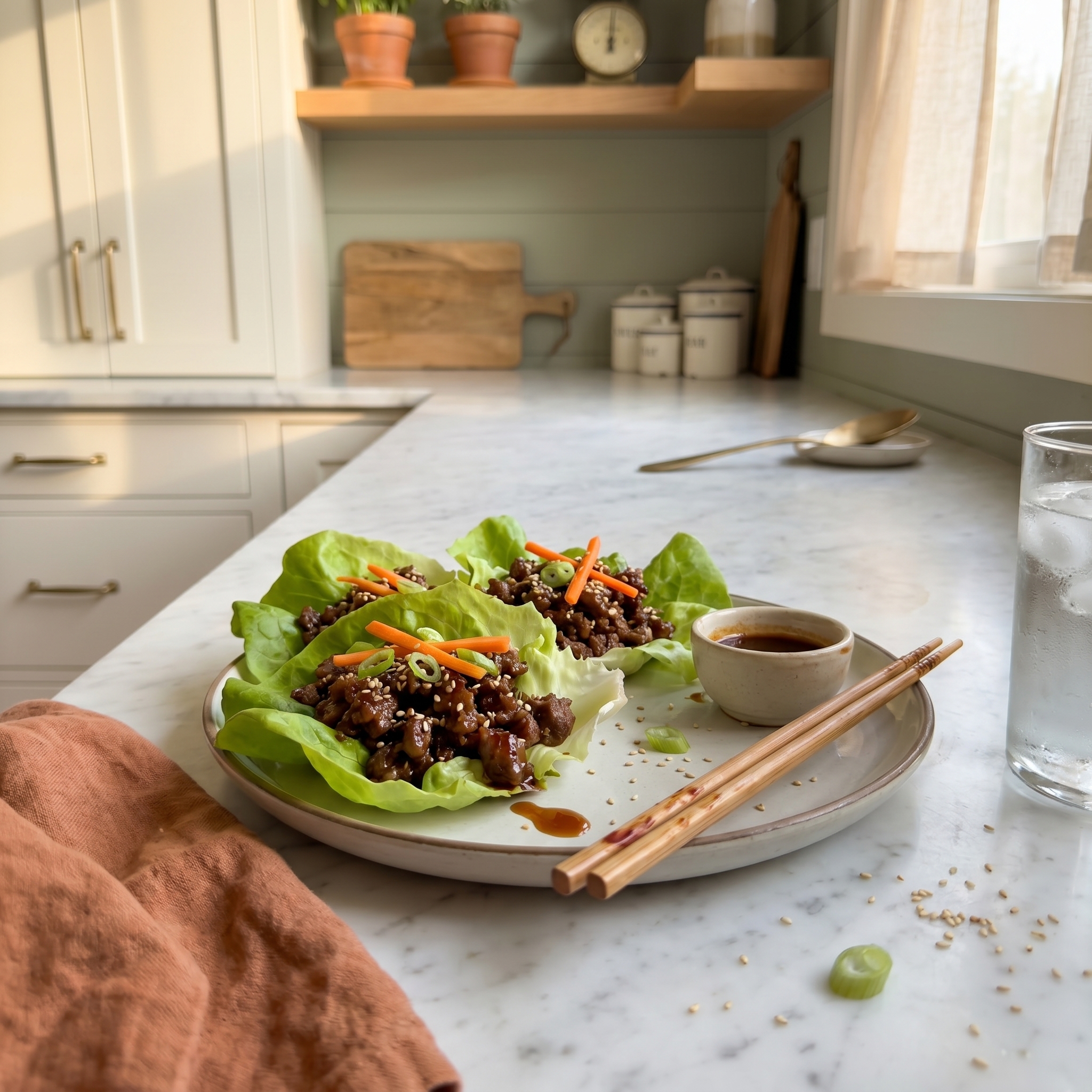
Crave-Worthy Korean BBQ Beef Lettuce Cups: 7 Reasons This 15-Minute Lunch Will Wreck Every Sad Desk Salad You’ve Ever Eaten
It started with a leftover half-pound of ground beef I had no plan for and a Wednesday noon hour that had exactly twenty minutes in it before my next call. I remember opening the fridge, staring at that beef and a head of butter lettuce I’d bought with genuinely good intentions at the start of the week, and thinking: I am going to make something actually good today. Not a sad sandwich. Not a bowl of cereal standing over the sink. Something that tastes like I meant it. I pulled out the soy sauce, the sesame oil, the garlic, the ginger, a squeeze of gochujang from a tube I kept in the door of the fridge, and twenty minutes later I was sitting at my desk eating the best lunch I’d had in months — Korean BBQ beef spooned into cold crisp butter lettuce cups, topped with a quick cucumber slaw and a drizzle of sriracha mayo, eating something that tasted like it came from the kind of restaurant with a line out the door on a Friday night. From my own kitchen. In twenty minutes. On a Wednesday.
Have you ever looked at your lunch options on a weekday and felt that quiet, specific disappointment of knowing you’re about to eat something that exists only to fill the hour rather than actually satisfy you? These Korean BBQ beef lettuce cups are the exact opposite of that feeling — they are bold, deeply savory, and layered with the kind of umami-rich complexity that makes you slow down and actually pay attention to what you’re eating, even in the middle of a busy workday. The sauce is built from pantry staples you probably already have. The beef cooks in under ten minutes. The lettuce cups are the vessel, the utensil, and the coolness that balances the warm, spiced beef all at once. This is a lunch that respects your time and rewards your appetite simultaneously.
Whether you’re a work-from-home cook who deserves something better than a frozen meal on a Tuesday, someone who has been meal-prepping the same grain bowl on repeat since January and is quietly desperate for a change, or a parent who needs a quick, impressive weeknight dinner that comes together before anyone starts complaining — keep reading. This recipe was built for all of you, and it is ready in fifteen minutes flat.
Table of Contents
Why This Recipe Works
Korean BBQ beef lettuce cups work because every single element is pulling in the same direction — the warm, caramelized beef against the cold, crisp lettuce, the sweet-salty-spicy sauce against the fresh cucumber and scallion, the rich sesame oil against the brightness of the lime. There is not a neutral ingredient in this entire recipe, and that intentionality is what makes the finished dish taste restaurant-worthy instead of just thrown together.
- ✔ On the table in 15 minutes — genuinely — Ground beef browns in eight minutes. The sauce takes thirty seconds to mix. The toppings take two minutes to prep. This is not a recipe that pretends to be fifteen minutes but actually takes forty-five. It is actually fifteen minutes, and it is actually delicious.
- ✔ That deep Korean BBQ flavor from pantry staples — Soy sauce, sesame oil, gochujang, brown sugar, garlic, and ginger build a sauce that tastes like something a restaurant kitchen spent all day developing. Every one of those ingredients lives in a well-stocked pantry and costs almost nothing per use.
- ✔ Naturally low-carb and gluten-adaptable — The lettuce cup format is built-in portion control that happens to also be light and fresh. Use tamari instead of soy sauce and the whole recipe is gluten-free without any other changes.
- ✔ Meal-prep gold — the beef gets better overnight — Cook a double batch of the Korean BBQ beef on Sunday and you have the base for four or five lunches. The flavors deepen and intensify overnight in the fridge, and reheating takes ninety seconds. Fresh lettuce and toppings go on right before eating.
- ✔ Interactive and fun to eat — There is something genuinely enjoyable about building your own lettuce cup — spooning the beef, layering the toppings, folding the leaf around everything, eating it in two bites. It makes a Tuesday lunch feel like a small event rather than a task to complete.
- ✔ Works as lunch, dinner, or a party appetizer — Scale up for a dinner party and set everything out as a build-your-own situation and you have one of the most impressive low-effort entertaining setups imaginable. Scale down for one and it’s the fastest satisfying lunch in your rotation.
- ✔ Endlessly riffable — Ground turkey, chicken, or pork all take this sauce beautifully. Add kimchi, pickled daikon, shredded carrots, crispy rice — the base formula handles additions without losing what makes it great.
Let’s get into the ingredients and talk about what each one is actually doing in this recipe.
What You’ll Need
This recipe makes 4 generous servings as a lunch or 6 lighter servings as an appetizer. Everything here is available at any grocery store, Walmart, or Trader Joe’s — and if you cook Asian-inspired food with any regularity, most of the sauce ingredients are already in your fridge and pantry right now.
For the Korean BBQ Beef
- 1 lb ground beef, 80/20 — the fat content is important for flavor and for the caramelization that happens in the pan
- 4 garlic cloves, minced or grated on a microplane
- 1 tablespoon fresh ginger, grated — about a 1-inch piece
- 2 scallions, white and light green parts minced for cooking, dark green parts sliced thin for topping
- 1 tablespoon sesame oil, divided
- 1 teaspoon neutral oil — vegetable or avocado for the initial browning
For the Korean BBQ Sauce
- 3 tablespoons low-sodium soy sauce — Kikkoman is reliable and widely available
- 1 tablespoon gochujang — Korean chili paste, available at most grocery stores now and at any Asian market or Trader Joe’s
- 1 tablespoon brown sugar, packed
- 1 tablespoon rice wine vinegar
- 1 teaspoon sesame oil
- ½ teaspoon black pepper
- Optional: 1 teaspoon fish sauce for an extra layer of umami depth — it sounds funky but it disappears into the sauce completely and makes everything taste more complex
For the Lettuce Cups
- 1 large head butter lettuce — also called Boston or Bibb lettuce — the leaves are the perfect cup shape and the right size for two-bite eating
- Alternative: Romaine hearts, separated into boat-shaped leaves, or iceberg lettuce quartered and leaves separated for sturdier cups
For the Quick Cucumber Slaw
- 1 English cucumber, halved lengthwise and thinly sliced into half-moons
- 1 tablespoon rice wine vinegar
- 1 teaspoon sesame oil
- 1 teaspoon honey
- Pinch of salt and red pepper flakes
For the Sriracha Mayo Drizzle
- 3 tablespoons Hellmann’s or Duke’s mayonnaise
- 1 tablespoon sriracha — more or less to taste
- 1 teaspoon fresh lime juice
- 1 teaspoon water to thin to a drizzleable consistency
For Topping and Finishing
- Scallion greens, thinly sliced
- 1 tablespoon toasted sesame seeds
- Fresh cilantro leaves — a small handful
- Lime wedges for serving
- Optional: kimchi, roughly chopped — a tablespoon per cup adds extraordinary depth and fermented funk
- Optional: shredded carrots dressed lightly in rice vinegar for color and crunch
Optional Add-Ins and Upgrades
- Steamed white rice spooned into the lettuce cup under the beef for a heartier, more substantial meal
- Pickled daikon or pickled jalapeños for a bright acidic contrast
- Sliced avocado tucked alongside the beef for richness
- A soft-boiled jammy egg halved over the top for extra protein and an almost ramen-like richness
- Crispy fried shallots scattered over everything at the very end for crunch
- A drizzle of chili crisp oil in addition to or instead of the sriracha mayo
Substitutions
What if I can’t find gochujang or don’t want the heat? Gochujang is increasingly available at mainstream grocery stores — look for it in the Asian foods aisle or the hot sauce section. Trader Joe’s carries a solid version, and most Walmart stores stock at least one brand. If you truly can’t find it, a combination of 1 teaspoon of sriracha plus ½ teaspoon of miso paste approximates the fermented chili flavor reasonably well, though nothing is a perfect substitute for gochujang’s specific depth. For a completely mild version, omit the gochujang and increase the soy sauce by 1 teaspoon — the beef will be less complex but still deeply savory and genuinely good.
Can I use a different protein? Ground turkey is the most popular swap and it works beautifully — the sauce is so flavorful that the slightly leaner turkey doesn’t feel like a compromise at all. Use 93% lean rather than 99% lean for better texture and more flavor. Ground chicken is another excellent option. Ground pork produces the richest, most deeply flavored version of all — if you can find it at your grocery store, it’s worth trying at least once. Thinly sliced flank steak or ribeye marinated in the sauce for 30 minutes and cooked in a screaming hot pan is the most restaurant-authentic version and is extraordinary — cook to medium-rare and slice very thin against the grain before spooning into cups.
What if I need this to be gluten-free? Swap the soy sauce for tamari — same volume, same flavor, fully gluten-free. Check your gochujang label as well; most brands are gluten-free but a few use wheat as a thickener. Sempio and Haechandle are two widely available gochujang brands that are certified gluten-free. Every other ingredient in this recipe is naturally gluten-free, so tamari and a checked gochujang label is all you need.
🧑🍳 Chef’s Note — Gochujang: Gochujang is a fermented Korean chili paste made from red chili powder, glutinous rice, fermented soybeans, and salt — it’s been a staple of Korean cooking for centuries and there is genuinely nothing that tastes quite like it. It brings heat, yes, but also a deep, fermented complexity and a subtle sweetness that no other hot sauce or chili paste replicates. A tube or tub in your fridge lasts for months and turns an ordinary weeknight dinner into something that tastes like you know what you’re doing. If you don’t have it yet, this recipe is the reason to go get it.
🧑🍳 Chef’s Note — Browning the Beef: The difference between Korean BBQ beef that tastes extraordinary and Korean BBQ beef that tastes just fine comes down almost entirely to how well the beef is browned before the sauce goes in. You want deep color — dark brown, almost mahogany in places, with rendered fat pooling in the pan and those browned bits sticking to the bottom. That color is the Maillard reaction, and it creates hundreds of flavor compounds that the sauce then picks up and amplifies. Don’t rush this step. Don’t stir constantly. Let the beef sit undisturbed for a full minute at a time to build that crust.
How to Make Korean BBQ Beef Lettuce Cups — Step by Step
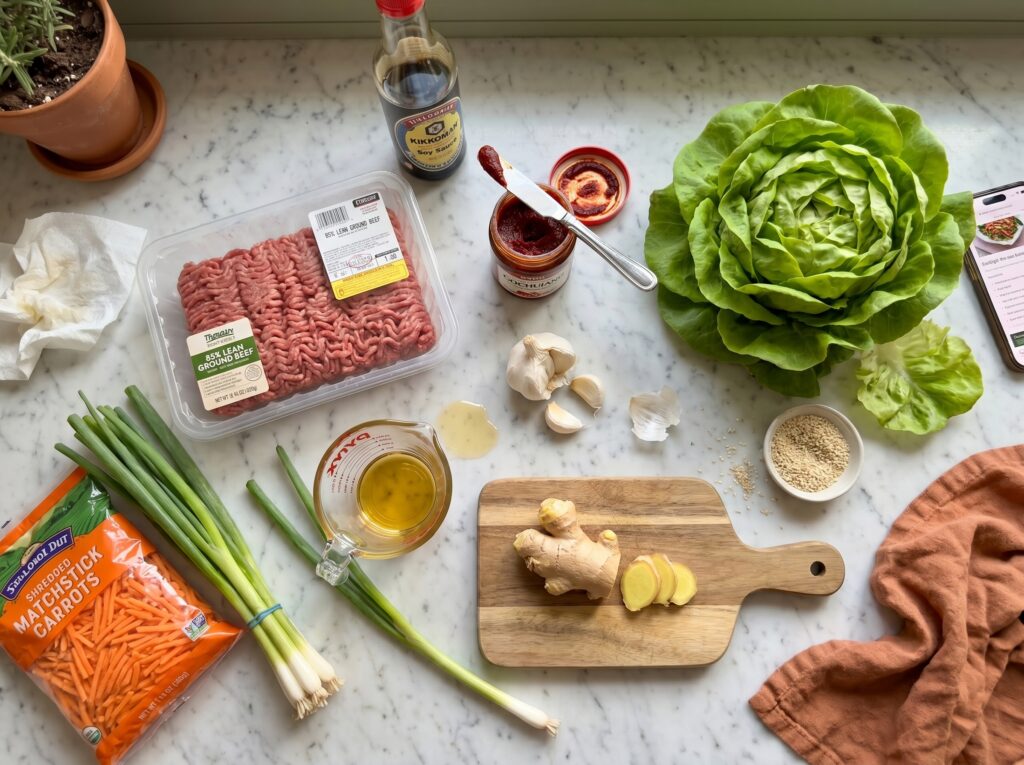
- Mix the Korean BBQ sauce first and set it aside — this is the first thing you do, every time. In a small bowl, whisk together the soy sauce, gochujang, brown sugar, rice wine vinegar, sesame oil, black pepper, and fish sauce if using. Whisk until the brown sugar is completely dissolved and the gochujang is fully incorporated into a smooth, glossy, deep-red sauce. Taste it — it should be boldly savory, slightly sweet, gently spicy, and have that unmistakable fermented depth from the gochujang. Set it right next to the stove so it’s ready to go the moment the beef needs it. Making the sauce in advance is a thirty-second step that keeps the cooking process smooth and prevents the beef from sitting in the pan waiting while you measure and whisk.
💡 Pro Tip: Make the sriracha mayo and the cucumber slaw before you start cooking the beef — both improve with even a few minutes of resting. The sriracha mayo gets creamier and more cohesive as the ingredients emulsify together. The cucumber slaw becomes slightly more flavorful as the salt and vinegar draw out the cucumber’s natural moisture and the dressing penetrates. Both take under two minutes to make. Do them first, set them in the fridge, and your attention is fully on the beef when it’s time.
- Make the quick cucumber slaw. Thinly slice the English cucumber into half-moons and add them to a small bowl with the rice wine vinegar, sesame oil, honey, salt, and red pepper flakes. Toss to coat and set in the refrigerator. The cucumbers don’t need long — even five minutes of marinating produces a noticeably more flavorful slaw than freshly tossed. The goal is cool, slightly tangy, lightly sweet cucumber that provides a bright, refreshing contrast to the warm, rich beef. Simple and fast and essential.
- Mix the sriracha mayo and prep the lettuce cups. Stir together the mayonnaise, sriracha, lime juice, and water in a small bowl until smooth and drizzleable — it should be loose enough to fall off a spoon in a thin stream rather than in thick globs. Taste and adjust the sriracha level. Separate the butter lettuce leaves and select the largest, most cup-shaped ones — you want leaves that curve upward naturally and can hold a generous spoonful of beef without collapsing. Rinse and pat completely dry. Wet lettuce cups go soggy immediately and cause the beef juices to pool at the bottom of the leaf rather than staying with the filling. Dry lettuce is a structural requirement, not just a preference.
💡 Pro Tip: Tear away the very base of each butter lettuce leaf where the stem was attached — that rigid white stem base makes the cup harder to fold and eat. Removing it takes two seconds per leaf and makes every bite significantly more graceful and enjoyable. The cup becomes more flexible, folds more easily around the filling, and doesn’t poke you in the face when you go in for the bite.
- Heat a large skillet — cast iron or stainless steel — over medium-high heat until it’s genuinely hot. A drop of water should evaporate immediately on contact. Add the neutral oil and swirl to coat. Add the ground beef in one even layer without breaking it up immediately — let it sit undisturbed for a full 60 to 90 seconds until the bottom develops a deep brown crust. Then begin breaking it into pieces with a wooden spoon or spatula, working in a single layer rather than constantly stirring. You want browned, slightly crispy crumbles of beef with real color and rendered fat — not gray, steamed, homogenous mush. This is the step that separates great Korean BBQ beef from mediocre Korean BBQ beef.
- Once the beef is deeply browned — about 6 to 8 minutes — drain most of the excess fat, leaving about a tablespoon in the pan. That remaining fat is flavor and it’s also the cooking medium for the aromatics. Push the browned beef to the edges of the pan and add the minced garlic, grated ginger, and the white and light green parts of the scallions to the center. Cook for 60 seconds, stirring constantly, until fragrant — the garlic should smell toasted and nutty, not raw and sharp. Mix the aromatics into the beef.
- Pour the Korean BBQ sauce over the beef and toss everything together over medium heat for 90 seconds. The sauce will hit the hot pan and sizzle dramatically — this is correct and desirable. The liquid will reduce quickly, the sugars will caramelize against the hot pan, and the sauce will coat every piece of beef in a sticky, glossy, deeply flavored glaze rather than sitting as a pool of liquid at the bottom. Stir and fold constantly during this step to keep the sugars from burning on the pan bottom. After 90 seconds the sauce should look reduced, glossy, and clinging to the beef. Remove from heat and stir in the remaining half tablespoon of sesame oil — added off the heat so the sesame flavor stays bright and doesn’t cook off.
💡 Pro Tip: The moment the sauce goes into the pan is not the moment to walk away and check your phone. Those 90 seconds of sauce reduction require attention — the brown sugar in the sauce will go from beautifully caramelized to burnt in under a minute if left unattended over high heat. Stir constantly, keep the heat at medium rather than high during this step, and pull the pan off the burner the moment the sauce looks glossy and clinging. You can always add a splash of water and return to heat briefly if it gets too tight — but you cannot un-burn caramelized sugar.
- Taste the finished beef and adjust the seasoning. It should be deeply savory, sweet, spicy, and have that unmistakable Korean BBQ flavor — bold and complex and satisfying. If it needs more salt, add a small splash of soy sauce. If it needs more heat, add a little more gochujang stirred in off the heat. If it needs brightness, a squeeze of lime juice directly over the beef before serving brings everything into sharper focus. The seasoning at this stage is where you make the recipe your own.
- Build your lettuce cups. Lay the prepared butter lettuce cups on a plate or board — four to six leaves per serving depending on size. Spoon a generous portion of the hot Korean BBQ beef into each cup. Arrange a few slices of the cucumber slaw alongside the beef, letting the cool green cucumber contrast against the warm, dark beef visually as much as in flavor. Scatter sliced scallion greens, toasted sesame seeds, and fresh cilantro leaves over the top of each cup.
- Drizzle the sriracha mayo over each assembled cup and serve immediately with lime wedges. Use a spoon, a squeeze bottle, or just a fork dipped and waved across the cups in a loose zigzag. The white-and-orange mayo against the dark beef and green lettuce is visually striking and the creamy, spicy drizzle is the element that ties every layer of the cup together into something cohesive and complete. Squeeze a wedge of lime over the whole plate right before it goes to the table — the citrus brightens everything and that little burst of acidity is the final note the recipe is waiting for.
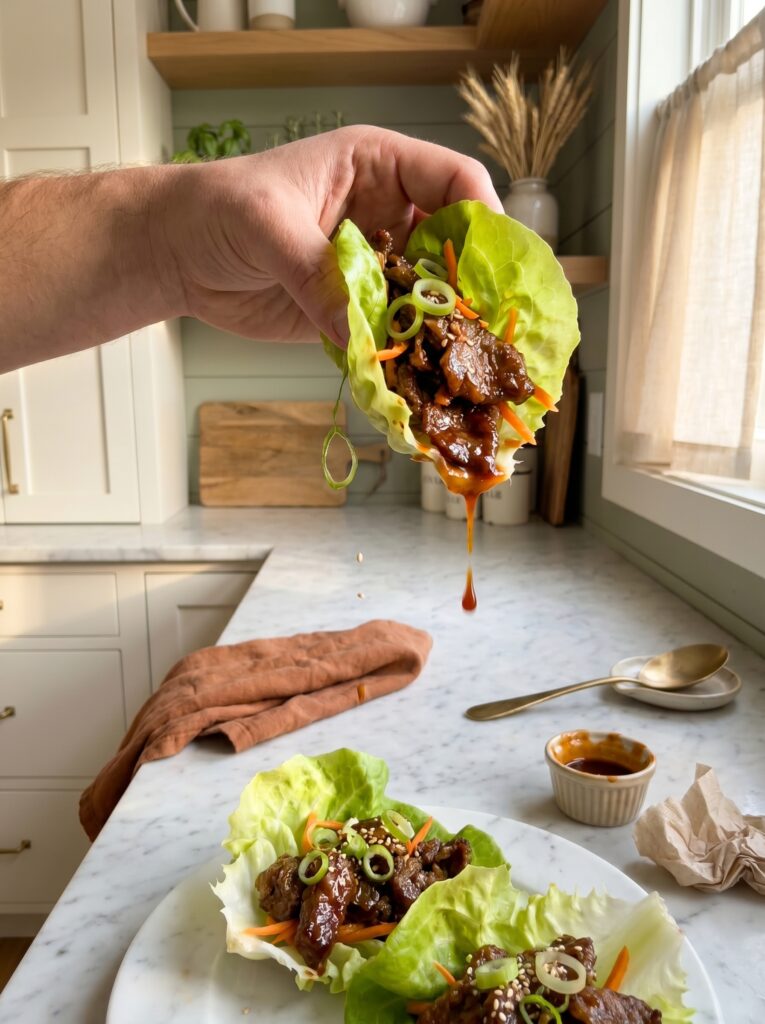
From cold pan to assembled cups on the table, this recipe takes fifteen minutes if you move with any kind of purpose and about twenty if you’re being leisurely about it. Either way, it is the fastest path from a hungry weekday noon hour to a lunch that genuinely satisfies — and that is the whole promise of this recipe.
How to Serve It
These Korean BBQ beef lettuce cups are one of the most versatile quick recipes in a home cook’s rotation — impressive enough for company, fast enough for a solo Tuesday lunch, and flexible enough to become a different meal every time you make them. Here are five ways to bring them to the table.
- ☕ Classic Work-From-Home Power Lunch: Plate four to six cups on a wide plate with the cucumber slaw tucked alongside, the sriracha mayo drizzled over, sesame seeds and scallions scattered liberally, and two lime wedges at the edge. This is the lunch you eat at your desk and feel slightly smug about — it tastes better than any restaurant delivery that just arrived cold in a bag, it cost three dollars, and it took fifteen minutes. The smug feeling is earned.
- 🥞 Build-Your-Own Dinner Party Situation: Double or triple the beef recipe and set everything out in separate serving dishes — the beef warm in a bowl, lettuce leaves fanned on a platter, cucumber slaw in a small dish, sriracha mayo in a squeeze bottle, and small bowls of toppings including kimchi, shredded carrots, sesame seeds, and cilantro. Let guests build their own cups. This format requires almost zero hosting effort, generates enormous conversation and interaction around the table, and looks like you planned something creative and intentional. It is the perfect dinner party move for someone who wants to be impressive without spending the afternoon cooking.
- 🌸 Meal-Prep Lunch Containers: Cook a double batch of the Korean BBQ beef on Sunday and portion it into four containers. Store the cucumber slaw in a separate small container. Pack fresh lettuce leaves in a zip-top bag. Each day, microwave the beef for 90 seconds, assemble the cups at your desk or in the kitchen, and add the cold slaw and drizzle fresh. Five days of genuinely exciting lunches from one 20-minute Sunday session — and the beef gets more flavorful every day it sits in the fridge.
- 📚 Weeknight Family Dinner with Rice: Spoon steamed white rice into the lettuce cups under the Korean BBQ beef — about two tablespoons of rice per cup — for a heartier, more dinner-appropriate serving. Add the cucumber slaw, the sriracha mayo, and all the toppings. Set out a bottle of chili crisp or gochujang on the table for anyone who wants more heat. This format feeds four adults comfortably as a full dinner and costs about eight dollars total. Serve with a quick miso soup on the side and you have a complete weeknight dinner that took twenty-five minutes and tastes like a restaurant.
- 🎃 Party Appetizer Platter: Use the smallest, most cup-shaped butter lettuce leaves and fill each one with just enough beef for a single two-bite portion. Arrange them on a large platter in tight rows — twelve to sixteen cups depending on the size of the head of lettuce. Drizzle the sriracha mayo over the entire platter, scatter sesame seeds and scallions, and tuck a small bunch of cilantro at one end of the platter for color. This is one of the most visually striking party appetizers you can make, and it disappears faster than anything else on the table at every party I’ve ever brought it to.
However you serve them, build the cups right before eating — assembled lettuce cups sitting for more than five or ten minutes begin to wilt and release liquid. The beef can sit warm in the pan with the heat off for up to fifteen minutes while you finish other preparations, but the final assembly should happen at the last moment for the best texture and presentation.
Storage & Make-Ahead Tips
Cooked Korean BBQ beef — Refrigerator: Store the cooked beef in an airtight container in the refrigerator for up to 5 days. This is one of those fillings that genuinely improves with time — the sauce penetrates deeper into the beef overnight, the gochujang mellows slightly while keeping its depth, and the whole thing tastes more cohesive on day three than it did on day one. Reheat in a skillet over medium heat for two minutes with a splash of water, or microwave covered for 90 seconds. Either method works; the skillet reheating gives you a little extra caramelization on the outside of the beef that is genuinely worth the extra dish.
Cooked Korean BBQ beef — Freezer: The cooked beef freezes beautifully for up to 3 months. Let it cool completely, transfer to a zip-top freezer bag, press out all the air, and freeze flat. Thaw overnight in the refrigerator and reheat as above. The sauce-coated beef holds up through freezing far better than plain cooked ground beef because the sauce acts as a protective coating around each piece — the texture after thawing is very close to freshly made.
The Korean BBQ sauce — Make it up to a week ahead: The sauce keeps in a sealed jar in the refrigerator for up to 7 days and is better after a day or two as the flavors integrate. Make a double or triple batch and keep it in the fridge as a weeknight shortcut — it takes thirty seconds off an already fast recipe and having it premixed means there is genuinely no barrier between you and a fifteen-minute lunch on any given day of the week. The sauce also works as a stir-fry sauce, a noodle sauce, and a marinade for chicken thighs.
📅 Make-Ahead Tip: On Sunday, cook a double batch of Korean BBQ beef, mix a jar of sauce to keep in the fridge, and make a large batch of cucumber slaw — store the slaw without the dressing, mixing it in fresh each day to keep the cucumbers crisp. With these three components ready, a complete lunch or dinner is never more than a lettuce leaf and ninety seconds of microwave time away. That is the most efficient weekday cooking setup I know for a recipe this good.
Lettuce cups — always assemble fresh: Never store assembled lettuce cups. The warm beef wilts the lettuce within minutes, the sriracha mayo soaks in and loses its visual appeal, and the cucumber slaw releases liquid that makes the whole cup soggy. Store every component separately and assemble right before eating, every single time. The beef reheats in ninety seconds. The assembly takes two minutes. There is no shortcut worth taking here because the shortcut produces an inferior result and the proper method produces an exceptional one.
Helpful Tips & Common Mistakes
These five mistakes account for the vast majority of Korean BBQ beef lettuce cups that don’t quite reach their potential — and every single fix is fast, simple, and makes an immediately noticeable difference.
✗ Mistake: Stirring the ground beef constantly from the moment it hits the pan and ending up with gray, steamed, textureless meat instead of deeply browned, flavorful crumbles.
✓ Fix: Add the beef to a hot pan and leave it completely alone for 60 to 90 seconds before touching it. Let it sit flat and develop a deep brown crust on the bottom before breaking it up. Then leave it again. Browning requires direct, uninterrupted contact with a hot surface — constant stirring prevents that contact and produces beef that’s been heated through rather than properly browned. The color you’re building in this step is the flavor foundation for everything that comes after it.
✗ Mistake: Using wet lettuce leaves straight from rinsing and watching the cups go limp and the beef juices pool at the bottom immediately.
✓ Fix: Rinse the lettuce and then dry it thoroughly — a salad spinner is ideal, but patting with a clean kitchen towel or paper towels works perfectly well. Dry lettuce maintains its structure significantly longer than wet lettuce, holds the beef without immediately collapsing, and doesn’t dilute the sauce and toppings with water. This takes an extra ninety seconds and is completely worth every one of them.
✗ Mistake: Adding the sauce to the beef and then walking away to do something else, coming back to find the sugar has burned on the bottom of the pan and the whole kitchen smells acrid.
✓ Fix: Stay at the stove for the full 90 seconds that the sauce cooks down. Stir constantly. Keep the heat at medium rather than medium-high. The brown sugar caramelizes fast and beautifully — and then goes past beautiful to burned in under a minute if you’re not watching. This is the most time-sensitive thirty seconds of the whole recipe. Give it your full attention and it produces a glossy, clinging, deeply caramelized glaze. Walk away and it produces smoke and regret.
✗ Mistake: Making the sriracha mayo too thick to drizzle and ending up with heavy globs that overwhelm each bite rather than a light, cohesive finish.
✓ Fix: Thin the sriracha mayo with water — one teaspoon at a time — until it falls from a spoon in a thin, steady stream rather than dropping in thick globs. The drizzle should be light and even across the cup, adding creaminess and heat without being the dominant flavor in every bite. A sauce that’s too thick gets eaten in patches and tastes heavy; a properly thinned drizzle ties every element of the cup together in a way that feels intentional rather than overwhelming.
✗ Mistake: Skipping the final splash of sesame oil added off the heat and wondering why the beef doesn’t smell as aromatic as restaurant Korean BBQ.
✓ Fix: Add the last half tablespoon of sesame oil after the pan comes off the heat — not before, not during. Sesame oil’s volatile aromatic compounds burn off rapidly at cooking temperatures, which means sesame oil cooked in the pan mostly disappears. Sesame oil added after cooking stays bright and fragrant and coats every piece of beef with that unmistakable, deeply aromatic sesame note that is one of the defining characteristics of Korean BBQ flavor. This is a ten-second step that makes the finished dish smell genuinely extraordinary.
Recipe Variations
The Korean BBQ sauce and lettuce cup format in this recipe are a framework — once you have them down, the possibilities expand considerably. Here are four variations that are all genuinely worth making in their own right.
🥩 Bulgogi-Style Sliced Beef Lettuce Cups: Instead of ground beef, use thinly sliced ribeye or sirloin — ask your butcher to slice it thin, or freeze a steak for 20 minutes and slice it yourself with a sharp knife against the grain. Marinate the slices in the Korean BBQ sauce for 30 minutes, then cook in a screaming hot cast-iron skillet for 2 minutes per side without moving until caramelized and slightly charred at the edges. The sliced beef is more authentically Korean BBQ in style, has a dramatically more tender and rich texture than ground beef, and looks absolutely stunning fanned across a butter lettuce cup with the cucumber slaw and sesame seeds over the top. This is the version I make when I want to genuinely impress someone.
🍗 Korean BBQ Chicken Lettuce Cups: Swap the ground beef for ground chicken — 93% lean for the best texture — and add one extra tablespoon of soy sauce to the sauce since chicken is milder and needs a slightly stronger seasoning hand. Brown the chicken in the same way as the beef, ensuring it develops real color before the sauce goes in. Top with a quick mango salsa — diced mango, red onion, jalapeño, cilantro, lime juice — in place of the cucumber slaw for a sweet-spicy-savory combination that is exceptional with the gochujang sauce. This version is lighter than the beef, subtly different in flavor, and a wonderful warm-weather variation that feels bright and summery.
🌱 Korean BBQ Mushroom and Tofu Lettuce Cups: For a plant-based version that doesn’t feel like a compromise, use 8 oz of finely chopped cremini mushrooms plus 8 oz of pressed, crumbled extra-firm tofu cooked together in the same way as the beef. The mushrooms brown beautifully and release liquid that helps caramelize the tofu. The gochujang sauce coats everything in the same bold, spicy-sweet glaze that makes the beef version extraordinary — the umami from the mushrooms is deep enough that this doesn’t read as a “meatless” dish so much as a genuinely different and excellent dish in its own right. Add a tablespoon of soy sauce to replace the depth that fish sauce would provide in the original recipe.
🍜 Korean BBQ Beef Rice Bowl — The Lunch Box Version: Take all the flavors of the lettuce cup and build them into a rice bowl for a more substantial, packable, fork-and-spoon lunch. Steamed jasmine rice as the base, Korean BBQ beef over the top, cucumber slaw alongside, a soft-boiled egg halved in the center, sriracha mayo drizzled over everything, and a pile of kimchi in one corner of the bowl. Scatter sesame seeds and sliced scallions over the whole thing and finish with a drizzle of chili crisp. This bowl packs and reheats well — minus the egg and the fresh toppings, which go on at eating time — and is one of the most satisfying packed lunches in existence. The flavor is identical to the lettuce cups, just in a warmer, heartier format for days when a lettuce cup isn’t quite enough.
Final Thoughts
That Wednesday afternoon lunch — the one where I grabbed a half-pound of ground beef and a head of butter lettuce with twenty minutes on the clock and produced something I actually wanted to eat slowly instead of rushing through — is the moment this recipe became permanent in my kitchen. Korean BBQ beef lettuce cups work because they ask almost nothing of you and give back an enormous amount in return: bold flavor, beautiful presentation, satisfying texture, and that particular feeling of having eaten something that was worth stopping for, even on a busy Tuesday noon hour. Make this once and you will make it again. Make it twice and it becomes part of how you cook — one of those recipes that lives in your hands rather than on the page.
Make it this week and let me know what you think — leave a ⭐⭐⭐⭐⭐ rating below, tag @zippydishes on Pinterest with your beautiful cups, and share this with anyone in your life who is still eating sad lunches out of habit when they could be eating this instead. You know who they are. Send it to them. 🥬🔥
Frequently Asked Questions
What do Korean BBQ beef lettuce cups taste like?
They taste like the most exciting thing you’ve eaten for lunch in a long time. The beef is deeply savory and sweet with a fermented chili heat from the gochujang that builds slowly rather than hitting all at once — it’s complex in a way that makes you keep eating to understand it. The butter lettuce adds a cool, faintly grassy freshness that balances the richness of the beef, the cucumber slaw brings brightness and crunch, and the sriracha mayo ties everything together with a creamy, spicy finish. Every bite contains all of those elements simultaneously, which is what makes the lettuce cup format so specifically satisfying — it’s not just a taco without the tortilla, it’s a different eating experience that happens to be lighter, fresher, and more interesting than most things you’ll eat on a Tuesday.
Can I make Korean BBQ beef lettuce cups ahead of time for meal prep?
The beef component is one of the best meal-prep proteins you can make — it stores for 5 days in the refrigerator, improves in flavor overnight as the sauce penetrates further into the meat, and reheats in 90 seconds in the microwave or 2 minutes in a skillet. The cucumber slaw keeps for 3 days if stored without the dressing — toss it with the dressing fresh each day for the best texture. The sriracha mayo keeps for up to a week in a sealed jar in the fridge. The one component you should never prep ahead is the assembled cup itself — always build it right before eating. Store everything separately, assemble at the last moment, and you have a genuinely excellent lunch ready every day of the week with essentially zero morning effort.
What is gochujang and where can I find it?
Gochujang is a fermented Korean chili paste that has been central to Korean cooking for centuries. It’s made from red chili powder, glutinous rice, fermented soybeans, and salt, and it has a flavor that is simultaneously spicy, sweet, savory, and deeply fermented in a way that no other condiment replicates. You can find it at Trader Joe’s, most Walmart stores in the Asian foods aisle, any Asian grocery market, and increasingly at mainstream grocery stores as Korean cuisine has become more widely familiar in American kitchens. It typically comes in a red tub or a squeeze tube — the tube is more convenient for small quantities. Once open, it keeps in the refrigerator for six months or longer. If you cook at all with any regularity, it is worth keeping on hand — it improves virtually everything it touches.
What type of lettuce works best for lettuce cups?
Butter lettuce — also called Boston or Bibb lettuce — is the gold standard for lettuce cups. The leaves are naturally cup-shaped with a flexible, pliable texture that folds around fillings without cracking or splitting, and they’re large enough for a proper two-bite serving without being so large that eating becomes unwieldy. The flavor is mild and slightly sweet, which complements rather than competes with the bold Korean BBQ beef. If you can’t find butter lettuce, romaine hearts separated into boat-shaped individual leaves are the best alternative — sturdier and more rigid, which some people actually prefer for heavier fillings. Iceberg lettuce works in a pinch and offers maximum crunch and neutrality. What you want to avoid is loose-leaf or red leaf lettuce — the leaves are too flat and floppy to hold fillings effectively.
Is this recipe spicy — can I make it milder for kids?
The spice level as written is moderate — noticeable but not aggressive. Most adults find it pleasantly warm rather than intensely hot. For kids or heat-sensitive eaters, you have two easy adjustments. First, reduce the gochujang from 1 tablespoon to 1 teaspoon — the fermented depth stays in the sauce but the heat drops significantly. Second, omit the sriracha mayo entirely and substitute a simple honey mayo instead — 3 tablespoons of Hellmann’s with 1 tablespoon of honey and a squeeze of lime. The result is sweet, savory, and mild enough that most kids will eat it happily. You can set out a bottle of sriracha or gochujang on the side for adults who want to add heat to their own cups without affecting everyone else’s.
Can I use this Korean BBQ sauce on other things?
This sauce is one of the most useful things in your refrigerator once you make it. Brushed over chicken thighs and baked at 400°F for 25 minutes, it creates a lacquered, caramelized crust that is extraordinary. Tossed with roasted broccoli or Brussels sprouts in the last 5 minutes of oven time, it makes vegetables that even self-proclaimed vegetable skeptics will eat voluntarily. Stirred into ramen or instant noodles with a soft-boiled egg, it turns a convenience food into something genuinely craveable. Used as a dipping sauce for spring rolls, dumplings, or grilled shrimp — excellent. It keeps for a week in the fridge and takes thirty seconds to make, which means having a jar ready at all times costs almost nothing in time or effort and pays off constantly throughout the week.
How do I make this recipe gluten-free?
The swap is simple and the result is indistinguishable from the original. Replace the soy sauce with an equal amount of tamari — same flavor, same color, same function, fully gluten-free. Check the label on your gochujang; most brands are gluten-free, but a few use wheat starch as a thickener. Sempio and Haechandle are two widely available brands that are certified gluten-free and available at most Asian markets and online. Every other ingredient in this recipe — ground beef, sesame oil, rice wine vinegar, brown sugar, garlic, ginger, lettuce, cucumber, mayonnaise, sriracha, lime — is naturally gluten-free. Two label checks and one swap and the entire recipe is fully gluten-free without any flavor compromise whatsoever.
What can I do with leftover Korean BBQ beef beyond lettuce cups?
Leftover Korean BBQ beef is one of the most versatile things you can have in your fridge. Spoon it over steamed rice with a fried egg on top and a drizzle of chili crisp for a five-minute rice bowl that tastes like you planned it. Tuck it into warm flour tortillas with shredded cabbage, avocado, and lime for Korean-Mexican fusion tacos that are genuinely wonderful. Stir it into instant ramen with the seasoning packet, a soft-boiled egg, and some frozen corn for a lunch that feels almost elaborate for the effort involved. Use it as a topping for a baked potato with sour cream and scallions — odd-sounding, extraordinary-tasting. Scramble it with eggs for a breakfast hash that will make you rethink everything you thought you knew about weekday mornings. The sauce coating on the beef works with almost every application you can think of, which is part of why making a double batch every time you cook this is one of the smartest meal-prep habits in this recipe’s repertoire.