
Viral Whole Grilled Onion Foil Packets: 9 Reasons This Addictive Summer Side Dish Will Steal the Show at Every Cookout
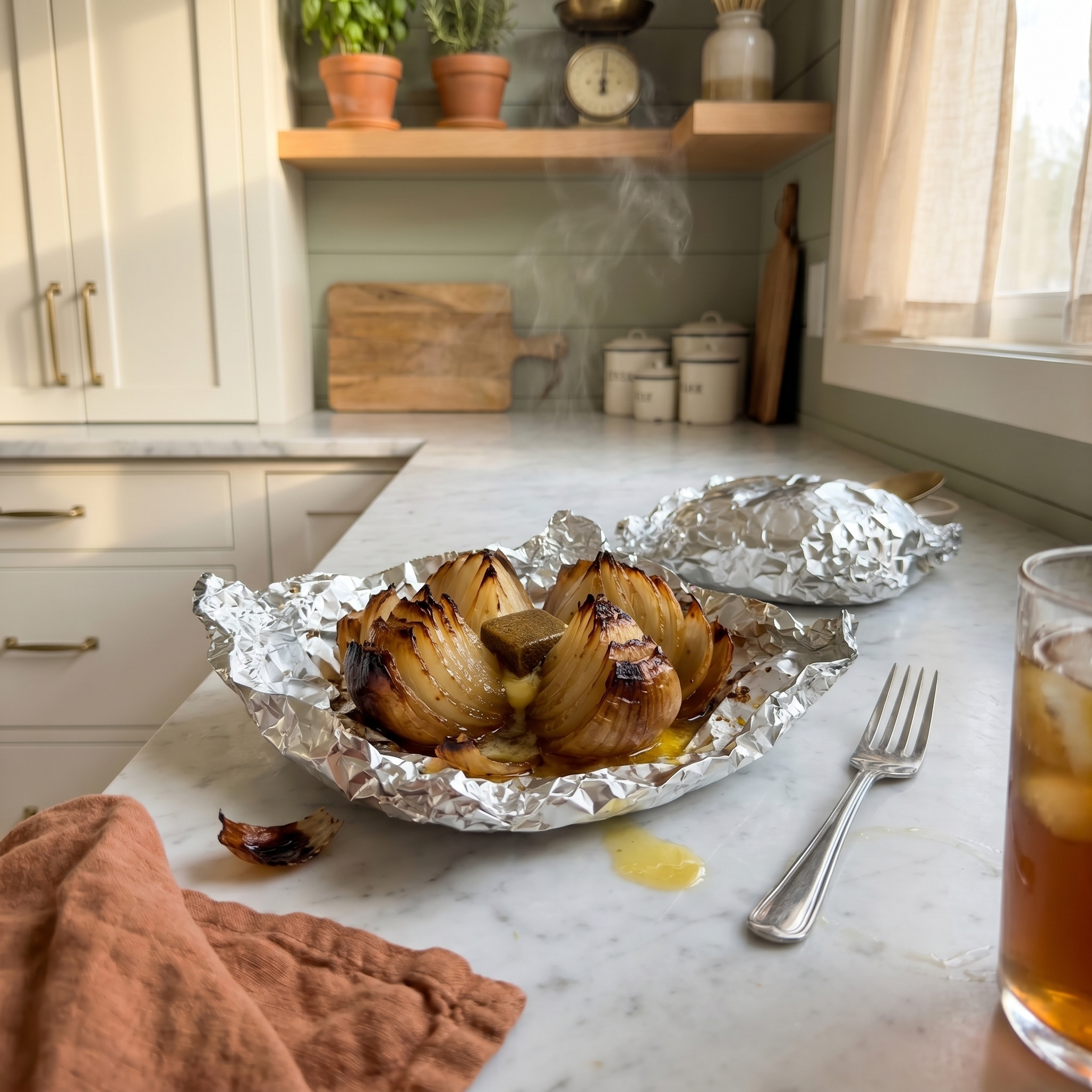
It started with my brother-in-law Rick doing something at a cookout that I initially thought was a mistake. He took four whole yellow onions — didn’t peel them, didn’t slice them, didn’t do anything to them except cut a small cone out of the top — set them upright on the grill grate in little nests of aluminum foil, dropped a cube of butter and a beef bouillon cube into the cavity of each one, and wrapped them up tight. I watched him do this with genuine confusion. I was the one who had spent forty-five minutes marinating the chicken and making the potato salad, and he was putting whole onions on the grill like that was a thing people do. An hour later he unwrapped one of those foil packets and the entire backyard stopped what it was doing. The smell hit first — caramelized, buttery, deeply sweet and savory — and then the onion itself emerged from the foil completely transformed: tender all the way through, glossy with butter and beef drippings, the outer layers soft and yielding, the inside impossibly rich. He handed me a fork. I ate the entire thing standing at the grill and immediately asked him to explain himself.
Have you ever been at a summer cookout where the side dishes were exactly what you expected — the same potato salad, the same bag of chips, the same corn that was fine but not memorable — and then something showed up that genuinely surprised you? A whole grilled onion foil packet is that thing. It is one of those recipes that sounds absurdly simple, looks almost laughably easy to make, and then produces something so unexpectedly delicious that it becomes the most talked-about item on the table. A whole sweet onion, cored just enough to create a small well, filled with butter and your choice of seasoning, wrapped tightly in foil, and left on the grill for an hour while you do everything else — and what you unwrap is essentially an onion that has been slow-roasted and braised in its own juices and melted butter simultaneously, until it is deeply caramelized, fork-tender, and almost impossibly flavorful. It is a side dish that justifies its own conversation.
Whether you’re a seasoned grill master looking for a new trick that will make people put down their burgers and actually pay attention, a summer host who wants a dead-simple make-ahead side dish that requires zero babysitting once it’s on the grill, or someone who has been eating onions their entire life and had no idea they could taste like this — keep reading. This is the recipe that changes how you think about a vegetable you already own, and it is one of the best things I have ever pulled off a grill.
Table of Contents
Why This Recipe Works
The reason a whole grilled onion foil packet works so spectacularly comes down to basic cooking science that is deeply satisfying once you understand it. The foil traps all the steam and liquid released by the onion as it cooks — which is considerable — and that liquid combines with the melting butter and seasonings to create a self-basting braising environment inside the packet. The onion essentially cooks in its own intensified juices the entire time, which is why the flavor is so concentrated and complex despite the simplicity of the preparation. The grill adds a background smokiness that an oven cannot replicate, and the high ambient heat caramelizes the natural sugars in the onion far more efficiently than any other cooking method.
- ✔ Completely hands-off once it’s on the grill — Prep takes five minutes per onion. Once the foil packet is on the grill, you walk away and don’t come back for an hour. No checking, no stirring, no babysitting. The grill does everything while you focus on the rest of the meal.
- ✔ Transforms a humble onion into something extraordinary — Raw onions are pungent and sharp. Whole grilled onions cooked low and slow in foil are sweet, buttery, deeply caramelized, and tender enough to eat with a spoon. The transformation is dramatic enough that people who claim not to like onions eat these without hesitation.
- ✔ Infinitely customizable flavor profiles — The basic formula is butter plus seasoning. What that seasoning is — beef bouillon, ranch powder, French onion soup mix, garlic and herbs, honey and balsamic — changes the entire character of the dish. One technique, a dozen directions.
- ✔ Works on any grill at any temperature — Gas grill, charcoal grill, pellet smoker — this recipe works on all of them. It also works in a 400°F oven if the weather doesn’t cooperate. The foil packet protects the onion from direct flame and makes it essentially foolproof regardless of how your grill runs.
- ✔ The most dramatic presentation of any side dish at the cookout — Unwrapping a foil packet at the table and revealing a glossy, steaming, perfectly whole onion sitting in a pool of buttery pan drippings is a moment. People stop talking. People lean in. People ask what that is. It is a side dish with genuine theatrical presence.
- ✔ Can be prepped hours in advance — Fill and wrap the onion foil packets up to 8 hours before cooking and store them in the refrigerator. Pull them out when the grill is hot and put them on. No day-of prep required beyond the initial five minutes of coring and filling.
- ✔ Pairs with absolutely everything on the grill — Steak, burgers, chicken, ribs, sausages, grilled vegetables — there is not a single thing coming off a summer grill that isn’t improved by having a buttery, caramelized grilled onion alongside it.
Let’s get into the ingredients and talk about the details that make the difference between a good foil packet onion and a truly great one.
What You’ll Need
This recipe makes 4 whole grilled onion foil packets — one per person as a generous side dish, or two for people who quickly discover what they’ve been missing and want another. Everything here is available at any grocery store, Walmart, or Aldi, and most of it is already in your pantry or refrigerator right now.
For the Onions
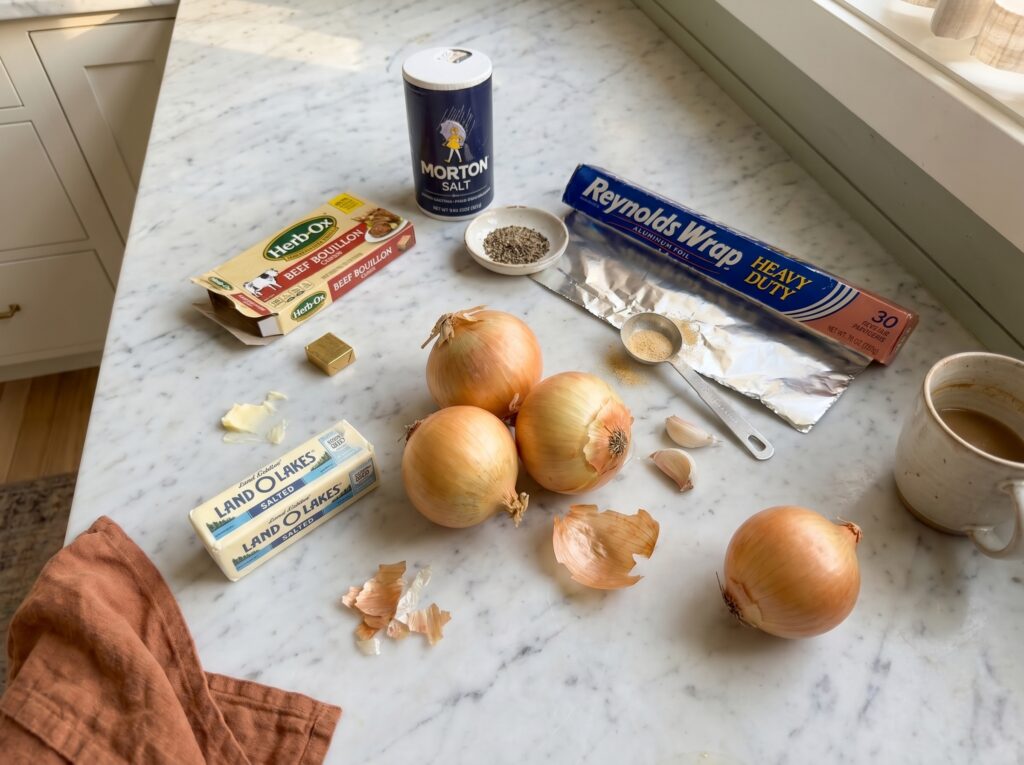
- 4 large sweet onions — Vidalia are the gold standard when they’re in season, but any large yellow sweet onion works beautifully
- Heavy-duty aluminum foil — standard foil tears too easily and can allow steam to escape; heavy-duty is worth having for this recipe
For the Classic Butter and Bouillon Filling
- 4 tablespoons unsalted butter — Land O’Lakes is my go-to — one tablespoon per onion
- 4 beef bouillon cubes or 4 teaspoons of beef bouillon paste — Better Than Bouillon beef base is exceptional here and worth seeking out
- ½ teaspoon garlic powder
- ½ teaspoon black pepper
- Optional: a pinch of dried thyme or rosemary tucked in with the butter
For the Ranch Butter Variation Filling
- 4 tablespoons unsalted butter
- 1 packet Hidden Valley Ranch seasoning mix, divided evenly among the four onions
- ½ teaspoon garlic powder
- Pinch of black pepper
For the French Onion Soup Style Filling
- 4 tablespoons unsalted butter
- 1 packet Lipton French Onion Soup mix, divided evenly among the four onions
- A small pinch of fresh or dried thyme per onion
For Finishing at the Table
- Flaky sea salt — Maldon is ideal
- Fresh chopped parsley or chives for color and freshness
- A wedge of lemon or a splash of balsamic vinegar for brightness
- Optional: a small spoonful of sour cream or crème fraîche in the center after unwrapping
- Optional: shredded Gruyère or Parmesan melted over the top in the last 5 minutes of grill time — open the foil packet slightly to let it melt
Optional Add-Ins and Upgrades
- A drizzle of Worcestershire sauce into the cavity before sealing the foil — adds a deep, savory complexity that plays beautifully with the caramelizing onion
- A teaspoon of brown sugar and a splash of balsamic vinegar for a sweet-tangy version that is outstanding alongside pork chops or chicken
- A small slice of bacon tucked into the cavity with the butter — it bastes the onion from the inside as it renders and creates an incredible smoky, porky richness in the finished packet
- Hot honey drizzled over the unwrapped onion right before serving
- A cube of cream cheese nestled in the cavity alongside the butter for a rich, tangy finish
- A teaspoon of miso paste blended with the butter for an umami-forward variation that is extraordinary
Substitutions
What if I can’t find Vidalia onions or large sweet onions? Any large yellow onion from the grocery store works well — the larger the better, since a bigger onion means more room for filling and a more dramatic presentation. White onions are slightly sharper and less sweet but still produce excellent results. Red onions turn a beautiful deep purple as they cook and have a slightly more complex, earthier flavor than yellow onions — they’re wonderful if you want something a little different visually and in flavor. The one onion to avoid is a small boiling onion or a pearl onion — they’re too small for the foil packet treatment and cook through too quickly before the caramelization has time to develop.
Can I use olive oil instead of butter? You can, but the result is noticeably different — butter caramelizes and browns inside the foil packet in a way that olive oil doesn’t, and it creates a richness and depth that is central to what makes this dish extraordinary. If you need a dairy-free version, a good quality plant-based butter — Miyoko’s is the best option for this application — produces results closer to dairy butter than olive oil does. A tablespoon of coconut oil with a pinch of sea salt is another dairy-free option that works better than olive oil for this specific application.
What if I don’t have beef bouillon? Chicken bouillon works and produces a lighter, more delicate flavor that is wonderful with fresh herbs. Vegetable bouillon makes the recipe fully vegetarian and is surprisingly excellent — the onion’s own sweetness takes center stage without the beef flavor. A teaspoon of soy sauce or Worcestershire sauce drizzled into the cavity with the butter is a completely different approach that still produces a deeply savory result. And honestly, butter alone with garlic powder, salt, pepper, and dried thyme is a beautiful minimalist version that lets the pure flavor of the caramelized onion be the point.
🧑🍳 Chef’s Note — Onion Selection: The size of your onion matters more than you might think for this recipe. You want the largest sweet onions you can find — ideally baseball-sized or larger. A small onion cooks through too quickly and doesn’t have enough mass to develop the slow, deep caramelization that makes this dish what it is. When Vidalia onions are in season — late April through August — they are the absolute best choice, with a natural sweetness and high water content that makes them ideal for foil packet cooking. Costco and Walmart often sell large bags of Vidalias during peak season at excellent prices.
🧑🍳 Chef’s Note — Foil Technique: The seal on your foil packet is the most important technical element of this recipe. A loose or poorly sealed packet loses steam, which means the onion braises in less liquid and can dry out before it finishes cooking. You need two layers of heavy-duty foil per onion, sealed tightly on all sides with the onion sitting upright — the cavity you’ve created needs to stay upright so the butter and drippings pool inside the onion rather than running out the sides. When you place the packet on the grill, set it on a flat, level section of the grate and don’t tilt it. The liquid inside that packet is the whole recipe.
How to Make Whole Grilled Onion Foil Packets — Step by Step
- Preheat your grill to medium heat — around 350°F to 375°F — and set it up for indirect cooking if possible. For a gas grill, light all burners to preheat, then turn one or two burners off and place the foil packet onions over the unlit side. For a charcoal grill, bank the coals to one side once they’re fully ashed over. Indirect heat is preferred because the foil packets need a sustained, even temperature for a full hour — direct flame under a foil packet can create hot spots that char the bottom of the onion before the center has cooked through. That said, medium direct heat works perfectly well if you can’t set up two zones — just rotate the packets a quarter turn every 20 minutes to prevent any one side from getting too much direct heat.
💡 Pro Tip: Put the foil packet onions on the grill before anything else — they need a full hour and they’re completely hands-off, so getting them started first means everything finishes at roughly the same time. Put them on, close the lid, and forget about them while you prep and grill everything else. They will not burn. They will not need checking. They will just sit there becoming extraordinary while you do other things.
- Prepare the onions — do not peel them. The outer papery skin stays on for the entire cooking process and serves as an additional protective layer that prevents the outermost flesh from drying out. Using a sharp paring knife, cut a shallow cone-shaped cavity into the top of each onion — think of coring an apple, but shallower. You want a well about 1 to 1½ inches deep and about 1 inch wide at the top — large enough to nestle a tablespoon of butter and a bouillon cube comfortably, but not so large that you’ve cut into the middle of the onion and compromised its structure. The core you remove can be finely chopped and saved for another use — it’s perfectly good onion.
- Fill the cavity of each onion with the butter and seasoning. Drop one tablespoon of butter — cut into two or three smaller pieces so it fits — directly into the cavity. Add the beef bouillon cube or a generous teaspoon of Better Than Bouillon paste directly on top of the butter. Sprinkle in the garlic powder, black pepper, and any dried herbs you’re using. If you’re adding a drizzle of Worcestershire sauce, add it now — about half a teaspoon directly into the cavity over the butter. The butter will melt during cooking and combine with the bouillon and the onion’s natural juices to create the braising liquid that flavors everything from the inside out.
💡 Pro Tip: If you want an extra layer of flavor complexity, use a compound butter instead of plain butter in the cavity. Soften a stick of butter and blend it with 1 teaspoon of Worcestershire sauce, 1 teaspoon of garlic powder, ½ teaspoon of onion powder, ½ teaspoon of smoked paprika, and a good pinch of salt. Roll it into a log in plastic wrap and refrigerate until firm, then slice off individual tablespoon portions for each onion. The compound butter melts slowly and bastes the onion from inside with layers of flavor that plain butter simply doesn’t provide. Make a double batch and keep it in the freezer — it’s extraordinary on grilled corn, grilled mushrooms, and steaks as well.
- Wrap each filled onion in two layers of heavy-duty aluminum foil, keeping it upright throughout. Tear a sheet of heavy-duty foil about 12 inches long and place the onion in the center. Bring the sides of the foil up around the onion, then crimp and fold the top tightly, leaving a small air pocket above the onion rather than pressing the foil flat against it — the steam needs a little room to circulate inside. Wrap a second sheet of foil around the outside of the first in the opposite direction, sealing it just as tightly. The double layer is not optional with heavy-duty foil and is essential with standard foil. Set the wrapped onion upright and press the base slightly flat so it stands without tipping.
- Place the foil packet onions upright on the grill over indirect heat and close the lid. Set them on a level section of the grate where they won’t tip over — a small square of crumpled foil under the base of any wobbly ones acts as a stabilizing nest. Close the grill lid and set a timer for 45 minutes. Do not open the lid during this time. The temperature inside a closed grill running at 350–375°F is the perfect environment for these packets — hot enough to caramelize, contained enough to braise. Opening the lid drops the temperature and extends the cooking time.
- After 45 minutes, check for doneness by carefully squeezing the top of one packet through the foil. The onion should feel very soft and yielding — almost like a stress ball — with no resistance in the center. If it still feels firm in the middle, seal it back up and give it another 15 minutes. Total cooking time is typically 55 to 65 minutes depending on the size of the onion and the temperature of your grill. A truly large Vidalia onion may need the full 65 minutes. When the squeeze test gives you that soft, collapsing feel all the way through, the onion is done.
💡 Pro Tip: For an extra layer of caramelization and visual drama, open the foil packets in the last 5 minutes of cooking and fold the foil down to expose the top of the onion directly to the grill heat. The top will develop a deep golden-brown caramelized crust that adds another textural dimension to the finished dish — crispy and caramelized on the very top, buttery and tender the rest of the way through. Watch these last 5 minutes closely; the exposed onion can go from beautifully caramelized to charred quickly over a hot grill.
- Remove the packets from the grill carefully — the liquid inside is extremely hot. Use tongs and carry each packet level so the accumulated butter and drippings don’t spill out before you’re ready. Set them on a heatproof surface and let them rest for 3 to 5 minutes before opening — this brief rest allows the internal temperature to even out and the liquid inside to settle slightly so it doesn’t erupt when you tear the foil. When you do open them, open away from your face; the escaping steam is intense and the liquid is boiling hot.
- Open the foil packets at the table for maximum impact. Bring each packet to the table sealed, set it on a plate, and open the foil in front of whoever is eating it — the steam release, the smell, and the reveal of that glossy, caramelized whole onion sitting in a pool of buttery drippings is genuinely one of the best presentation moments in backyard cooking. The outer layers of foil become the bowl. Finish with a pinch of flaky sea salt, a scatter of chopped fresh parsley or chives, and a squeeze of lemon if you’re using it. If you’re adding cheese, fold the foil back and add the shredded Gruyère in the last 5 minutes on the grill.
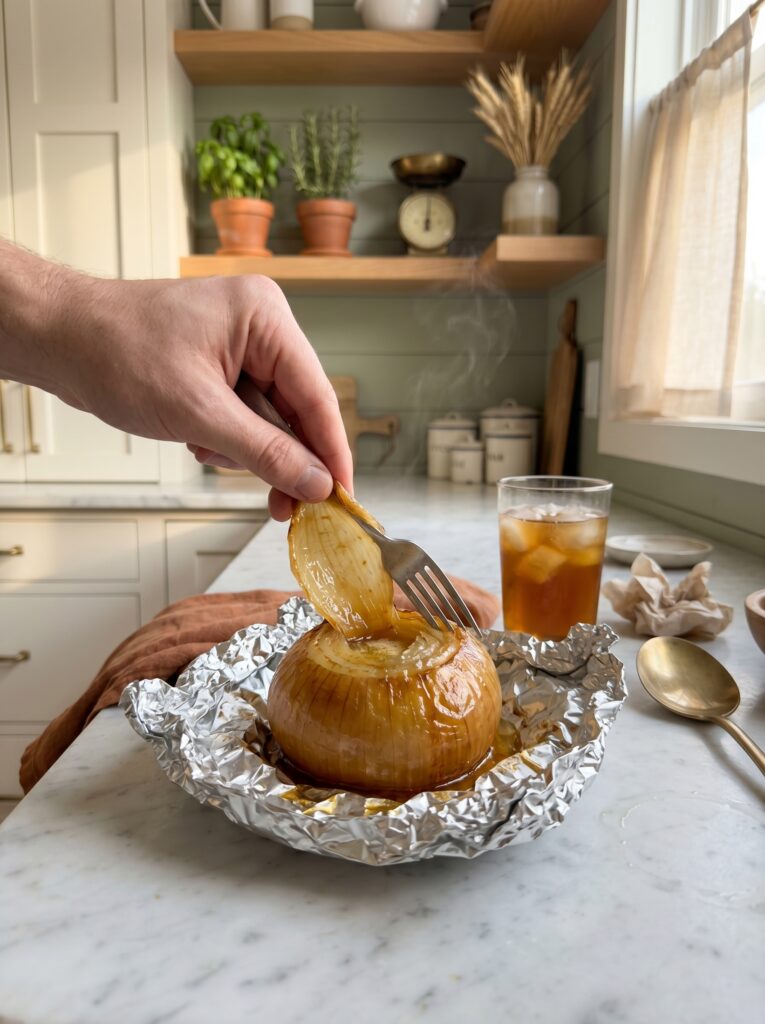
- Eat it directly from the foil using a fork, pulling the tender onion layers apart as you go. The outer few layers will be deeply caramelized and almost jammy. The inner layers will be soft and sweet and soaked through with the butter and bouillon. The very center will be the most tender of all — almost melting. Every layer is slightly different, and eating through all of them is one of the most genuinely enjoyable side dish experiences in grilling season. Don’t forget to tip the foil and drink the drippings. They are extraordinary.
Five minutes of prep per onion, an hour of completely unattended grill time, and a side dish that people will talk about on the drive home. That is the whole recipe. That is the entire promise. And it delivers every single time you make it.
How to Serve It
These whole grilled onion foil packets are one of those side dishes that earns its own conversation at every cookout — beautiful, dramatic, and deeply delicious in a way that surprises people who were expecting a regular side. Here are five ways to bring them to the table.
- ☕ Classic Backyard Cookout Side: Set the foil packets directly on individual plates and open them at the table — one per person, accompanied by the main protein and whatever else is coming off the grill. The foil becomes the bowl and the drippings become the sauce. No extra dishes, no plating effort, no presentation work required. The onion does all of that for you. Pair with grilled ribeyes, smoked ribs, or beer-can chicken and watch the onion compete for attention with the main event.
- 🥞 Grilled Onion as a Steak Topper: Pull the cooked onion from the foil, slice it in half from top to bottom, and lay each half cut-side down on the grill over direct heat for 2 to 3 minutes to develop a final char on the cut surface. Serve directly on top of a grilled steak — the buttery, caramelized onion draped over a ribeye or a strip steak is a combination that costs a fraction of a steakhouse meal and tastes like it shouldn’t. Spoon any remaining drippings from the foil over the steak as a natural pan sauce.
- 🌸 Party Appetizer Presentation: For a large cookout, place all the foil packets in a cast-iron skillet or on a large wooden board and open them all at once in the center of the table — a communal presentation where guests pull layers of onion onto their own plates. Set small bowls of toppings alongside: sour cream, chopped chives, shredded Gruyère, hot honey, and flaky sea salt. This format turns a side dish into an interactive experience and works beautifully as an appetizer while the main proteins finish on the grill.
- 📚 Leftover Grilled Onion on Everything: The cooked, caramelized onion from these packets is one of the most versatile refrigerator ingredients you can have. Pull the leftover onion from the foil, chop it roughly, and use it on burgers the next day — it is a better burger topping than anything you’ve been doing. Stir it into scrambled eggs for a deeply savory breakfast. Add it to grilled cheese sandwiches. Fold it into quesadillas with Monterey Jack. Spoon it over baked potatoes with sour cream. The possibilities are genuinely endless and they are all excellent.
- 🎃 French Onion Soup Inspired Bowl: Take the finished onion, place it in a deep oven-safe bowl, pour a ladle of warm beef broth over it, top generously with shredded Gruyère or Swiss cheese, and slide it under the broiler for 3 to 4 minutes until the cheese is bubbly and golden. The whole grilled onion version of French onion soup is not a traditional preparation, but it is extraordinary — the deeply caramelized foil packet onion has more concentrated flavor than any broth-simmered onion, and the result is richer and more intensely onion-flavored than the classic soup. Serve with crusty bread for soaking up every drop of the broth.
However you serve them, always open the foil packets at the last possible moment — and always pour every drop of the accumulated drippings over or alongside the onion when you serve it. Those drippings are liquid gold and discarding them would be a genuine waste of the best part of the packet.
Storage & Make-Ahead Tips
Cooked whole grilled onions — Refrigerator: Store leftover cooked onions — removed from the foil and placed in an airtight container with all their drippings — in the refrigerator for up to 4 days. The drippings solidify when cold and become a deeply flavorful butter that can be reheated and used as a sauce or spread. Reheat the onion in a covered skillet over medium-low heat with a splash of water or beef broth for 5 to 6 minutes, or microwave covered for 90 seconds. The reheated onion is excellent — the caramelization deepens slightly and the butter re-melts into a glossy sauce.
Uncooked filled foil packets — Refrigerator: Assemble the filled and wrapped foil packet onions up to 8 hours in advance and store them upright in the refrigerator on a flat tray. When you’re ready to grill, pull them from the fridge and put them directly on the grill — add 5 to 10 extra minutes to the total cooking time since you’re starting from cold rather than room temperature. This is the ultimate make-ahead cookout move: all the prep happens the night before or the morning of, and when your guests arrive you just put the packets on the grill and open a beer.
Cooked onion for uses all week: Make a double or triple batch of foil packet onions at any cookout and refrigerate the extras specifically for weekday use. Chopped caramelized grilled onion from these packets elevates everyday cooking in a way that takes seconds to add — stir into pasta sauces, add to grain bowls, spoon over grilled chicken, fold into omelets. Having a container of pre-cooked deeply caramelized onion in the fridge is one of those quiet kitchen advantages that makes everything you cook taste better without any extra effort.
📅 Make-Ahead Tip: Fill and wrap the foil packets on Friday evening and refrigerate them through the weekend. Saturday afternoon cookout, Sunday afternoon cookout — whenever the grill comes out, the onions are ready. No prep on the day of, no last-minute scrambling to core and fill onions while everything else is happening. Five minutes of Thursday prep makes Saturday completely effortless, and that is the kind of kitchen organization that genuinely changes how enjoyable summer hosting feels.
The drippings — save every drop: The accumulated butter and juices in the foil packet after the onion is cooked are one of the most intensely flavored cooking liquids you will ever produce on a grill. If you have any leftover after serving, pour them into a small jar and refrigerate — they solidify into a deeply savory, caramelized compound butter that is extraordinary spread on bread, used as a basting sauce for grilled meats, or melted over steamed vegetables. Do not pour them out. They are better than anything you made intentionally.
Helpful Tips & Common Mistakes
These five mistakes are the ones that stand between a grilled onion foil packet that is good and one that is genuinely great — and every fix is simple once you know what to watch for.
✗ Mistake: Peeling the onion before wrapping it in foil and ending up with outer layers that dry out and char during cooking.
✓ Fix: Leave the papery outer skin completely intact. It provides an additional layer of protection that keeps the outermost flesh moist and prevents the foil from scorching directly against the onion surface. The skin peels away easily after cooking and takes any overcooked outer layer with it, revealing perfectly tender, caramelized flesh underneath. This is not a step you can skip — a peeled onion in foil produces noticeably drier, less evenly cooked results than an unpeeled one.
✗ Mistake: Using a single layer of standard aluminum foil and ending up with a torn packet that leaks all the buttery drippings onto the grill grates before the onion finishes cooking.
✓ Fix: Always use two layers of heavy-duty foil. Standard foil is too thin and too prone to tearing when it’s been exposed to an hour of grill heat — it develops micro-tears at the crimp points that allow steam and liquid to escape. Heavy-duty foil in two layers creates a packet that is genuinely sealed for the full cooking time. If you only have standard foil, use three or four layers instead of two. The seal is the whole recipe.
✗ Mistake: Laying the foil packet on its side so the butter and drippings pool to one side of the onion rather than staying in the cavity and basting everything from the center.
✓ Fix: The onion must stay upright — cavity facing up — for the entire cooking time. The butter fills the cavity, melts downward through the layers of the onion, and the drippings collect in the bottom of the foil packet where they keep the base of the onion moist and braised. An onion lying on its side has the butter running out the cavity immediately, and the result is drier and less flavorful than a properly upright packet. If your onions keep tipping, create small nests of crumpled foil around their bases to hold them level.
✗ Mistake: Opening the foil packet too early to check on the onion and releasing all the accumulated steam that was doing the cooking work.
✓ Fix: Use the squeeze test through the foil rather than opening the packet to check doneness. A properly cooked whole grilled onion feels very soft when gently squeezed through the foil — almost like squeezing a stress ball, with no firm resistance anywhere. If you feel resistance in the center, seal it back up and give it more time. Opening the foil packet to peek releases the steam that has built up inside and can extend the remaining cooking time by 10 to 15 minutes. Trust the squeeze test. It is accurate and it doesn’t cost you anything.
✗ Mistake: Cooking the foil packets over direct high heat for the entire time to try to speed up the process and pulling out an onion that’s charred on the outside and still firm in the center.
✓ Fix: Medium heat and patience are non-negotiable for this recipe. The whole point of the foil packet method is a slow, even cook that caramelizes the onion’s sugars gradually and gives the steam time to penetrate all the way to the center. High direct heat forces the outside of the onion to cook faster than the inside, producing an unevenly cooked result. Keep the grill at 350–375°F, use indirect heat if you can, and give the onions the full 55 to 65 minutes they need. The wait is not negotiable — and it’s completely hands-off, which means it costs you nothing except time.
Recipe Variations
The whole grilled onion foil packet formula — onion, cavity, fat, seasoning, sealed tight — is one of the most adaptable techniques in summer grilling. Here are four directions that are all genuinely extraordinary in their own right.
🧀 French Onion Gruyère Stuffed Onion: This is the variation that makes people actually gasp. Fill the cavity with unsalted butter, a packet of Lipton French Onion Soup mix, a teaspoon of Worcestershire sauce, and a small pinch of fresh thyme. Grill as written for 55 minutes, then open the foil, pile shredded Gruyère generously over the top of the exposed onion, close the foil loosely, and return to the grill for another 5 minutes until the cheese is fully melted and beginning to brown at the edges. Open the packet at the table and serve with a thick slice of crusty sourdough bread for soaking up the drippings. This is the grilled side dish version of French onion soup, and it is one of the most deeply satisfying things you will cook on a grill this summer.
🍯 Honey Balsamic Herb Onion: Fill the cavity with unsalted butter, a teaspoon of honey, a teaspoon of good balsamic vinegar, a small garlic clove minced fine, a pinch of dried rosemary, and a pinch of flaky sea salt. The honey and balsamic caramelize together inside the packet into a thick, glossy, sweet-tart lacquer that coats every layer of the onion as it cooks. Finish with an extra drizzle of hot honey and a few fresh rosemary leaves right before serving. This variation is outstanding alongside pork tenderloin, grilled chicken thighs, and lamb chops — the sweet-acidic note in the onion cuts through the richness of the meat in a way that makes the whole plate more interesting.
🌶️ Tex-Mex Chili Butter Onion: Mix the butter for the cavity with a teaspoon of taco seasoning, half a teaspoon of chipotle powder, a small squeeze of lime juice, and a pinch of cumin and garlic powder. After cooking, top the opened packet with a spoonful of pico de gallo, a drizzle of sour cream, and a scatter of crushed tortilla chips for crunch. Serve alongside grilled fajita chicken or carne asada. The chipotle butter that accumulates in the bottom of the foil packet is a genuinely excellent sauce for drizzling over everything on the plate — smoky, slightly spicy, and deeply savory in a way that ties the entire meal together.
🫒 Mediterranean Herb and Feta Onion: Fill the cavity with olive oil rather than butter — a generous tablespoon — a quarter teaspoon of dried oregano, a pinch of red pepper flakes, a small grated garlic clove, and a teaspoon of lemon juice. Grill as written. When the packet is opened and the onion has rested for a moment, crumble a generous amount of good feta cheese directly into the cavity — it will soften slightly from the residual heat without fully melting. Finish with a drizzle of good olive oil, a scatter of fresh oregano, and a squeeze of lemon. Serve alongside grilled lamb, grilled halloumi, or a big Greek salad. The combination of slow-caramelized sweet onion and tangy feta with olive oil and lemon is a pairing that is greater than the sum of its parts.
Final Thoughts
Rick’s whole grilled onion at that backyard cookout three summers ago is still the side dish I get asked about most — and every time I tell someone what it is, they have exactly the reaction I had standing at that grill: mild skepticism followed by genuine astonishment at what a humble onion can become when you give it butter, seasoning, foil, and an hour on the grill. The whole grilled onion foil packet is proof that the most interesting food doesn’t always come from complexity or technique — sometimes it comes from understanding what a simple ingredient can become when you give it the right environment and the patience to let it get there. Five minutes of prep. An hour of hands-off grill time. A side dish that people are still talking about on the drive home. That is a recipe worth knowing.
Make these at your next cookout and let me know what happens when you open the foil at the table — leave a ⭐⭐⭐⭐⭐ rating below, tag @zippydishes on Pinterest with your beautiful foil packets, and share this with every backyard griller you know who thinks they’ve already done everything interesting with a grill. They haven’t. Not yet. 🧅🔥
Frequently Asked Questions
What does a whole grilled onion foil packet taste like?
It tastes like a completely different vegetable than the raw onion you started with — and that transformation is the whole point of the recipe. The sharpness and pungency of a raw onion is entirely gone, replaced by a deep, almost jammy sweetness from the caramelized natural sugars, a richness from the butter that has been slowly melting through every layer for an hour, and a savory depth from the bouillon or seasoning that has been steeping in the accumulated steam. The texture is silky and yielding all the way through — nothing like the crunch of a raw onion, nothing like the chew of a sautéed onion. It is closer to a very soft, deeply flavorful confiture than anything you’d normally describe as a vegetable side dish. People who don’t think they like cooked onions are consistently surprised by this recipe.
How long does a whole onion take to cook in a foil packet on the grill?
The standard cooking time is 55 to 65 minutes at a grill temperature of 350–375°F. Smaller onions — around baseball size — are typically done at the 55-minute mark. Large Vidalia onions the size of a softball can need the full 65 minutes or occasionally a few minutes beyond that. The most reliable doneness test is the squeeze test through the foil — a properly cooked onion feels very soft and yielding all the way through when gently squeezed, with no firm resistance anywhere in the center. If there’s any firmness remaining in the center, seal the packet back up and give it another 10 minutes. You cannot really overcook these within a reasonable time window — an extra 10 to 15 minutes beyond done produces an onion that is slightly more collapsed and intensely caramelized, which most people find even better.
Can I make these in the oven instead of on the grill?
Absolutely, and the oven version is genuinely excellent — it’s how I make them in the winter when the grill is buried under two feet of snow and the idea of standing outside is not appealing. Preheat the oven to 400°F, place the foil packet onions upright in a muffin tin or a baking dish with sides to keep them from tipping, and bake for 55 to 65 minutes using the same squeeze test for doneness. The oven version lacks the subtle smokiness that the grill imparts, but the caramelization, tenderness, and buttery richness are identical. If you want to approximate the grill’s smokiness, add ¼ teaspoon of smoked paprika to the filling and a few drops of liquid smoke — not a perfect substitute, but it moves in the right direction.
What type of onion works best for this recipe?
Large sweet onions are the ideal choice — Vidalia when in season, which runs from late April through August, and any large sweet yellow onion the rest of the year. The high sugar content and high water content of sweet onions make them ideal for foil packet cooking — they caramelize beautifully and release enough moisture to create the braising liquid that makes this recipe work. Yellow onions from any grocery store are the most reliable year-round option and produce excellent results. White onions are slightly less sweet and more pungent but still very good. Red onions are a beautiful choice that turn a deep, jewel-like purple during cooking and have a slightly earthier, more complex flavor profile. The one thing all the best choices have in common is size — always go as large as you can find, because bigger onions develop more caramelization and are more impressive on the plate.
Can I add more ingredients inside the foil packet beyond butter and seasoning?
Yes, and some of the best versions of this recipe come from what’s tucked into the cavity or added to the foil packet. A slice of bacon folded into the cavity with the butter renders during cooking and bastes the onion with smoky, porky fat that is extraordinary. A small cube of cream cheese nestled in with the butter melts into a tangy, rich sauce. A teaspoon of miso paste blended with the butter adds a deep umami complexity that makes people ask what the secret ingredient is. Sliced mushrooms, small pieces of garlic clove, and sprigs of fresh thyme tucked into the foil packet alongside the onion all become deeply caramelized and tender by the end of cooking. A drizzle of Worcestershire sauce over the butter before sealing is one of the single best additions — it adds layers of savory depth that make the finished drippings taste like a professional pan sauce.
How do I keep the foil packet from leaking on the grill?
Two things prevent leaking — the right foil and the right technique. Always use heavy-duty aluminum foil in two layers, with the second layer wrapped in the opposite direction from the first. The crimp points where you seal the foil are the most vulnerable spots; fold them over at least two or three times and press firmly. Keep the onion upright at all times so the accumulated liquid pools at the base of the packet rather than sitting against the side seams where it can find any micro-gap. If you’re concerned about leaking, place the wrapped foil packet inside a second foil packet as a backup containment layer. And use a level, flat section of the grill grate so the packet doesn’t shift during cooking. A well-sealed, properly positioned foil packet should lose essentially no liquid over an hour of grill time.
Can I make foil packet onions for a large crowd?
This recipe scales effortlessly to any number — it’s essentially one packet per person and the only limit is how many will fit on your grill at once. A standard large gas grill can typically accommodate eight to ten foil packet onions simultaneously, which handles a crowd of eight to ten people. For a larger gathering, stagger the cooking so the first batch finishes just as a second batch goes on — the cooked onions can rest wrapped in their foil off the grill and will stay hot for 20 to 30 minutes. You can also prep the packets up to 8 hours in advance and refrigerate them, which means all of your party-day prep happens the night before regardless of how many you’re making. Scale to the crowd, prep ahead, and the recipe requires the same zero hands-on time whether you’re making four or forty.
What do I do with the drippings left in the foil packet after eating the onion?
You treat them with the respect they have earned. The accumulated liquid in the bottom of a foil packet after an hour of cooking is an intensely concentrated beef-butter-caramelized-onion dripping that is one of the most flavorful things a grill produces. Pour it over your steak. Drizzle it over your baked potato. Use it to baste grilled corn in the last few minutes of cooking. Soak it up with crusty bread and make absolutely no apologies about it. If you have leftover drippings after the meal, pour them into a small jar, refrigerate, and use the solidified compound butter that results as a spread on bread or a finishing sauce for sautéed vegetables during the week. There is not a single legitimate use case for pouring those drippings onto the ground. Save every drop.