
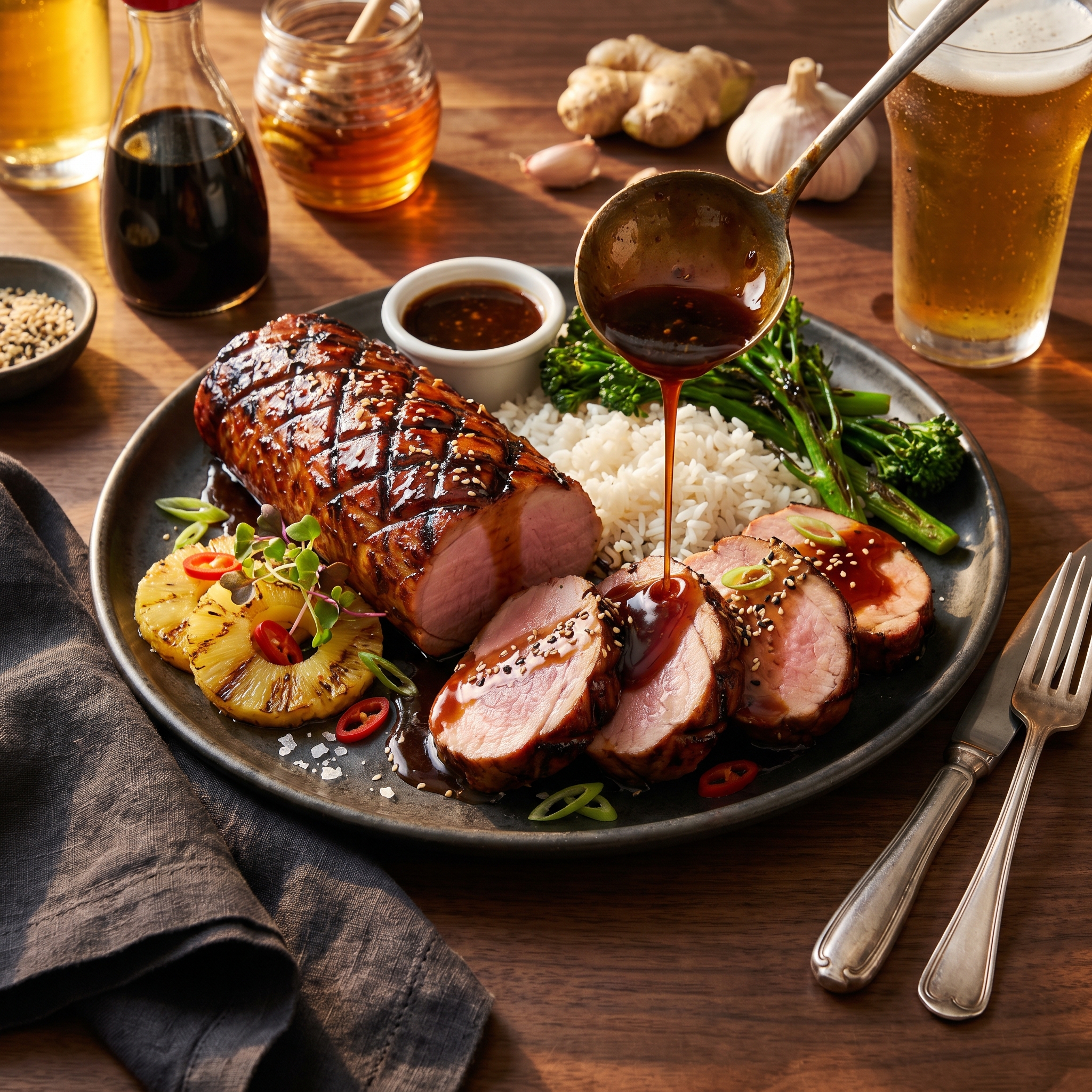
Show-Stopping Grilled Teriyaki Pork Tenderloin: 7 Secrets to the Best Father’s Day Dinner He’ll Ever Have
It was Father’s Day three summers ago, and I had grand plans to grill something impressive — something that would make my dad put down his iced tea, look up from the backyard, and actually say “wow.” I’d been making the same grilled chicken for years and he was always politely grateful in that dad way, where you can tell they appreciate the effort but the enthusiasm is measured. That year I decided to try something different. I marinated two pork tenderloins overnight in a homemade teriyaki sauce — soy sauce, fresh ginger, garlic, a little honey, a splash of pineapple juice I had leftover in the fridge — and the next afternoon I put them on a hot grill and just watched. The smell alone made three neighbors come out onto their porches. My dad took one bite, set his fork down, and said: “This is the best thing you’ve ever made.” He has never said that about the chicken.
Are you trying to figure out what to cook for Father’s Day this year — something that feels genuinely special and celebratory without requiring a culinary degree or an entire afternoon in the kitchen? This grilled teriyaki pork tenderloin is the answer. It marinates while you sleep, grills in under twenty minutes, and produces a juicy, deeply caramelized, lacquered piece of meat that looks and tastes like something from a high-end steakhouse — at a fraction of the cost and with zero intimidation factor once you understand a handful of simple techniques. This is the Father’s Day dinner that earns you the “best cook in the family” title, and I’m going to walk you through every step of making it happen.
Whether you’re cooking for a dad who loves bold, savory flavors and a good char off the grill, a father-in-law who is impossible to impress and eats at nice restaurants every week, or a husband who just wants a real meal that feels like a celebration rather than a Tuesday — keep reading. This recipe was built for all three of those men, and it delivers every single time.
Table of Contents
Why This Recipe Works
Pork tenderloin is one of the most underrated cuts at the butcher counter — it’s leaner than chicken breast, more flavorful than most people expect, and almost impossible to mess up once you understand how it behaves on a grill. Paired with a proper homemade teriyaki marinade that does double duty as a finishing glaze, this recipe produces results that are dramatically better than anything bottled or store-bought, and it comes together with pantry ingredients you likely already have.
- ✔ Incredibly tender and juicy every single time — Pork tenderloin is the most tender cut on the pig. Marinated overnight and grilled to exactly 145°F, it slices like butter and stays juicy all the way through — no dry, chalky pork in sight.
- ✔ That glossy, caramelized teriyaki lacquer — The homemade teriyaki marinade reduces into a glaze that coats the tenderloin in a deep, shining layer of sweet-savory caramelization that looks restaurant-worthy and tastes even better.
- ✔ Mostly hands-off — the marinade does the heavy lifting — Mix the marinade, submerge the pork, refrigerate overnight. The next day you pull it out, let it come to room temperature, and grill. Most of the flavor development happens while you sleep.
- ✔ Grills in under 20 minutes — Pork tenderloin is thin and cooks fast over direct heat. You’re looking at 15–18 minutes total on the grill — faster than a steak, more impressive than a burger, and a genuinely special occasion feel for a weekday-level time investment.
- ✔ Makes a stunning presentation — Sliced on a diagonal and fanned across a serving platter with the reduced glaze drizzled over and a scatter of sesame seeds and scallions, this looks like something you’d pay thirty dollars a plate for at a restaurant.
- ✔ Feeds a crowd without breaking the budget — Two pork tenderloins — which is how most grocery stores package them — feed six to eight people generously. At Costco or Walmart, that’s one of the best value-to-impression ratios in all of grilling season.
- ✔ The leftovers are extraordinary — Cold sliced teriyaki pork tenderloin on a rice bowl the next day is one of those leftover situations that makes you genuinely happy to open the fridge. Plan for extras.
Let’s build this marinade from scratch and talk about exactly what each ingredient is doing.
What You’ll Need
This recipe serves 6–8 people using two pork tenderloins, which is the standard packaging you’ll find at Costco, Walmart, or any grocery store. The marinade ingredients are mostly pantry staples — the fresh ginger and garlic are the only things you might need to pick up specifically, and both are absolutely worth it for the depth they add.
For the Pork
- 2 pork tenderloins (about 1 lb each — most packages run 1.75–2 lbs total)
- 1 tablespoon olive oil (for the grill grates and a light coat on the pork)
- Kosher salt and black pepper (a light sprinkle before grilling even with the marinade)
For the Teriyaki Marinade & Glaze
- ½ cup low-sodium soy sauce (Kikkoman is my go-to — consistent, balanced, widely available)
- 3 tablespoons honey
- 2 tablespoons brown sugar, packed
- 3 tablespoons pineapple juice (from a can — this is the secret ingredient that tenderizes and brightens everything)
- 2 tablespoons rice wine vinegar
- 1 tablespoon sesame oil
- 4 garlic cloves, finely minced or grated
- 1 tablespoon fresh ginger, grated (about a 1-inch piece — do not substitute powdered)
- 1 teaspoon sriracha or chili garlic sauce (optional — adds a gentle background heat)
- 2 teaspoons cornstarch mixed with 2 teaspoons cold water (for thickening the glaze)
For Serving
- 2 scallions, thinly sliced on the diagonal
- 1 tablespoon toasted sesame seeds
- Fresh lime wedges
- Steamed white rice or coconut jasmine rice
- Optional: grilled pineapple rings alongside for a stunning presentation
Optional Add-Ins and Upgrades
- 1 tablespoon mirin in the marinade for extra depth and gloss
- A teaspoon of Chinese five-spice stirred into the marinade for a warm, aromatic complexity
- A tablespoon of hoisin sauce blended into the marinade for a richer, deeper flavor
- Grilled bok choy or asparagus as a side — cook right on the grill while the pork rests
- A quick cucumber salad dressed with rice vinegar, sesame oil, and a pinch of sugar alongside
- Crispy wonton strips scattered over the sliced pork just before serving for crunch
Substitutions
What if I can’t find pork tenderloin or want to use a different cut? Bone-in pork chops cut at least 1 inch thick work beautifully with this marinade and glaze — reduce the grill time to about 4–5 minutes per side and pull at the same 145°F internal temperature. Boneless chicken thighs are another excellent option that takes the teriyaki marinade exceptionally well — grill over medium-high heat for 6–7 minutes per side. If you want to go the steak route, a flank steak or skirt steak marinated in this teriyaki blend is genuinely outstanding — just pull it at 130–135°F for medium-rare and slice very thin against the grain.
Can I use bottled teriyaki sauce instead of making the marinade from scratch? You can, but the flavor difference is significant and not in the bottled sauce’s favor. Homemade teriyaki marinade has fresh ginger, real garlic, and pineapple juice doing things that a bottled sauce simply can’t replicate — the fresh aromatics add a brightness and complexity that makes the finished dish taste genuinely special rather than like something you picked up from a grocery store shelf. If you’re truly pressed for time, Kikkoman’s Teriyaki Marinade is the best bottled option, but I’d encourage you to try the homemade version at least once before deciding the bottle is easier.
What if I don’t have a grill? A cast-iron skillet and your oven work beautifully together. Sear the marinated tenderloins in a screaming hot cast-iron skillet with a tablespoon of oil for 2 minutes per side to build a crust, then transfer the skillet directly into a 400°F oven for 12–15 minutes until the internal temperature hits 145°F. The char won’t be identical to a grill but the flavor is excellent, and the cast-iron crust is genuinely impressive in its own right. A broiler finish for the last 2 minutes adds extra caramelization that comes close to the grill experience.
🧑🍳 Chef’s Note — Marinade Timing: The minimum effective marinating time for pork tenderloin is 4 hours, but overnight — 8 to 12 hours — is where the magic really happens. The soy sauce and pineapple juice gently break down the outer muscle fibers while the aromatics permeate deep into the meat. Do not marinate longer than 24 hours; the acid in the pineapple juice will eventually start breaking down the texture in a way that works against you, making the surface slightly mushy rather than firm and juicy.
🧑🍳 Chef’s Note — The Glaze: Reserve at least ½ cup of the marinade before the raw pork ever touches it — set it aside in a small saucepan right when you make the marinade. This reserved portion becomes your finishing glaze. Never use marinade that has been in contact with raw pork as a finishing sauce; always work from the reserved portion that was set aside clean. This is the most important food safety rule in this recipe and it takes five seconds to do right.
How to Make Grilled Teriyaki Pork Tenderloin — Step by Step
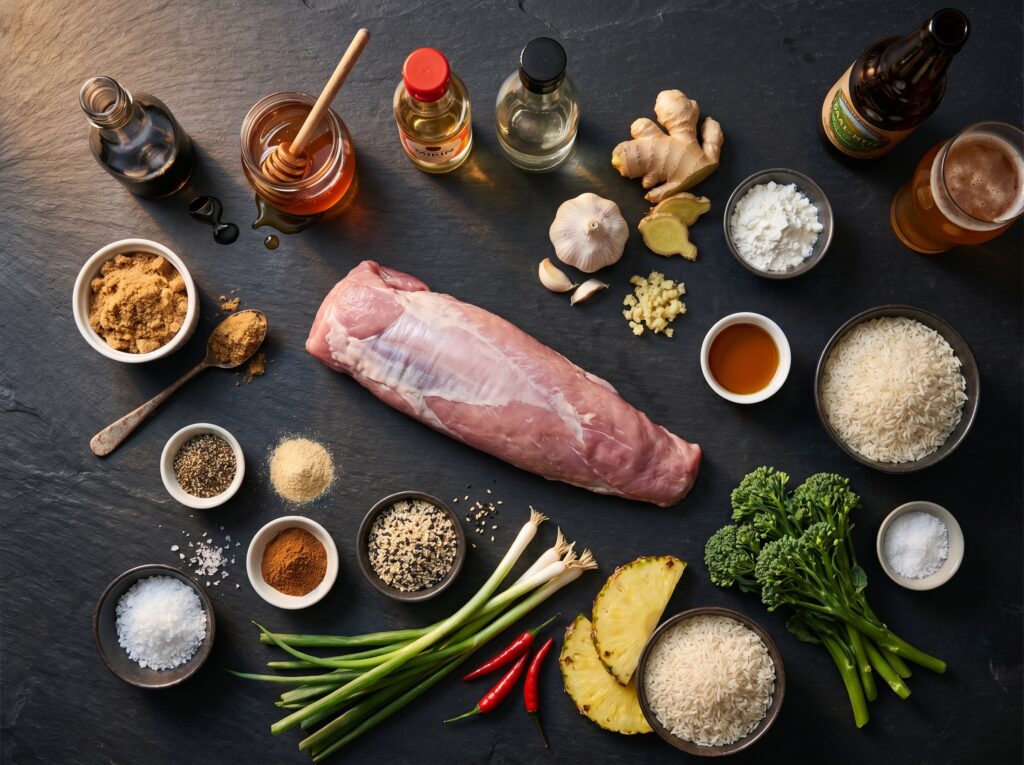
- Make the teriyaki marinade the night before — this is the most important step in the entire recipe. In a medium bowl, whisk together the soy sauce, honey, brown sugar, pineapple juice, rice wine vinegar, sesame oil, minced garlic, grated ginger, and sriracha if using. Whisk until the honey and brown sugar are completely dissolved and the marinade looks smooth and glossy. Taste it — it should be deeply savory, sweet, garlicky, and bright. Before the pork goes anywhere near it, measure out ½ cup into a small saucepan, cover it, and put it in the fridge. That is your glaze. The rest goes over the pork.
💡 Pro Tip: Pat the pork tenderloins completely dry with paper towels before submerging them in the marinade. Dry meat absorbs marinade more effectively than wet meat — the moisture on the surface dilutes the marinade at the point of contact and slows absorption. Thirty seconds of patting dry makes a noticeable difference in how deeply flavored the finished pork is.
- Trim the silver skin from the tenderloins before marinating. Silver skin is the thin, shiny, bluish-white membrane that runs along one side of the tenderloin. It doesn’t break down during cooking, it’s unpleasantly chewy, and it causes the tenderloin to bow and curl on the grill as it tightens with heat. Slide a sharp boning knife or paring knife just under the silver skin at one end, hold the flap of skin firmly with your other hand, and run the knife along the length of the tenderloin with the blade angled slightly upward. One pass removes most of it. Don’t worry about perfection — getting most of it is plenty.
- Submerge the trimmed tenderloins in the marinade, seal, and refrigerate overnight. Place the pork in a zip-top gallon bag or a shallow baking dish. Pour the marinade over and turn the pork to coat every surface thoroughly. Seal tightly, pressing out as much air as possible if using a bag, and refrigerate for a minimum of 4 hours — overnight is ideal. If you’re using a bag, lay it flat in the fridge so the pork is submerged evenly rather than sitting in a puddle at the bottom.
💡 Pro Tip: Pull the marinated tenderloins out of the refrigerator 30–45 minutes before grilling and let them sit at room temperature. Cold meat hitting a hot grill drops the grill temperature and causes the exterior to cook faster than the interior — you end up with an overcooked surface and an underdone center. Room temperature pork cooks more evenly from edge to center and develops a better sear. This is one of those small habits that makes a consistent, repeatable difference every time you grill.
- Preheat your grill to medium-high heat — around 400–425°F — and set it up for two-zone cooking. Two-zone cooking means you have one side of the grill with direct high heat and one side with indirect lower heat. On a gas grill, light all burners to preheat, then turn one burner off before adding the pork. On a charcoal grill, bank all the coals to one side. This setup lets you sear the pork over direct heat to build color and crust, then finish it over indirect heat without burning the sugars in the marinade before the center is cooked through. Clean and oil the grates with a folded paper towel dipped in oil held with tongs — this is essential with a sugary marinade, which will stick and tear if the grates aren’t properly oiled.
- Remove the pork from the marinade, let the excess drip off, and season lightly with salt and pepper. Shake off as much marinade as possible before the pork hits the grill — a thick coating of wet marinade steams instead of searing and creates flare-ups from the dripping sugars. A thin film is what you want. The light sprinkle of salt and pepper over the already-marinated pork sounds redundant but it adds a final seasoning layer to the crust that makes a real difference in the finished flavor.
- Sear the tenderloins over direct heat, turning every 3–4 minutes to build crust on all sides. Place the pork on the hot side of the grill and resist the urge to move it constantly. Let it sear for 3–4 minutes until it releases naturally and has a deep golden-brown crust, then rotate a quarter turn. Repeat on all four “sides” of the tenderloin — top, bottom, and each side — for a total of about 12–14 minutes of direct heat. If you get flare-ups from dripping marinade sugars, move the pork to the indirect side temporarily until they die down, then return to direct heat.
💡 Pro Tip: While the pork is on the grill, make your glaze. Pour the reserved marinade into the small saucepan and bring it to a simmer over medium heat. Stir in the cornstarch slurry and cook for 2–3 minutes, stirring constantly, until the glaze thickens enough to coat the back of a spoon. It should look glossy and lacquer-like — not watery, not gloppy. Remove from heat and set aside. You’ll brush this over the pork in the final minutes of grilling and again right after it rests.
- In the final 3–4 minutes of grilling, brush the tenderloins with the reduced teriyaki glaze. Move the pork to the indirect side of the grill if it’s getting too much color, then brush a generous coat of glaze over every surface. Close the lid and let the glaze set and caramelize for 2 minutes, then brush on a second coat and close the lid again for another minute or two. You’re building up layers of lacquer — each coat adds depth of color, sweetness, and that gorgeous glossy finish. Pull the pork when an instant-read thermometer inserted into the thickest part reads 145°F.
- Rest the tenderloins for 8–10 minutes before slicing — do not skip this. Tent the pork loosely with foil and set it on a cutting board. The resting period allows the internal temperature to coast up the last few degrees while the juices redistribute evenly throughout the meat. Pork tenderloin sliced immediately off the grill loses most of its moisture onto the cutting board. Pork tenderloin that has rested properly is juicy, tender, and dramatically more flavorful. Eight minutes is not a long time. Use it to plate the rice and set the table.
- Slice on the diagonal, fan across a serving platter, and finish with the remaining glaze. Cut the rested tenderloins into ½-inch diagonal slices — the diagonal cut is not just for looks, it also shortens the muscle fibers slightly and makes each piece more tender to eat. Fan the slices across a large serving platter, then spoon or brush any remaining glaze generously over the top. Scatter the sliced scallions and toasted sesame seeds over everything, tuck grilled pineapple rings around the platter if you made them, and set lime wedges alongside. This is the moment it goes from a backyard dinner to something that genuinely looks special.
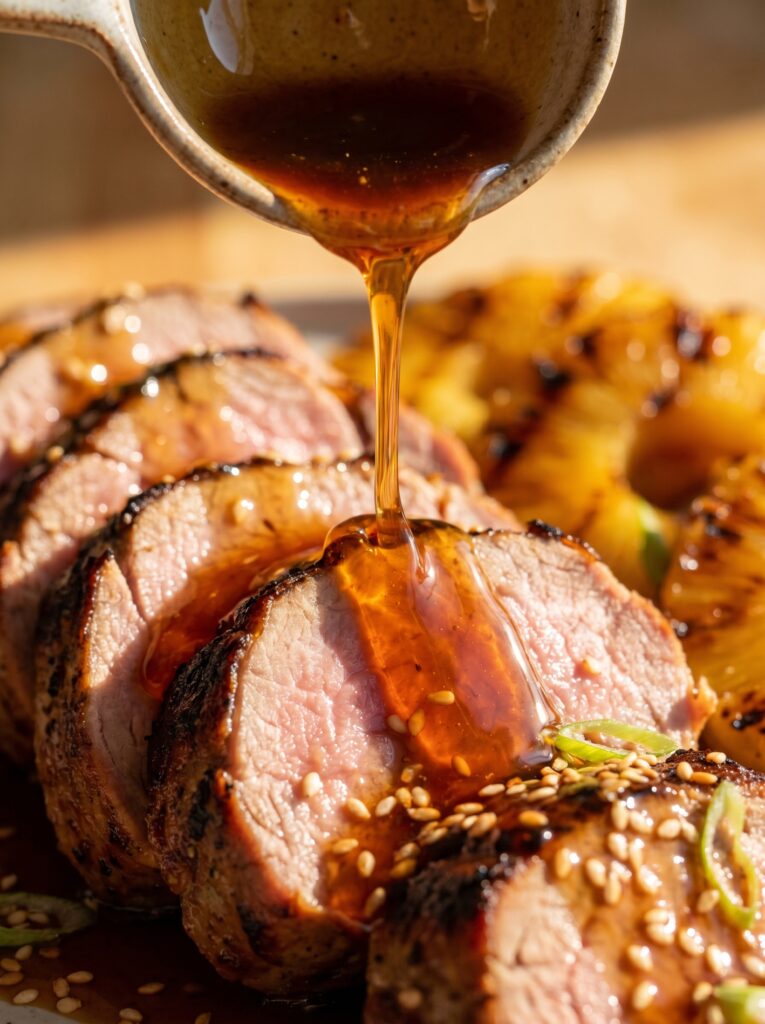
From first bite of marinade prep the night before to platter on the table, this is one of those recipes that gives back far more than it asks of you. The overnight marinade does the heavy lifting. The grill does the rest. And you get to be the person who made something everyone is still talking about when they drive home.
How to Serve It
This grilled teriyaki pork tenderloin is the kind of centerpiece dish that anchors an entire meal — impressive enough for a Father’s Day celebration, versatile enough to pair with almost anything you want to put alongside it. Here are five ways to bring it to the table.
- ☕ Classic Father’s Day Backyard Spread: Slice and fan the tenderloin across your best serving platter, set it in the center of the table alongside a big bowl of coconut jasmine rice, a platter of grilled corn on the cob brushed with a little butter and soy sauce, and a crisp cucumber-sesame salad. Add a cold six-pack of whatever dad drinks and call it the best Father’s Day dinner in recent memory. The presentation does half the work and the flavor does the other half.
- 🥞 Teriyaki Rice Bowl Station: Set up a build-your-own rice bowl bar — steamed rice in a pot, sliced tenderloin on a platter, and small bowls of toppings: pickled ginger, sliced avocado, shredded carrots, edamame, sliced scallions, sesame seeds, extra glaze, and sriracha mayo. Let everyone build their own bowl. It’s interactive, visually stunning, and works perfectly for a mixed crowd of adults and kids who all want different things.
- 🌸 Date Night Plated Dinner: For a more intimate Father’s Day celebration — just the two of you, or a small family dinner — plate individual portions with three or four slices of tenderloin fanned over a scoop of coconut rice, a side of steamed bok choy drizzled with sesame oil, and a decorative drizzle of glaze around the plate. Add a garnish of microgreens or fresh herbs and a single grilled pineapple ring. It looks like a restaurant plate and takes about ninety seconds to assemble.
- 📚 The Next-Day Leftover Rice Bowl: Cold sliced teriyaki pork tenderloin over steamed white rice with a drizzle of the leftover glaze, a soft-boiled egg halved on top, sliced cucumbers, and a shake of furikake seasoning is one of the best lunches you can make from yesterday’s dinner. The pork is arguably better cold — the flavors have deepened overnight and the texture firms up beautifully. Plan to make extra specifically for this purpose.
- 🎃 Sliders and Sandwiches for a Crowd: If you’re feeding more than eight people for a big Father’s Day gathering, slice the tenderloin thin and pile it onto King’s Hawaiian slider rolls with a smear of sriracha mayo, a thin slice of grilled pineapple, and a little shredded cabbage for crunch. Set them out on a platter with the extra glaze in a small bowl for dipping. These disappear faster than anything else on the table and require zero additional cooking beyond what you’ve already done.
However you plate it, always drizzle a final spoonful of warm glaze over the tenderloin right before it hits the table — it refreshes the lacquer, adds a glossy sheen, and signals to everyone sitting down that something special is about to happen.
Storage & Make-Ahead Tips
Cooked tenderloin — Refrigerator: Store leftover sliced or whole grilled teriyaki pork tenderloin in an airtight container in the refrigerator for up to 4 days. To reheat without drying it out, place the slices in a skillet over medium-low heat with a splash of water or chicken broth, cover with a lid, and steam for 2–3 minutes until just warmed through. Alternatively, microwave covered with a damp paper towel over the top for 45–60 seconds. Either method preserves the moisture far better than uncovered reheating.
Cooked tenderloin — Freezer: Grilled pork tenderloin freezes well for up to 3 months. Slice it before freezing and lay the slices flat in a single layer on a parchment-lined baking sheet to freeze solid, then transfer to a zip-top freezer bag. Freezing flat prevents the slices from fusing into a solid block and lets you pull out exactly how many you need. Thaw overnight in the refrigerator and reheat gently as described above. The glaze on the exterior protects the moisture of the meat during freezing better than plain grilled pork would.
The marinade — Make it up to 3 days ahead: The teriyaki marinade keeps beautifully in a sealed jar in the refrigerator for up to 3 days before you need it. Mix it on Thursday evening, pour it over the pork on Saturday night, and grill on Father’s Day Sunday — the marinade is actually at its best after a day or two in the fridge as the garlic and ginger mellow and integrate. The reserved glaze portion can also be made ahead and stored separately; just reheat it gently in the saucepan and stir in the cornstarch slurry right before using.
📅 Make-Ahead Tip: For a truly stress-free Father’s Day morning, do every bit of prep the night before. Make the marinade, reserve the glaze portion, trim and marinate the pork, and mix the cornstarch slurry in a small container. Sunday morning, all you have to do is pull the pork out 45 minutes before grill time and fire up the grill. The whole active cooking process is under 30 minutes and you look like you’ve been planning this for weeks.
Do not slice before storing if you can help it: A whole grilled tenderloin retains moisture far better than pre-sliced pieces, which have more exposed surface area to dry out. If you’re planning to have leftovers intentionally, slice only what you’re serving and store the rest whole. Slice fresh right before eating for the best texture and presentation every time.
Helpful Tips & Common Mistakes
These are the five mistakes that stand between a good grilled pork tenderloin and a genuinely great one — and every single fix is simple once you know what to watch for.
✗ Mistake: Skipping the silver skin removal and wondering why parts of the tenderloin are chewy and the whole thing curled up on the grill.
✓ Fix: Take two minutes to trim the silver skin before marinating. It doesn’t break down with heat the way fat does — it stays tough, rubbery, and causes the tenderloin to bow dramatically on the grill as it tightens. A paring knife slid just under the membrane at one end and run the length of the loin removes it cleanly. This one prep step transforms the texture and the grill behavior of the entire cut.
✗ Mistake: Using the leftover pork marinade directly as a finishing glaze without cooking it first.
✓ Fix: Always reserve a clean portion of the marinade before the raw pork touches it, and use that reserved portion for your glaze. Marinade that has been in contact with raw pork must be boiled for a full minute before it’s safe to eat — and even then, the texture and flavor are compromised. The reserved clean glaze tastes better, reduces more cleanly, and requires zero food safety worry. Set it aside before you marinate. It takes five seconds and it’s non-negotiable.
✗ Mistake: Cooking the tenderloin to 160°F or beyond because that’s what older food safety guidelines recommended for pork.
✓ Fix: The USDA updated pork guidelines in 2011 — the safe internal temperature for whole cuts of pork is now 145°F with a 3-minute rest. Pull your tenderloin at 145°F and it will be slightly blush-pink in the center, incredibly juicy, and perfectly safe. Cooked to 160°F, pork tenderloin is dry, chalky, and genuinely unpleasant — this is why so many people think they don’t like pork, and why a meat thermometer is the single most important tool for this recipe.
✗ Mistake: Grilling over direct high heat the entire time and ending up with a burned exterior and an undercooked or just-barely-done center.
✓ Fix: Use two-zone grilling — sear over direct heat to build the crust, then finish over indirect heat to cook the center through without burning the sugary marinade. The sugars in teriyaki glaze caramelize beautifully but they also burn fast over sustained high heat. Moving to indirect heat for the final minutes gives you control over the color and prevents the exterior from going from glossy lacquer to black char before the center is done.
✗ Mistake: Slicing the tenderloin immediately off the grill because it looks done and everyone is hungry.
✓ Fix: Rest for 8–10 minutes, tented loosely with foil, without exception. The internal temperature continues rising during the rest — often 3–5 degrees — and the juices redistribute throughout the meat rather than pouring out onto the cutting board the moment you slice. Pork tenderloin that has rested properly holds its juices in every slice. Pork tenderloin sliced immediately is visibly drier and less flavorful, and that difference is noticeable to every person at the table.
Recipe Variations
The teriyaki marinade and two-zone grilling technique in this recipe are a framework — once you understand them, you can take this in a dozen directions. Here are four variations that are all genuinely worth making.
🍍 Hawaiian-Style Teriyaki Pork with Grilled Pineapple: Add 2 tablespoons of coconut milk to the marinade and increase the pineapple juice to ¼ cup. While the tenderloin rests, grill thick pineapple rings over direct heat for 2–3 minutes per side until caramelized and slightly charred. Serve the sliced tenderloin over coconut jasmine rice — cook it with half water, half canned coconut milk — with the grilled pineapple rings and a drizzle of the teriyaki glaze. Finish with toasted coconut flakes and a scatter of macadamia nuts for crunch. It’s the kind of Father’s Day plate that makes people close their eyes for a moment when they take the first bite.
🌶️ Spicy Gochujang Teriyaki Tenderloin: Whisk 1 tablespoon of gochujang paste and an extra teaspoon of sesame oil into the marinade in place of the sriracha. Gochujang has a deeper, more complex heat than sriracha — fermented and slightly sweet — and it pairs with the teriyaki flavors in an extraordinary way. Finish the glaze with a drizzle of honey right before brushing it on in the final minutes of grilling. Serve with steamed white rice and a quick kimchi cucumber salad on the side. This is the variation for the dad who likes heat and has an adventurous palate.
🥩 Teriyaki Pork Tenderloin with a Garlic-Ginger Compound Butter: Make a quick compound butter by combining 4 tablespoons of softened butter with 1 teaspoon of grated ginger, 1 small grated garlic clove, 1 teaspoon of soy sauce, and a pinch of sesame seeds. Roll it into a log in plastic wrap and refrigerate until firm. When the rested tenderloin comes off the grill, slice it and lay two thin rounds of the compound butter directly on the warm meat to melt over the top. The butter melts into the teriyaki glaze and creates a sauce that pools around the slices on the platter. It sounds like a steakhouse move because it is a steakhouse move, and it works just as well on pork.
🫙 Sheet Pan Teriyaki Pork Tenderloin for When the Weather Doesn’t Cooperate: If Father’s Day brings rain and the grill isn’t happening, this variation saves the day without sacrificing the flavor. Use the same marinade exactly as written. Sear the marinated tenderloins in a cast-iron skillet over high heat for 2 minutes per side to build a crust, then transfer the skillet to a 400°F oven for 12–15 minutes until the internal temperature hits 145°F. Brush the glaze over the tenderloins in the last 5 minutes of oven time and again immediately out of the oven. Finish with a 2-minute broil right at the end to get that caramelized, lacquered exterior as close to grill char as an oven can manage. Rest and slice exactly as written. Nobody has to know it wasn’t grilled.
Final Thoughts
That Father’s Day three summers ago — the one where my dad put down his fork and actually said “wow” — changed the way I think about what a celebration dinner can be. It doesn’t have to be the most complicated thing you’ve ever made. It doesn’t have to take all day or cost a fortune. It just has to be made with intention and a little technique, and this grilled teriyaki pork tenderloin has both of those things built right in. The overnight marinade is the intention. The two-zone grill setup and the 145°F pull temperature are the technique. Everything else is just showing up with good ingredients and doing what the recipe says. The result is a Father’s Day dinner that tastes like it cost three times what it did and took twice as long as it actually did — and that is exactly the kind of cooking magic worth sharing.
Make this for the dad in your life this Father’s Day and let me know how it lands. Leave a ⭐⭐⭐⭐⭐ rating below, tag @zippydishes on Pinterest so I can see your beautiful platter, and share this with anyone who is still wondering what to make this weekend. The answer is right here. 🥩🔥
Frequently Asked Questions
What does grilled teriyaki pork tenderloin taste like?
The best way to describe it is: deeply savory and sweet with a caramelized, slightly smoky exterior that gives way to a juicy, tender, blush-pink interior that practically melts. The teriyaki glaze caramelizes on the grill into a lacquered crust — sweet from the honey and brown sugar, savory from the soy sauce, bright from the pineapple juice and rice vinegar, and complex from the fresh garlic and ginger. The pork itself is incredibly mild and takes on the marinade flavors beautifully without being overpowered. The overall experience is somewhere between a high-end Japanese restaurant and the best backyard cookout you’ve ever attended — familiar enough to feel comforting, impressive enough to feel genuinely special.
How long should I marinate the pork tenderloin?
The minimum effective marinating time is 4 hours, but overnight — 8 to 12 hours — is where the real flavor development happens. The soy sauce penetrates the outer layers of the meat, the pineapple juice gently tenderizes, and the garlic and ginger infuse throughout. Do not go beyond 24 hours; the acid in the pineapple juice will start to break down the surface texture of the meat in a way that works against you, creating a slightly mushy exterior rather than a firm, juicy one. For most people, the best approach is to make the marinade on Saturday evening, marinate overnight, and grill on Sunday — that puts you right in the sweet spot of 10 to 12 hours every time.
What internal temperature should pork tenderloin be cooked to?
Pull it at 145°F on an instant-read thermometer, then rest for 3–5 minutes minimum — 8 to 10 minutes is even better for this recipe given the size of the cut. The USDA updated their pork guidelines in 2011 to reflect that 145°F with a rest is safe for whole cuts of pork, and at that temperature pork tenderloin is slightly blush-pink in the very center, incredibly juicy, and absolutely delicious. Cooked to 160°F — the old guideline — pork tenderloin is dry, chalky, and genuinely unpleasant. An instant-read thermometer is the single most useful tool in this recipe and costs about $15 at Walmart. It pays for itself the first time you use it.
Can I make the teriyaki marinade ahead of time?
Yes, and honestly you should. The marinade keeps in a sealed jar in the refrigerator for up to 3 days before you use it, and it’s actually better after a day or two as the garlic and ginger mellow slightly and the flavors integrate. Make it on Thursday or Friday for a Father’s Day Sunday grill — just remember to reserve the glaze portion before any pork touches the marinade. Store the reserved glaze in a separate container, labeled clearly so nobody accidentally uses it for something else. When you’re ready to grill, pull the marinated pork out 45 minutes early and make the glaze while you wait. Everything is already done by the time the grill is hot.
What if I don’t have a grill — can I make this in the oven?
Absolutely. The oven method produces genuinely excellent results with a cast-iron skillet and a hot broiler doing most of the work. Sear the marinated and dried-off tenderloins in a very hot cast-iron skillet with a tablespoon of oil for about 2 minutes per side to build an initial crust. Transfer the skillet to a 400°F oven for 12–15 minutes until the internal temperature reaches 145°F, brushing the glaze over the pork in the last 5 minutes of oven time. Pull the pork, brush one more coat of glaze over everything, then slide back under the broiler for 2 minutes to caramelize the glaze and develop char. Rest for 8 minutes and slice as written. The flavor is slightly different from the grill — less smoky, more even — but the teriyaki lacquer is just as gorgeous and the pork is just as juicy.
Can I use this teriyaki marinade on other proteins?
This marinade is one of the most versatile things in my recipe arsenal. Boneless chicken thighs marinated for 4–6 hours and grilled over medium-high heat are extraordinary — arguably even better than the pork version because the higher fat content in thighs creates incredible char and juiciness. Salmon fillets need only 30–60 minutes of marinating and are spectacular on the grill or under the broiler. Flank steak marinated for 4 hours and grilled to medium-rare, then sliced very thin against the grain, is a crowd-pleaser at any cookout. Firm tofu pressed dry and marinated overnight absorbs the flavors beautifully for a vegetarian version. The one protein I wouldn’t use this marinade on is anything very delicate — white fish like tilapia or sole doesn’t have the structure to hold up to soy sauce marinades and tends to fall apart.
Can I make this for a smaller group — just two or three people?
Most grocery stores sell pork tenderloins in two-packs with a combined weight of about 1.75–2 lbs. If you’re cooking for two or three people, use just one tenderloin and scale the marinade down by half — or make the full marinade batch and reserve the extra for another use during the week. One pork tenderloin feeds three people very comfortably with a side dish or two alongside. The grilling time and technique stay exactly the same; just watch the internal temperature more closely since a single smaller tenderloin may cook slightly faster than two together on the grill.
What sides go best with grilled teriyaki pork tenderloin for Father’s Day?
The sides that work best here are ones that balance the sweet-savory intensity of the teriyaki glaze with something fresh, starchy, or lightly acidic. Coconut jasmine rice is the top pairing — the subtle coconut sweetness mirrors the teriyaki flavors without competing. Grilled corn on the cob brushed with a little butter and soy sauce is effortless on the same grill. A quick cucumber salad with rice vinegar, sesame oil, a pinch of sugar, and sliced scallions adds freshness and cuts through the richness of the glaze. Steamed edamame with flaky sea salt is a crowd-pleasing starter that fits the flavor profile perfectly. And if you want something green and substantial, grilled bok choy halved and cooked cut-side down over direct heat for 3–4 minutes is stunning alongside the tenderloin both in flavor and on the platter.